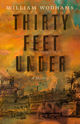
An Italian Museum Heist and Murder Stir a Seasoned FBI Agent in THIRTY FEET UNDER: A MYSTERY
In Thirty Feet Under, Williams Wodhams blends art crime, archaeology, and high-stakes intrigue. Moving between Europe and New York, the novel follows parallel ambitions and moral compromises, offering mystery readers a tightly plotted story where history, greed, and danger collide just beneath the surface.
A murder in an Italian museum draws an unexpected treasure into the spotlight. When a guard is killed and a modest marble sphinx disappears, former FBI Art Crimes agent Kate Taylor is pulled back into the field after years of desk work. The case feels like a long-awaited break, even if the artifact itself seems oddly insignificant.
As Kate digs deeper, the sphinx reveals its true value, pointing toward a long-lost royal tomb and an international smuggling ring willing to kill to protect its secrets. With the clock ticking and trust in short supply, including doubts about her Carabinieri partner Luca, the investigation becomes a race to solve a mystery buried for three thousand years before its treasures vanish for good.
We're thrilled (pun intended) to preview the novel ahead of its early March release in this interview with the author!
Open Book:
Do you remember how you first started this novel or the very first bit of writing you did for it?
William Wodhams:
The idea for the novel came after a series of fortunate events. I was taking a class in Art History at McMaster University, where I was attending as a senior student. For me, it was fascinating. Around the same time, I waxs lucky enough to travel to Italy, where I visited many museums as well as the Vatican, which holds some of the world’s most beautiful ancient art.
One day, shortly after I returned, I was driving to the cottage on a cold winter morning and wondering what the subject of my next book should be. I’d just finished my first novel, Declan Tucker’s Grand Debut, and had no idea what to write about next. I happened to be listening to a podcast called Looted, which featured stories about ancient artifacts, international smuggling, and the illicit antiquities trade. Lucky coincidence — that was it. The penny dropped. After that, everything was ancient history.
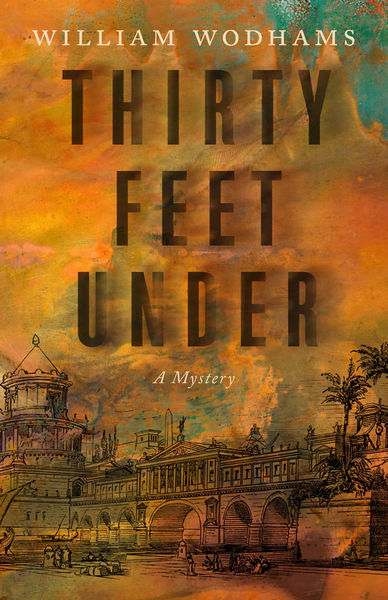
Thirty Feet Under by William Wodhams
OB:
How did you choose the setting of your novel? What connection, if any, did you have to the setting when you began writing?
WW:
Most of the novel takes place in New York and Italy. If I had a spiritual home, it could be either one — I love both of them. New York is home to several major museums and a branch of the FBI Art Crimes Team, so that was easy. Italy is home to much of the world’s most extraordinary ancient art, as well as the renowned Carabinieri Art Squad. It wasn’t complicated.
Your CanLit News
Subscribe to Open Book’s newsletter to get local book events, literary content, writing tips, and more in your inbox
OB:
Did the ending of your novel change at all through your drafts? If so, how?
WW:
The ending didn’t change, but the beginning did. For that I blame Kingsley Amis and my wife. Amis once said that as he grew older, he saw “little point in reading any book that did not begin with a gun going off.” My wife’s taste in books runs toward murder mysteries, and she shares Amis’s perspective on how a proper book should begin.
So I decided there had to be a dead body in the first chapter. Although Thirty Feet Under does not follow traditional mystery and crime novel story arcs, it does in that regard — there’s now a dead guy early on.
OB:
If you had to describe your book in one sentence, what would you say?
WW:
Thirty Feet Under is a tale of lost kings, mad emperors, international smugglers, and a handsome Carabinieri agent with big eyes.
OB:
Did you do any specific research for this novel? Tell us a bit about that process.
WW:
There was a lot of reading about crimes in the ancient art world, as well as interviews with an art crime detective, an expert in Greek and Roman studies, and museum curators. There was also a trip to Italy, which served as invaluable research, although I didn’t know it at the time. I didn’t even have an idea for the book while I was there — that came later.
Two books provided further inspiration. Chasing Aphrodite is a true story about how the J. Paul Getty Museum in Los Angeles knowingly purchased stolen Greek and Roman antiquities, including a fourth-century B.C. statue of Aphrodite. The Medici Conspiracy uncovers an illicit network of smugglers led by an art dealer named Giacomo Medici, who sold looted art to major institutions including the Getty Museum and the Metropolitan Museum of Art.
Thirty Feet Under is a work of fiction, but these books, among others, provided real-world inspiration.
OB:
What was the strangest or most memorable moment or experience during the writing process for you?
WW:
The smuggling of antiquities is far more prevalent than I could ever have imagined. After interviewing experts in archaeology and ancient art and reading everything I could find, I realized it’s an international problem that is constantly growing.
It’s been estimated that losses to art crime internationally exceed $6 billion every year — making it the third largest criminal enterprise in the world, after drugs and weapons.
The looting of art has been called the world’s second-oldest profession. The Romans sacked Greece. Napoleon filled the Louvre with stolen art. The Seventh Earl of Elgin removed friezes from the Parthenon that now sit in the British Museum. And it’s still going on. Just a few years ago, the Metropolitan Museum of Art was accused of purchasing looted antiquities.
One industry expert told me there are still major museums that purchase illegal artifacts, but the growth in private buyers is what’s really driving the business.

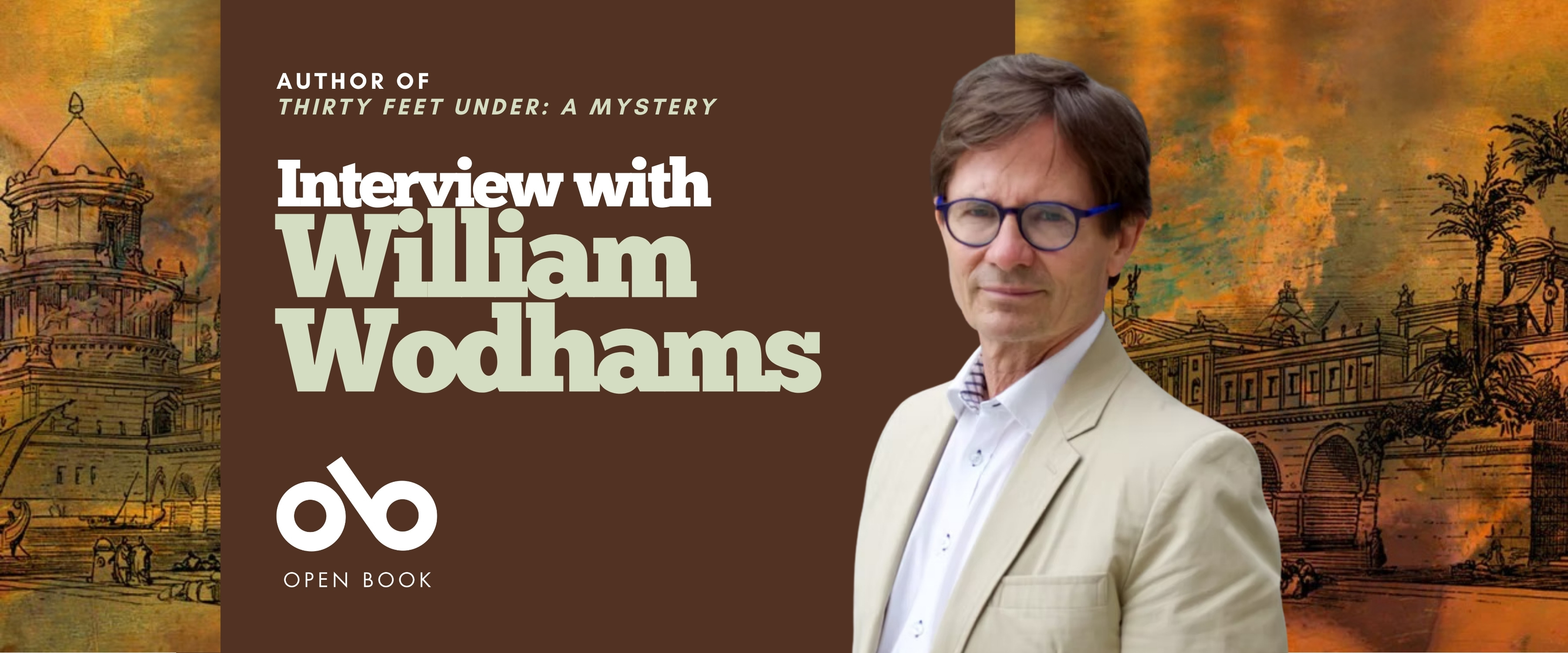
William Wodhams
OB:
What, if anything, did you learn from writing this novel?
WW:
The most important lessons I learned were about book publishing. This is my first novel with a traditional publisher, so I learned a great deal about editing, publishing, and marketing a book.
I was an advertising copywriter for years, so writing and marketing aren’t new to me — but publishing a book is a completely different journey.
When you’re writing ad copy, you’re trying to make people interested in products they rarely want to read about — hamburgers one day, cell phone plans the next, then cars, banks, drywall. It didn’t matter what I was working on; it was up to me to make it interesting.
That can be good exercise for authors. Many writers were former copywriters, including Salman Rushdie, Don DeLillo, Joseph Heller, James Patterson, Kurt Vonnegut, and F. Scott Fitzgerald, who once created the slogan “We keep you clean in Muscatine” for a laundry in Iowa.
Writing a novel is different. Time is the biggest contrast — you’re lucky if you have a week to write an ad; writing and publishing a book can take years. And it’s a competitive market. When I hear people say there are more writers than readers, I’m inclined to believe it.
The journey from first draft to publication took a few years. After Thirty Feet Under was announced as a finalist for the Crime Writers of Canada Best Unpublished Crime Novel Award, I received a call from Jack David at ECW Press and signed a contract shortly after. Since then, we’ve been editing and preparing the book for publication. It’s been an interesting and enjoyable ride, and the folks at ECW have been incredible.
_______________________________
William Wodhams lives in Vancouver, British Columbia, with his wife and an ill-behaved dog. His stories have appeared in several publications, and his first novel, Declan Tucker’s Grand Debut, was published in 2024. Thirty Feet Under was named a finalist for the 2024 Crime Writers of Canada Best Unpublished Crime Novel Award.