A Long-Buried Secret Reshapes a Family’s Understanding of Itself in THE BREAKWATER by Leslie Shimotakahara

A long-buried secret reshapes a family’s understanding of itself in The Breakwater (Cormorant Books), a multigenerational story that moves between past and present to trace the impact of silence, displacement, and memory.
When Cathy Matsumoto’s father, Yasuo, announces a sudden trip to British Columbia, it seems like a simple family visit. Instead, the journey returns them to Victoria, where Yas was uprooted during the internment of Japanese Canadians in the Second World War. There, Cathy learns that the “cousin” he plans to see is actually his younger brother, hidden from the family for decades and living in psychiatric care after being institutionalized years earlier.
As past and present begin to overlap, memories of the brothers’ youth near Victoria’s Chinatown come into focus, marked by rivalry, responsibility, and choices that could not be undone. In The Breakwater, award-winning author Leslie Shimotakahara examines how history lives on within families, and what it means to finally confront what has been left unsaid.
We have a fantastic Long Story interview with the author right here!
Open Book:
Do you remember how you first started this novel or the very first bit of writing you did for it?
Leslie Shimotakahara:
The Breakwater began with a family trip to British Columbia in the summer of 1990, when I was on the verge of adolescence. Like many Japanese Canadians of their generation, my maternal grandparents had grown up in Vancouver and Victoria before the Second World War and the internment uprooted their lives. I assumed the trip would be a kind of final look back at their childhood homes.
But my grandfather had another purpose. Without telling us in advance, he arranged for us to visit his younger brother, who had been sent to Essondale Asylum before the war and remained in institutional care for decades. Witnessing their reunion, after more than fifty years apart, was surreal and deeply affecting. That moment stayed with me. Years later, when Dane Swan invited me to contribute to Changing the Face of Canadian Literature, I wrote a short story exploring that relationship. That piece became the seed from which the novel grew.
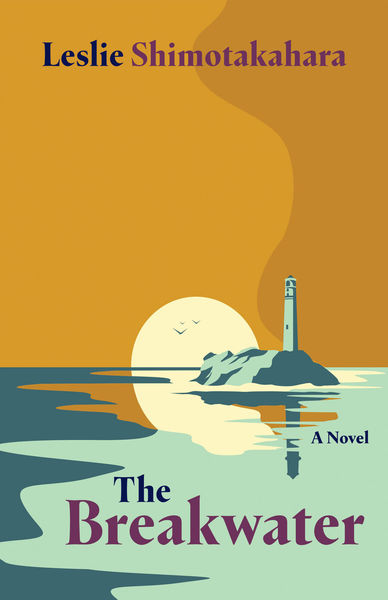
The Breakwater by Leslie Shimotakahara
OB:
How did you choose the setting of your novel? What connection did you have to it?
LS:
The settings in The Breakwater are rooted in the places we visited on that trip. In Victoria, my grandfather pointed out a weathered waterfront building that had once been a brothel. He told us stories about delivering laundry there as a boy, and the way the madam tried to lure him and his brother inside. We also visited Ogden Point Breakwater, where he had fished as a child and claimed to have seen a sea creature with a horse-shaped head. Walking along that narrow stretch, with waves crashing on either side, made a strong impression on me.
Your CanLit News
Subscribe to Open Book’s newsletter to get local book events, literary content, writing tips, and more in your inbox
We passed through Store Street near Chinatown, where his family once lived in a small apartment with a distinctive moon-shaped window. In Vancouver, we went to Oppenheimer Park, where he and his brother had played baseball. These places lingered in my imagination for decades and became essential to the novel’s atmosphere and structure.
OB:
Did you do any specific research for this novel? Tell us a bit about that process.
LS:
In 2017, I returned to British Columbia with my father to retrace the original trip as research. Since I don’t drive, he generously took on that role. What struck me most was how much had changed. The derelict brothel had been transformed into a luxury condominium, and the breakwater now had guardrails that made it feel less dangerous.
We spent time searching for the psychiatric facility where my great-uncle had lived, but we couldn’t find it. It had likely been decommissioned. Instead, we visited a similar institution nearby, posing as people seeking care for a relative. The trip helped me bridge memory and present-day reality, and it deepened my understanding of the spaces that shaped the story.
OB:
What was the most memorable moment during the writing process for you?
LS:
During revisions, my editor at Cormorant Books, Marc Côté, encouraged me to expand the voice of a secondary character inspired by my mother. He felt the novel could more fully explore intergenerational trauma by bringing that perspective forward.
As we discussed this by the fireplace at his home, something unexpected happened. It felt almost like a séance. The character’s voice became vivid and insistent, as though she were speaking directly to me. I ended up rewriting several chapters from her point of view. That shift transformed the emotional depth of the novel.
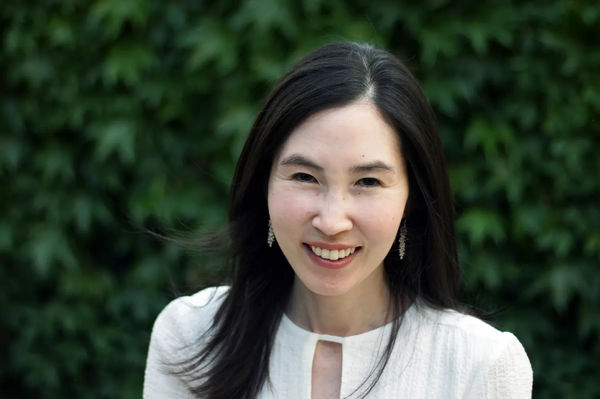
Leslie Shimotakahara
OB:
Who did you dedicate your novel to, and why?
LS:
I dedicated the book to my great-uncle, Akira Kuwabara. Learning about his life, and how thoroughly he had been erased from our family’s narrative, has stayed with me for years. This novel is my attempt to imagine him as a full, complex person and to restore his presence within our family history.
_______________________________________________-
Leslie Shimotakahara is an award-winning author of three novels and a memoir, as well as numerous short fiction and essays. She won the Canada-Japan Literary Prize (2012) and has been shortlisted for the K.M. Hunter Artist Award. Her writing has appeared in the National Post, World Literature Today, and other anthologies and periodicals. She holds a PhD in English from Brown University, and lives in Toronto with her husband.