Andrea Coke Reflects on Family, Culture, and Belonging in I AM CARIBBEAN
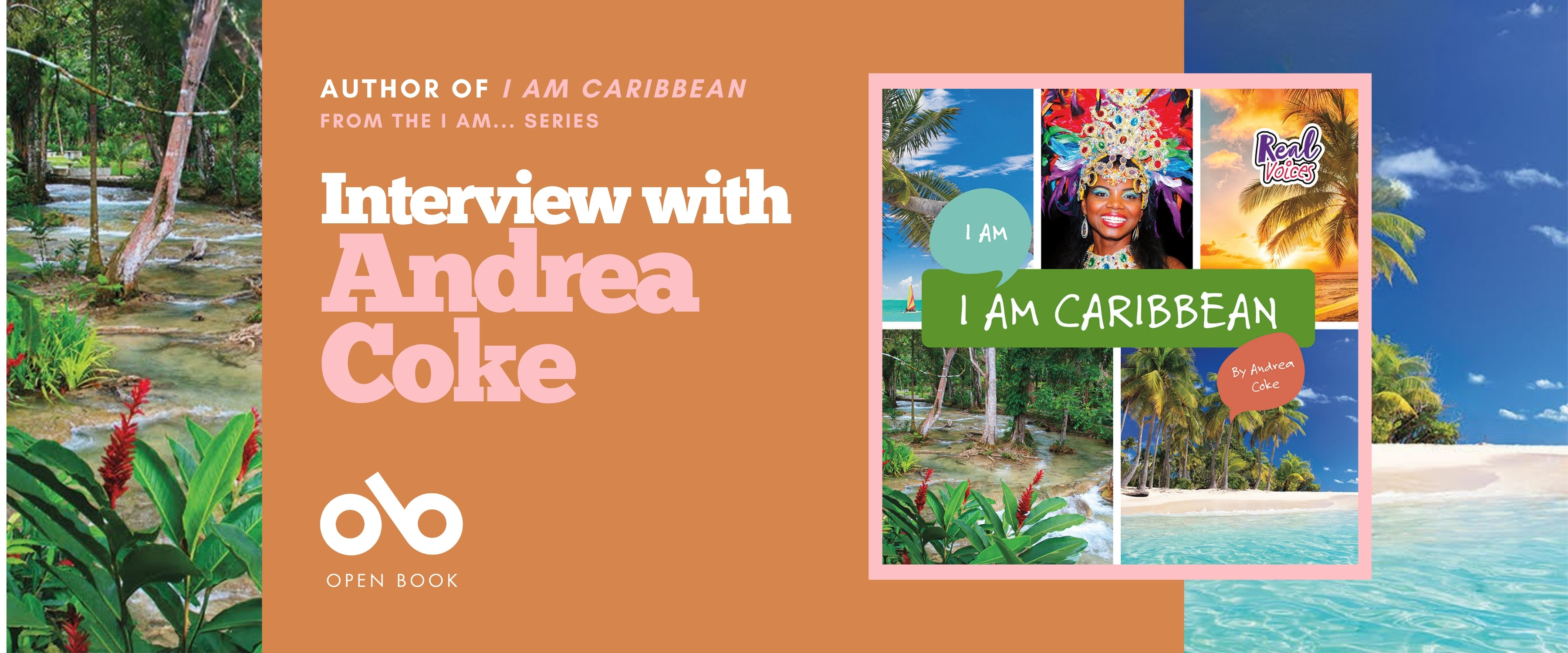
I Am Caribbean by Andrea Coke banner
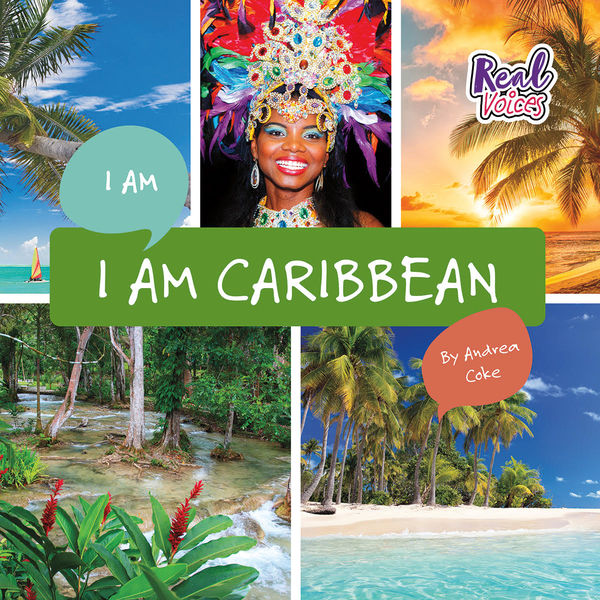
Author and Speech-Language Pathologist Andrea Coke knows that identity is rarely a simple story. In her memoir I Am Caribbean (Saunders Book Company/Beech Street Books) she reflects on family, culture, belonging, and the experiences that have shaped her understanding of herself.
Part of Saunders Book Company’s I Am… Real Voices series, I Am Caribbean invites young readers into Coke’s personal history while embracing the complexity of Caribbean identity. Writing the book also meant deciding what to share, what to leave out, and how to tell her story without allowing any one part of it to define the whole.
Check out our fascinating interview with Andrea here, in which the author discusses the vulnerability of memoir, the title change that helped the book take shape, and why true stories can create such meaningful connections between readers. She also shares her writing habits and gives us a glimpse of the new chapter book she’s working on now!
Open Book:
Did your memoir change significantly from when you first started working on it to the final version? Was there anything that surprised you about the process?
Andrea Coke:
Yes, I struggled with the original title. It made me uncomfortable. I thought it didn’t quite do justice to what I was going to write about. The original title reduced my identity to a single factor that seemed to defeat the whole purpose of telling my story. Why tell a layered story if the title has already reduced it to one thing?
Thankfully, the publisher worked with me to find a better title. Once we found it, I could finally write. That was the ‘greenlight’ my brain needed to move forward.
And the experiences I originally thought I would include changed as I wrote.I kept asking myself: Is this important enough? Would a reader understand why or care that I included a particular detail? I wanted to tell a compelling story without missing key experiences but finding that balance was harder than I expected.
I Am Caribbean by Andrea Coke
OB:
What do you need in order to write – in terms of space, food, rituals, writing instruments?
AC:
In popular culture, we always hear writers talk about writer’s block but I can’t relate. All I need is an idea, a memory or an event and then I’m off.That’s my anchor.
Your CanLit News
Subscribe to Open Book’s newsletter to get local book events, literary content, writing tips, and more in your inbox
I actually write the story in my head. An idea or thought might come to me in the shower and as soon as I’m out, I write it down. I have journals and scraps of paper everywhere. I’m very old-school that way!
When I eventually sit at my laptop, I look at those notes and write. So, no writers block. That’s what the sticky notes and journals are for. I also don’t edit as I go because that slows me down and makes me second-guess myself. I let the thoughts flow (spelling mistakes and all) and edit later.
OB:
If you have written in other genres, what was different for you in writing a memoir?
AC:
I love writing fiction because your imagination can run wild. You create the world, the events and the characters. Even if they’re based on people you know, you can make them better.
But a memoir is different. You can’t change the experiences you’ve been through. You have to sit with all of it, the good, the complicated and the parts that aren’t particularly flattering.
In the book, for example, I write about moving to Quebec and not having boots to wear in the snow. It’s a small detail, but I remember wondering: Will people judge my parents for this? That’s the vulnerability of memoirs. You're telling what happened and exposing how you experienced it.
In the end, all you can do, though, is tell your story in a way that honours all of you and then be okay with that.
OB:
Did you experience any anxiety about making a part of yourself public in this way? If so, how did you or do you cope with the vulnerability of publishing a memoir?
AC:
Absolutely! I thought a lot about my family: What would they think about what I included? What would they think about what I left out?
That becomes complicated when you’re writing about identity, culture and family. With a word count limit, you have to leave things out. But when people know the real story, leaving out one detail can make the whole thing feel incomplete.
I also felt vulnerable knowing that, once published, it was there for anyone to read so I did feel some apprehension. The first time I actually read the finished text, I wanted to backtrack! It took a few days for me to sit with it before I gave the publishers the go-ahead.
So, in some ways you’re writing for three audiences: your readers, your critics (also known as family) and yourself. And sometimes that last audience needs the story the most.
OB:
Personal essays, memoirs, and creative nonfiction in general have becoming particularly in demand and loved by readers in recent years. Why do you think creative nonfiction is more popular than ever?
AC:
We’re naturally curious. We see a famous writer, singer or actor, and wonder, How did they get here? What decisions did they make to land where they are? We want to know.
I also think people crave intimacy. We want to get up close and personal with other people‘s lives. We see it everywhere now, in books, movies, television, even the explosion of reality TV. We compare ourselves to others, but we’re also inspired by them. We want to look behind the scenes and witness what people are really like when the cameras aren’t rolling.
That peak behind the curtain reminds us that even people whose lives look fascinating from the outside are still just people figuring things out as they go, and that makes us feel good about ourselves.
Creative non-fiction is reality TV in some ways but with better editing and, hopefully, a little more reflection. We get the scoop, but we also get the story behind a story. And I think that’s what keeps us reading.
Andrea Coke
OB:
What are you working on now?
AC:
I’m stepping outside my comfort zone and writing an early chapter book. I’ve mainly written picture books so this is a stretch but a fun one.
The funny part is that I actually wrote this character for a picture book. I began editing it during a family cruise. I was sitting outside, looking at the blue water, enjoying my third cup of tea when I thought, Why not make this a chapter book? I had wanted to do that for a long time.
Of course, that meant more work. The original manuscript was about 1200 words so I had already cut it down to the sweet spot of 400 to 600 words that work for a picture book. I then had to go back and put all those deleted scenes back in. Basically, I did the work twice.
The book follows an average kid who is a whirlwind of creativity powered by his ADHD brain. He and his friends get into ordinary kids' stuff in hilarious ways. There’s no ‘fixing’ his ADHD. So many stories about kids with attention difficulties focus on fixing them. I just wanted to celebrate my character’s genius and all the things that make his brain uniquely his. I’m excited to take this picture book character and write him a bigger world.
It’s all new for me but coming together nicely. I’m excited to see where it takes me.
___________________________________
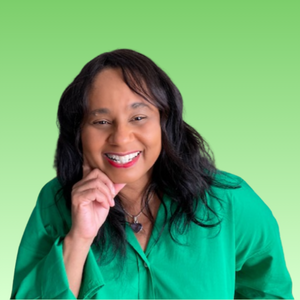
Andrea Benjamin Coke is the Chief Speech-Language Pathologist at the Toronto Catholic District School Board. She has 20+ years of experience as a Teacher & Speech-Language Pathologist. She is an Adjunct Lecturer - University of Toronto. Andrea received her M.H.Sc. S-LP from the University of Toronto. She presents widely on early identification & intervention and diversity & equity in learning. She was awarded the TCDSB 2020 Innovative Exemplary Practice Award for her work promoting andimplementing special education programs for students with communication needs.