Anne Baldo Explores the Lives That Shape Us in ONE DAY, HARD AND CLEAR
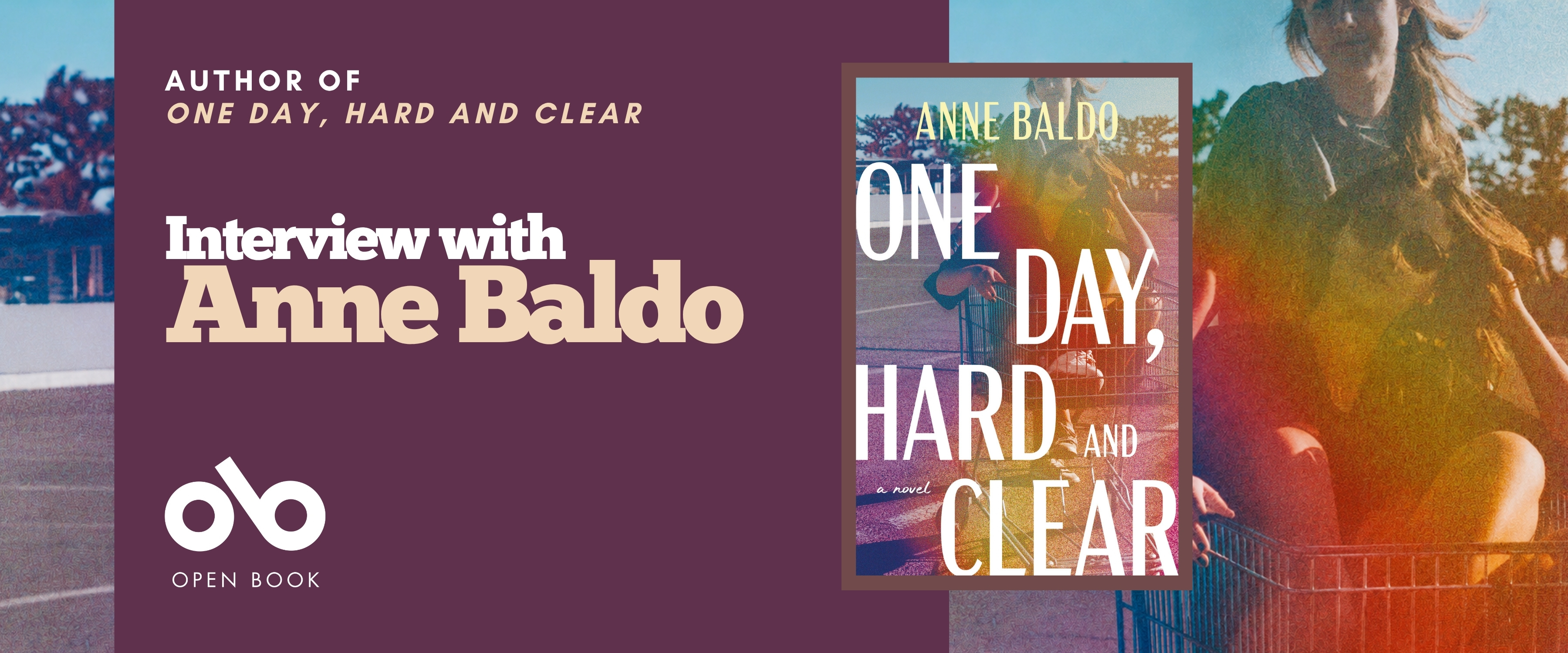
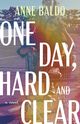
Growing up often means discovering that the people we love can't always become the people we need them to be. In One Day, Hard and Clear (Dundurn Press), that realization unfolds through the friendship of two young women coming of age in a working-class town, where dreams of leaving clash with the ties that bind them to the place.
While Lucy is determined to build a life beyond her hometown, Sami remains caught in the orbit of True, whose charm and instability pull her further away from both her closest friend and the future she imagines for herself. As adolescence gives way to adulthood, the novel traces the shifting bonds between friendship, first love, and family, asking what it takes to let go of the stories we tell ourselves about the people we care for most.
With empathy and emotional precision, Anne Baldo explores longing, heartbreak, and the difficult work of finding your own footing. One Day, Hard and Clear is a deeply felt portrait of growing up, capturing the quiet moments and painful choices that shape a life long after youth has passed.
We are delighted to share this interview with the author today on Open Book!
Open Book:
Do you remember how your first started this novel or the very first bit of writing you did for it?
Anne Baldo:
I first wrote some of what became this novel around fifteen years ago. It was a completely different story, and it ended up being over five hundred pages of very messy writing about an unsolved murder on an island. But that’s when I started writing about several of the characters (Sami and True and Charlie) that eventually ended up in One Day, Hard and Clear. The first versions of Charlie, and to an extent True, were closer to the characters they became, but Sami changed a lot. At first, Sami wasn’t a main character. She didn’t have a narrative role. She was cynical and kind of mean and more of a tough love type of mother. She was still True’s ex-girlfriend, but she idealized him and saw him more as a benevolent figure to her, where in One Day, Hard and Clear, Sami can name True’s flaws, and then romanticizes them. She knows he does more harm than good in her life, but has a hard time giving him up completely anyway. I never finished the novel, putting it aside. I stopped writing what I’d usually written, which had been poetry, and novels that never came together, and began reading and writing short fiction. Eventually I took sections of the abandoned novel and revised them into short stories. One of these stories was later published first in a literary journal and then in the collection Morse Code For Romantics, and it told a version of the ending of One Day, Hard and Clear, but from the point of view of True’s new girlfriend, Cecilia. On impulse a few years later, I decided to rewrite that short story from Sami’s perspective. And then I kept writing short stories about her. Eventually, I combined of all of this into One Day, Hard and Clear.
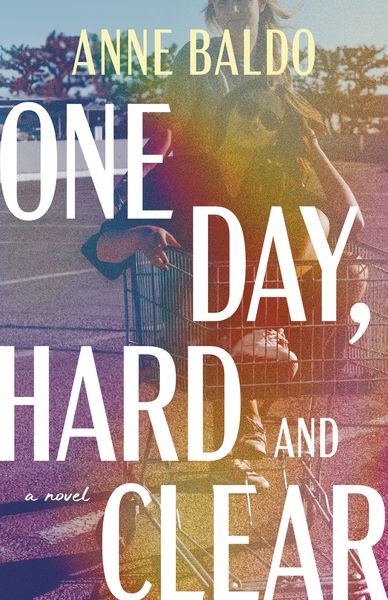
One Day, Hard and Clear by Anne Baldo
OB:
How did you choose the setting of your novel? What connection, if any, did you have to the setting when you began writing?
AB:
It just seemed to only make sense to set the novel in Windsor, where I’ve always lived. I love reading books that take place in Essex County or are by local authors (and if you are interested, check out the books of Jade Wallace, Mark Laliberte, Vanessa Shields, Gwen Aube, Madeline Sonik or Renée D. Bondy, just to mention a few amazing writers with regional connections) or even writing that just references our geographical location (I still remember how excited I was to see Windsor mentioned very briefly in The Blind Assassin). I wanted Windsor, and Essex County, to explicitly be the setting, and many of the places the scenes happen are real, like Central Mall and Fontainebleau Library, or inspired by real places.
OB:
Did you find yourself having a "favourite" amongst your characters? If so, who was it and why?
Your CanLit News
Subscribe to Open Book’s newsletter to get local book events, literary content, writing tips, and more in your inbox
AB:
By the time I was done writing the book, I had a strange amount of sympathy for True, even though he often treats people terribly. Towards the end of the novel, he tells Sami she’s his best friend, and I realized as I was writing that scene not only is he being sincere, but that she’s really his only friend throughout the entire book. I felt he was someone with deep self-loathing beneath a confident surface who would probably never be able to love Sami, or anyone, more than he hated himself. That being said, Sami was my favourite character, maybe because I’d never spent more time with a character and trying to get inside her head. Her perspective was different from the point of view I’d usually written from, characters who tended to be more like Lucy, hesitant and unsure of themselves and unable to speak up, where Sami, although she’s often lying to herself and others, acts with assurance and believes in herself. She accepts herself and those around her for who they are, for the most part, even though at times that becomes detrimental. I was fortunate to meet a woman in university, and even luckier to become her friend, an authentic and brilliant person who taught me you didn’t have to diminish yourself intellectually or physically. This was a quality I really wanted Sami to have, and hopefully some of that shows up in her character.
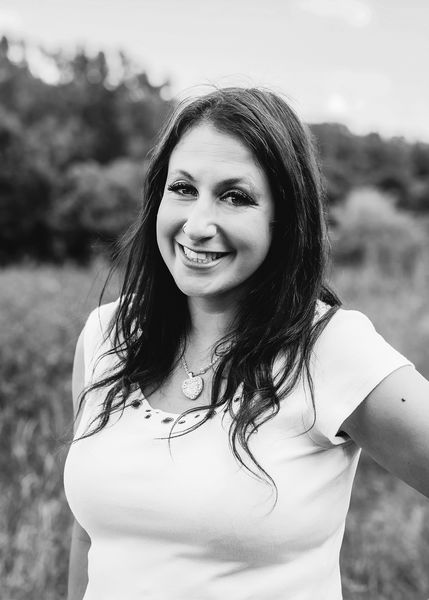
Anne Baldo
OB:
Did you do any specific research for this novel? Tell us a bit about that process.
AB:
I read as many magazines from the early 2000s I could find, and personal accounts of those of us who were teenagers during that time, as well as books discussing the toxic pop culture of that era. I tried to read as much as possible about almost anything included in the book, whether it showed up in the final draft or not. I studied a timeline of Britney Spears’ and Kevin Federline’s relationship. I read forums about the experiences of Applebees’ employees and the history of the Art Gallery of Windsor and invertebrate zoologist Ray Lankester. I went to the library for GQ magazines because it felt like what Silvio would read, where I learned about changing your cologne for the season.
OB:
Did you include an epigraph in your book? If so, how did you choose it and how does it relate to the narrative?
AB:
I chose two quotations for the epigraph. The first is the opening lines from Bronwen Wallace’s poem, “Reclaiming the City”: The sign says, Windsor, City of Roses, / but anyone who’s lived here knows it’s a city of hands / and dark metal, necessary as blood. I’d always loved this poem and felt it spoke to one of novel’s themes, the gap between how we perceive ourselves (or wish to be perceived by others) and how we actually are perceived. I think too often we make quick judgements about people and even places based on superficial assumptions, denying others their inner complexity and the compassion they deserve. Windsor is often described as the Automotive Capital of Canada (although based more on our history than the current volume of vehicles produced), an industrial city built around manufacturing. Despite not being known for our nature (our tree canopy coverage is below average for Southern Ontario and we definitely need more green space), we do have beautiful rose gardens, and Rose City has been a nickname of Windsor’s for decades. A newspaper from 1928, The Border Cities’ Star, has an article recounting a rose show at Willestead Hall and the Parks Board’s wish “to gain a reputation for Walkerville and the other Border Cities as being the Rose Garden of Canada”, noting our location was “peculiarly fitted for a proper development of the rose, the Queen of Flowers.”
The other quotation was from an interview Gavin Rossdale, the lead singer for Bush, conducted on The Howard Stern Show in the 90s. The song he spoke about and performed, “Glycerine”, was one I often played during writing, and I chose this quotation for its link to the pop culture of the era, as well as the song’s lyrics and its title: glycerine is a chemical compound used in bombs, Hollywood tears, and perfume. I felt this applied to most of the relationships between the characters in the book, and the contradictions of human connections.
_____________________________
Anne Baldo is the author of the story collection Morse Code for Romantics. Her writing has appeared in Grain, Stanchion, and Riddle Fence. One Day, Hard and Clear is her debut novel. She lives in Windsor, Ontario.