Author and Journalist Moira Welsh Explores THE ASTONISHING LIVES OF OLDER WOMEN
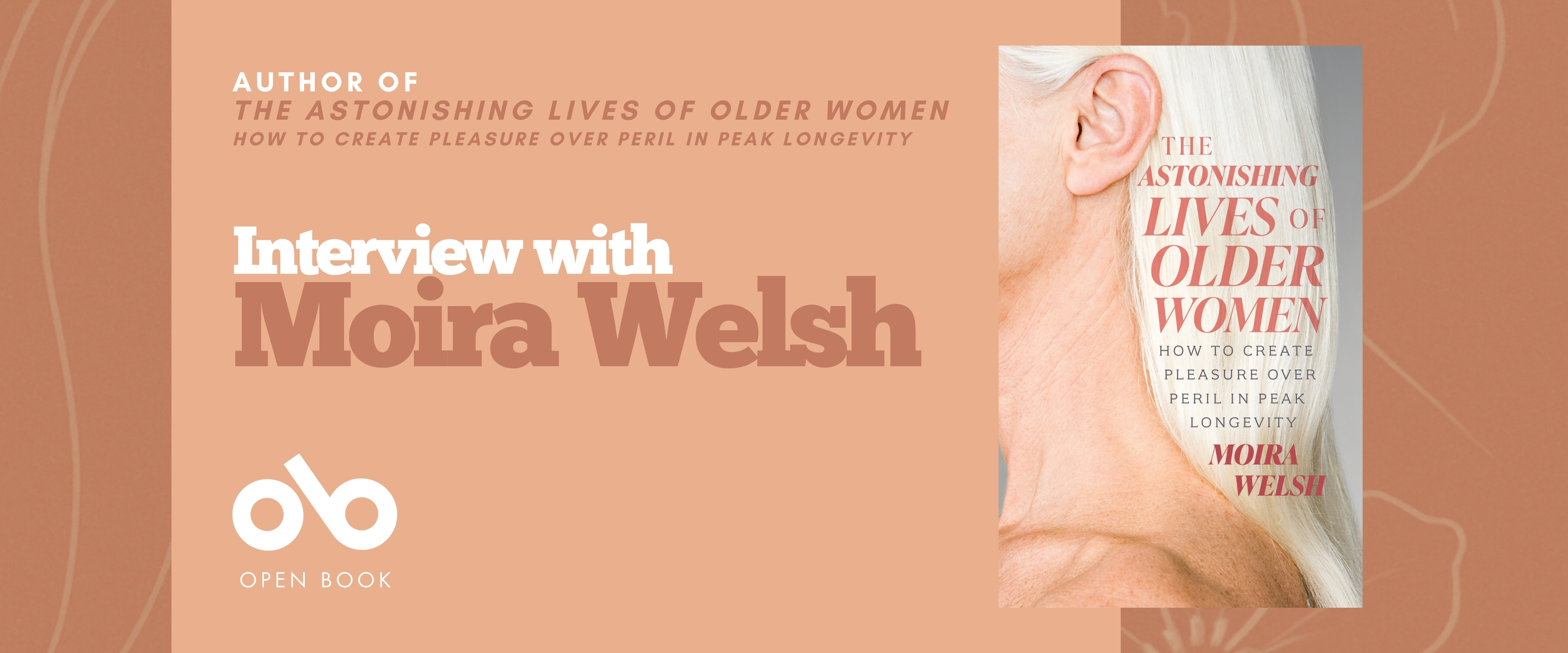
Growing older brings new freedoms, but also new pressures, especially when financial security is uncertain. The Astonishing Lives of Older Women (ECW Press) looks closely at what many women face later in life when, after years spent raising families, building careers, and supporting others, they often find themselves navigating aging on unstable ground.
Drawing on reporting by journalist and author Moira Welsh, the book brings together personal stories and expert insight to show how gaps in pay, pensions, and housing access shape women’s experiences over time. Distinct voices from a range of fields offer practical perspectives on how these systems work and how they might be challenged, while the women at the centre of the book speak candidly about resilience, reinvention, and the importance of independence.
Grounded and direct, The Astonishing Lives of Older Women keeps its focus on lived experience and the strength found in community and friendship. It's a must-read, and we were thrilled to dig deeper into the book in an interview with the author!
Check that out right here, and pre-order this title in advance of its release on April 7, 2026!
Open Book:
Tell us about your new book and how it came to be. What made you passionate about the subject matter you're exploring?
Moira Welsh:
The Astonishing Lives of Older Women began with a question about longevity and what it really means for women. We are living longer, and statistically, women tend to outlive men, but those extra years can come with serious financial uncertainty. The gender pension gap has existed for decades and remains largely unchanged.
I started by exploring this issue from a research perspective, but as I spoke to more people, the project shifted. The lives of three older women, each remarkable in different ways, became the foundation of the book. Their stories opened up a much broader conversation, one that also includes younger women making different choices around independence and relationships.
Like many writers, I worked on the book evenings and weekends while holding down a full-time job. Over time, I became deeply invested in it. At moments, it felt as though the book was unfolding on its own.
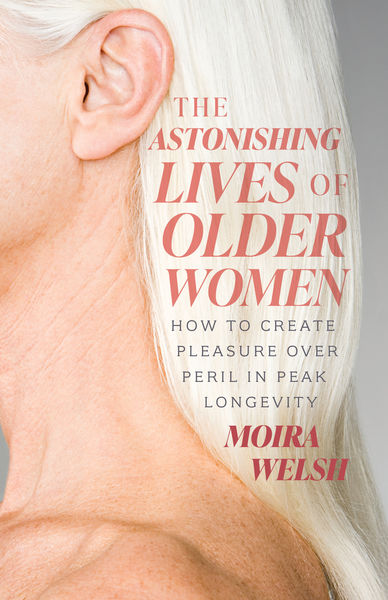
The Astonishing Lives of Older Women by Moira Welsh
OB:
What was your research process like for this book? Did you encounter anything unexpected?
Your CanLit News
Subscribe to Open Book’s newsletter to get local book events, literary content, writing tips, and more in your inbox
MW:
The research was extensive and, at times, frustrating. I examined workplace pensions, housing affordability, and poverty rates among older adults in Canada. One of the biggest challenges was how data is presented. Averages can obscure the reality for many women. When you look more closely, you see how often their experiences are hidden.
I spent a great deal of time trying to define what economic hardship looks like for older women today. Traditional measures do not always capture the realities of living on a fixed income in a time of rising housing and food costs.
Early on, I was told the gender pension gap would resolve itself with younger generations, but that is not guaranteed. The rise of gig work and the decline of stable, pensioned employment complicate that assumption. What began as a study of older women quickly became a cautionary look at the future as well.
OB:
What do you love about writing nonfiction? What are some of the strengths of the genre?
MW:
My background in journalism shapes how I approach nonfiction. I believe there is a kind of beauty in facts, especially when they are brought to life through storytelling. Nonfiction allows for deep research while also giving space to human experience.
It takes time to build trust with the people whose stories you are telling, but that trust allows for honesty. When it works, nonfiction can draw readers into someone else’s life in a way that is both accurate and deeply engaging. It is a delicate balance, but a rewarding one.
OB:
What do you need in order to write?
MW:
Years in a newsroom taught me to write almost anywhere. For this book, I often wrote at home, sitting by a large window on a sofa my children used when they were younger. I used to listen to music while writing, but for this project, I preferred quiet.
I also had some unexpected company. My “grand-puppy,” Reese, was often nearby and brought a kind of calm energy to the process.
OB:
What do you do if you're feeling discouraged during the writing process?
MW:
There were difficult stretches, especially when I ran into gaps in research. The lack of data on older women is part of the problem. If something is not measured, it is often overlooked.
When writing felt stuck, I stepped away. I went for fast walks, spent time with friends, even took boxing classes. But ultimately, I relied on a simple principle: treat writing like work. Put words on the page and revise later. Keep moving forward.
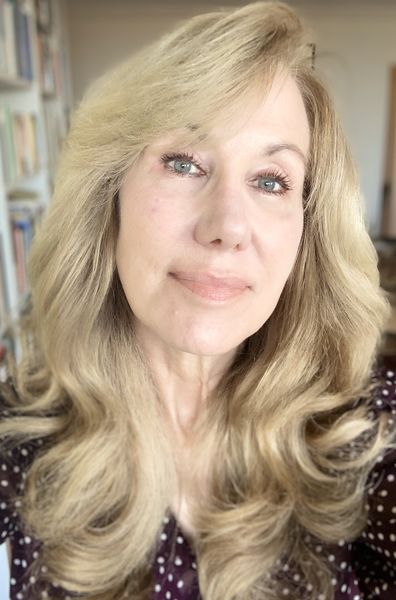
Moira Welsh
OB:
Do you remember the first moment you began to consider writing this book?
MW:
The idea came from a reader who contacted me after my first book. She suggested I write about older women who cannot afford to survive, and she was direct about it. There are many of us, she said, and no one is paying attention.
That stayed with me. Women who have spent their lives raising families, working, and caregiving often become invisible later in life, particularly if they lack financial security. That realization became the driving force behind the book.
OB:
What are you working on now?
MW:
I am taking a break from book writing and focusing on my work as a journalist. I am currently covering politics at the Toronto Star’s Queen’s Park bureau, which is housed in a striking historic building filled with marble floors and gargoyles. It is a very different pace, but one I am enjoying.
____________________________________
Moira Welsh is a political reporter at the Toronto Star’s Queen’s Park bureau and a former investigative reporter who, for decades, has written about the joys and vicissitudes of a long life. Welsh lives in Toronto and is the mother of two wonderful young men.