Blaine Thornton on Writing Survival, Healing, and Home in the New Poetry Collection, HERE'S TO LETTING GO
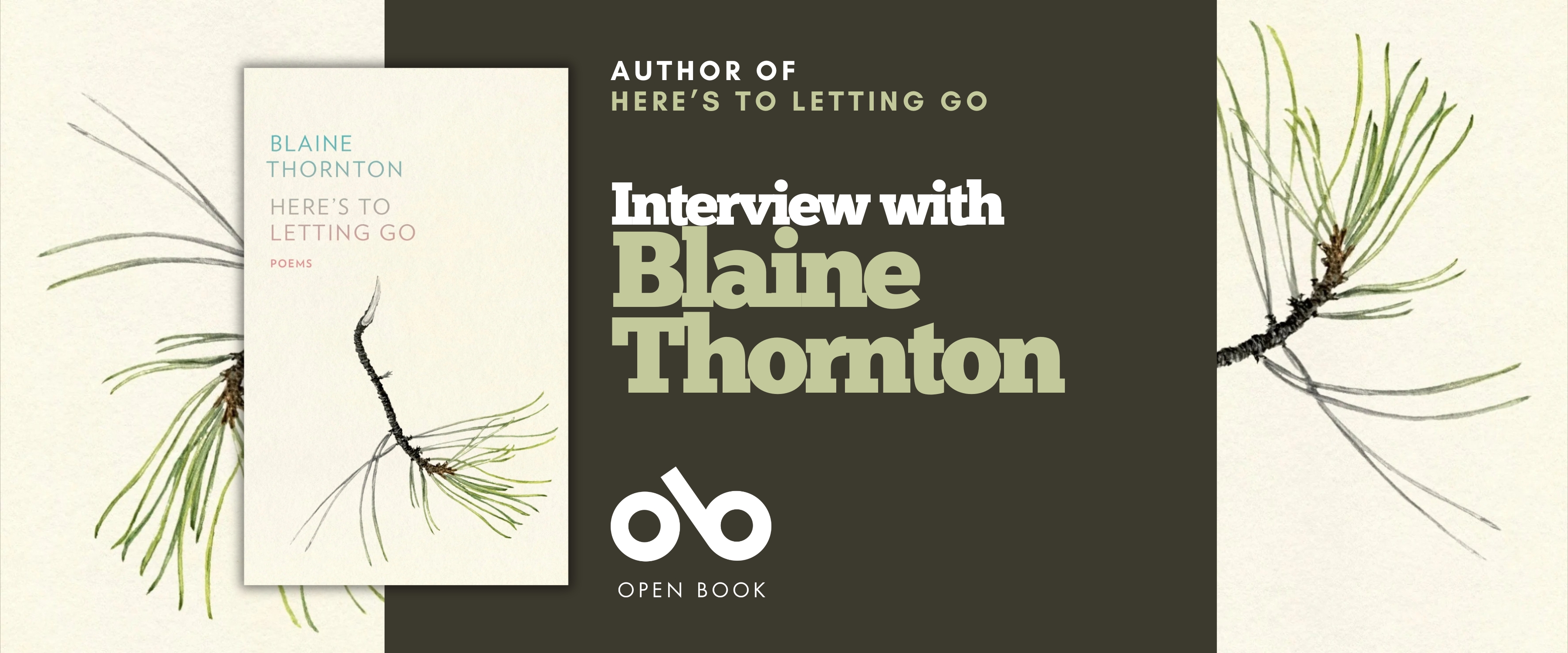
Here's to Letting Go by Blaine Thornton banner
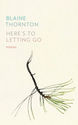
Finding safety is rarely a straight path. Here's to Letting Go (Latitude 46 Publishing) follows one young person's search for belonging through unstable housing, temporary shelters, and the quiet determination to keep moving forward, even when home never truly feels like it.
Blending memoir and poetry, the collection reflects on growing up as a trans, non-binary youth navigating homelessness, violence, and the difficult search for acceptance. The poems are intimate without being sentimental, capturing both the precariousness of surviving day to day and the resilience required to imagine a different future. Throughout, Blaine Thornton keeps the focus on lived experience, giving voice to stories that are too often unheard.
Today, we're speaking with Thornton about transforming personal history into poetry, writing with honesty about trauma and healing, and what they hope readers will take away from this deeply affecting debut collection.
Open Book:
Tell us about this collection and how it came to be.
Blaine Thornton:
My book has lived many lives.
It started as a thesis project, an accumulation of four years of work at OCAD University while studying creative writing. I put it all in chronological order, and filled the gaps with the story of first love. It was a love letter, a bleeding out, born new. The plan was to print the book myself and sell it at my thesis show.
This book has taught me that nothing ever goes according to plan. My life crumbled, I failed most of my classes, and I moved back to Sudbury. One week until my thesis was due and I still didn't have a happy ending, and so badly I wanted this book to have a happy ending. It didn't.
I'm in Sister's childhood bedroom when I get a text,
"Blaine do you have a moment to chat?
All good news..."
Your CanLit News
Subscribe to Open Book’s newsletter to get local book events, literary content, writing tips, and more in your inbox
Veins shoot lightning bolts through skin.
Program Chair tells me my thesis won the medal.
Electricity reanimates manuscript corpses. After all the tragedy, I find purpose. For the first time, in a long time, I am proud of myself.
Before publishing, this book lived as performances and installations. It was a safer way to tell my story. After I moved back home, I was able to find the end of the book.
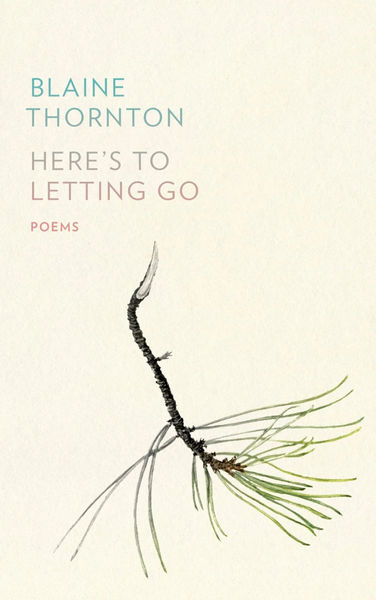
Here's to Letting Go by Blaine Thornton
OB:
What were you reading while writing this collection?
BT:
My Art Is Killing Me by Amber Dawn
Where the Words End and My Body Begins by Amber Dawn
Ontario foraging books
This Wound Is a World by Billy-Ray Belcourt
Ontario wildlife books
Travels with Lizbeth by Lars Eighner
Old and inaccurate encyclopedias
Fault Lines and Shatter Cones by Kim Fahner
Stone Butch Blues by Leslie Feinberg
Vesper Flights by Helen Macdonald
(and so so so many more)
OB:
What advice would you give to an emerging or aspiring poet?
BT:
When I first started writing this book, my program chair Catherine Black asked me, "Are you telling your own secrets or someone else's?" It has always stuck with me, and it's something I repeat to myself all the time now. Throughout the whole process I was always worrying about what my mom and sister would think of the book. I keep my mom's kindergarten photograph next to me when I write. This way, I am reminded that she too was just a child, getting her hair curled, dress ironed. My mom sat next to my sister at my book launch, they listened, cried together, and got me red roses and baby's breath. The people who love you will stand with you.
(Although, I do tell the secrets of evil people.)
OB:
Was there a question or questions that you were exploring, consciously from the beginning or unconsciously and which becoming clear to you later, in this collection?
BT:
From the beginning, I knew I was considering themes of love and home. Back then, I thought love was the answer to home. This collection started out as a love letter to my first love. I was writing the hard parts of my story, while also revealing moments where love could break through. Love has repeatedly let me down. Love is also the reason I can keep moving forward.
This poetry collection is also a memoir, it's a healing from the time I spent living outside as a trans body. How can I define home when it doesn't have a roof?
It wasn't until I finished writing the book that I understood what these words meant to me. I hope that people who read the book also find answers to what this means for them.
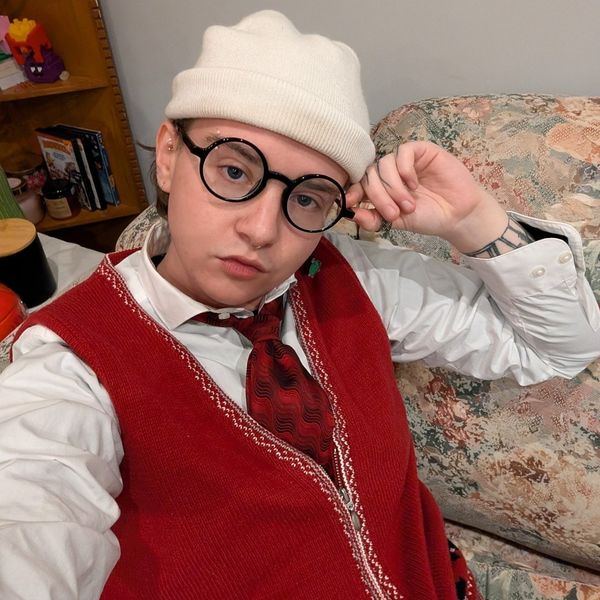
Blaine Thornton
OB:
For you, is form freedom or constraint in poetry?
BT:
For me, form has been a constraint. Throughout school I struggled with meter and rhyme. I like to be free on the page by blurring the lines between memoir and poetry. Even when I was competing in poetry slams, I couldn't stand to be confined to three minutes with a ten-second grace period. I flip from poems to essays frequently, leaving the traditional forms behind.
OB:
What are you working on next?
BT:
For the last year, I have been working with composer Petr Balaz on developing this collection into a performance. Petr plays his guitar, I play my typewriter, and we give the poems another life. I have always wanted to be in a band, and this is as close as I'll ever get given my lack of musical talent. Thanks to the support of the Ontario Arts Council, we were lucky enough to perform pieces during my book launch. I am so excited to continue to perform this book in ways that are surprising, honest, and vulnerable.
___________________________
Blaine Thornton is a non-binary community-based artist and founder of Mooncrater Theatre in Sudbury, Ontario, a graduate of Ontario College of Art & Design University, and the recipient of the 2023 Creative Writing Medal. They were the managing editor for the first edition of Pulse Literary Journal, and co-host of Friday Night on the Mic.Their work has been published in Pulse Literary Journal and A Thousand Tiny Awakenings (Latitude 46, 2025).