CANADA READS Mid-Week Roundup - Which Books Are Still in the Running?

Canada Reads is well underway, and this year’s competition brings together a strong and varied group of titles, each offering a distinct perspective on the theme of connection and understanding. Together, this year’s selections reflect a wide range of styles and subject matter, from intimate, reflective narratives to larger historical and speculative works.
Billy-Ray Belcourt’s A Minor Chorus follows a young academic who returns to northern Alberta, leaving behind an urban, intellectual life in search of something more grounded. The novel explores questions of identity, belonging, and the role of storytelling, particularly in relation to Indigenous experience and the complexities of speaking for oneself and one’s community.
Tyler Hellard’s Searching for Terry Punchout is set in the world of Maritime hockey and centres on a writer attempting to piece together the story of his estranged father, a former enforcer. Blending humour with more serious reflection, the novel examines masculinity, family legacy, and the ways people understand themselves through the stories they inherit and resist.
In The Cure for Drowning, Loghan Paylor presents a sweeping historical narrative that spans the years surrounding the Second World War. The novel focuses on trans and nonbinary characters whose lives and relationships challenge traditional historical narratives, offering a reimagined perspective on identity, love, and survival during a period of global upheaval.
Iain Reid’s Foe introduces a speculative element to the competition. Set in a near-future environment, the novel follows a couple whose lives are disrupted by a government program that raises unsettling questions about identity, autonomy, and human connection. As the story unfolds, it explores the emotional and ethical implications of technological intervention in personal relationships.
Rounding out the list, Joss Richard’s It’s Different This Time is a contemporary novel about two people reconnecting after a complicated shared past. As they navigate unresolved feelings and changing ambitions, the book considers themes of timing, personal growth, and the challenges of revisiting relationships shaped by earlier versions of themselves.
Here is a mid-week recap of some of the prominent points of debate, and the books that are still in the running to be the winner of Canada Reads 2026!

Canada Reads - Panelists Steve Glynn, Josh Dela Cruz, Tegan Quin, Elle-Máijá Tailfeathers, and Morgann Book
Day One of Canada Reads 2026 opened with a clear sense of purpose, as this year’s theme, “one book to build bridges,” shaped nearly every exchange between the panel. From the outset, the five defenders positioned their titles not just as compelling reads, but as tools for connection across difference, setting up a debate that quickly turned pointed.
Actor and filmmaker Elle-Máijá Tailfeathers led with a focus on identity and belonging, arguing that A Minor Chorus offers an intimate yet expansive look at community and disconnection. Musician Tegan Quin followed with a passionate defence of The Cure for Drowning, emphasizing its emotional intensity and the way it renders queer and trans experience with urgency and care.
YouTuber and hockey commentator Steve Glynn brought a more energetic, populist tone to the table, championing Searching for Terry Punchout as a book that speaks to overlooked communities and the complexities of masculinity. Actor Josh Dela Cruz highlighted the philosophical and unsettling qualities of Foe, framing it as a story that pushes readers to confront uncomfortable questions about relationships and humanity. Rounding out the panel, content creator Morgann Book argued that It’s Different This Time stands out for its accessibility and its ability to draw in readers who may not typically see themselves reflected in Canadian literature.
Your CanLit News
Subscribe to Open Book’s newsletter to get local book events, literary content, writing tips, and more in your inbox
Very quickly, the central tension of the day emerged around what it actually means to “build bridges.” Tailfeathers and Quin repeatedly emphasized empathy and lived experience, arguing that emotional and cultural specificity can open up deeper understanding. Glynn supported this idea from a different angle, pointing to relatability and voice as key to reaching readers who might otherwise feel excluded from literary conversations.
In contrast, Dela Cruz questioned whether accessibility alone should carry a book forward, returning several times to the importance of complexity and interpretive depth. Morgann Book pushed back against that framing, arguing that readability and broad appeal are not weaknesses, but strengths in a competition built around national reach.
As the discussion deepened, another distinction was made between literary ambition and reader connection. Quin and Tailfeathers leaned into the transformative potential of their books, stressing how they invite readers into unfamiliar perspectives. Glynn framed his pick as both entertaining and meaningful, suggesting that humour and voice can be powerful entry points into difficult conversations. Dela Cruz remained the most focused on form and idea, while Morgann Book consistently returned to the question of who gets included in the reading public.
By the time the panel moved toward elimination, the debate had zeroed in on urgency and impact. Foe was ultimately positioned by several panellists as the least aligned with the year’s bridge-building theme. While Dela Cruz made a thoughtful case for its intellectual depth, other defenders argued that it felt more insular than connective in the context of the competition.
Foe by Iain Reid was eliminated at the end of day one.
With that, four titles move forward, A Minor Chorus, Searching for Terry Punchout, The Cure for Drowning, and It’s Different This Time, all of which are strong contenders to make it deep in the competition.
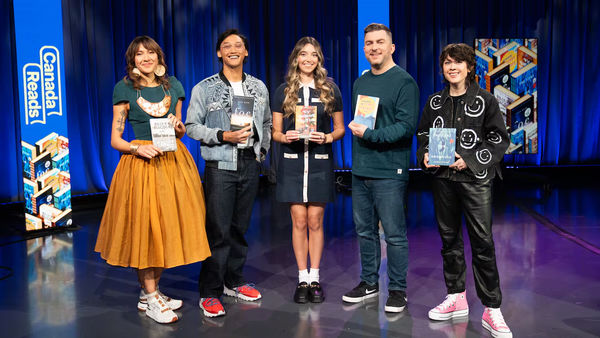
The 2026 Canada Reads contenders from left to right, Elle-Máijá Tailfeathers, Josh Dela Cruz, Morgann Book, Steve (Dangle) Glynn and Tegan Quin. (Joanna Roselli/CBC)
Day Two of Canada Reads 2026 felt like the moment the debate really snapped into focus. With Foe already out, there was less circling and more direct questioning, especially around what “building bridges” actually looks like in practice.
Elle-Máijá Tailfeathers started strong with a thoughtful, steady defence of A Minor Chorus, sticking to her core argument that quiet, introspective storytelling can create deep, lasting empathy. But that same quality kept getting challenged. Other panellists circled back to the idea that the book might be harder to access for a broad audience, and whether that limits its ability to really reach across divides.
Tegan Quin, meanwhile, stayed locked in on The Cure for Drowning as a book that urgently needs to be read now. She kept the focus on representation and emotional impact, and didn’t back down when the conversation turned to accessibility, arguing that connection starts with whose stories are being told.
Steve Glynn came with a bit more bite on day two, continuing to champion Searching for Terry Punchout as the book most likely to pull in readers who don’t usually see themselves as “readers” at all. He repeatedly pushed the panel on whether a slower, more internal novel can really build bridges if people don’t make it all the way through.
Morgann Book kept her focus on accessibility with It’s Different This Time, but the pressure definitely ramped up. She held the line that readability and broad appeal matter, especially in a national conversation like this, even as others questioned whether that was enough.
The main sticking point of the day was the idea of depth versus reach. Tailfeathers argued for the kind of connection that builds slowly and sticks with you. Glynn and, at times, Morgann Book pushed for immediacy and engagement. Quin cut through that a bit by returning to representation, framing the question less as how a book reads and more as who it’s for.
By the time the vote came around, A Minor Chorus had suffered the most sustained criticism. There was a great deal of respect for the novel around the table, but it was ultimately framed as the book least likely to connect quickly and widely with readers across the country.
A Minor Chorus by Billy Ray Belcourt was eliminated at the end of day two.
That leaves The Cure for Drowning, Searching for Terry Punchout, and It’s Different This Time heading into day three, with the lines between them now much more clearly drawn.
Join us at the end of the week for a rundown of the rest of the competition, and all of the news about the titles and book champions that battled right down to the final literary wire.
_________________________________________
About CBC's Canada Reads:
Five books, five champions, one winner: Canada Reads has been getting people listening, watching and, of course, reading, for more than two decades. Each day of the competition, one book will be eliminated until a winner is declared the must-read book for Canadians.
Canada Reads finds new ways each year to raise awareness for a range of Canadian books and authors, and has influenced the way Canadians talk about and consume books. For the past ten years, every Canada Reads finalist has appeared on the Canadian bestseller lists following the announcement of the shortlist, and many titles have spent months on these lists.
The first winner of Canada Reads in 2002 was In the Skin of a Lion by Michael Ondaatje, championed by musician Steven Page.
Past panellists include the winningest Canadian contestant in the history of Jeopardy! and the host of CBC’s Bookends, Mattea Roach; athletes Olympian Clara Hughes and wrestler Adam Copeland; and actors such as Paul Sun-Hyung Lee and Devery Jacobs.
The great Canadian book debate first aired as a radio show in 2002. Today, Canada Reads is available on CBC Radio, CBC TV, CBC Gem, CBCbooks.ca, CBC Listen and YouTube.
CBCbooks.ca has all the latest on Canada Reads, or follow @CBCbooks on TikTok and Instagram using the hashtag #CanadaReads.