Dani Netherclift Tries to Capture the Shape of Absent Bodies in VESSEL
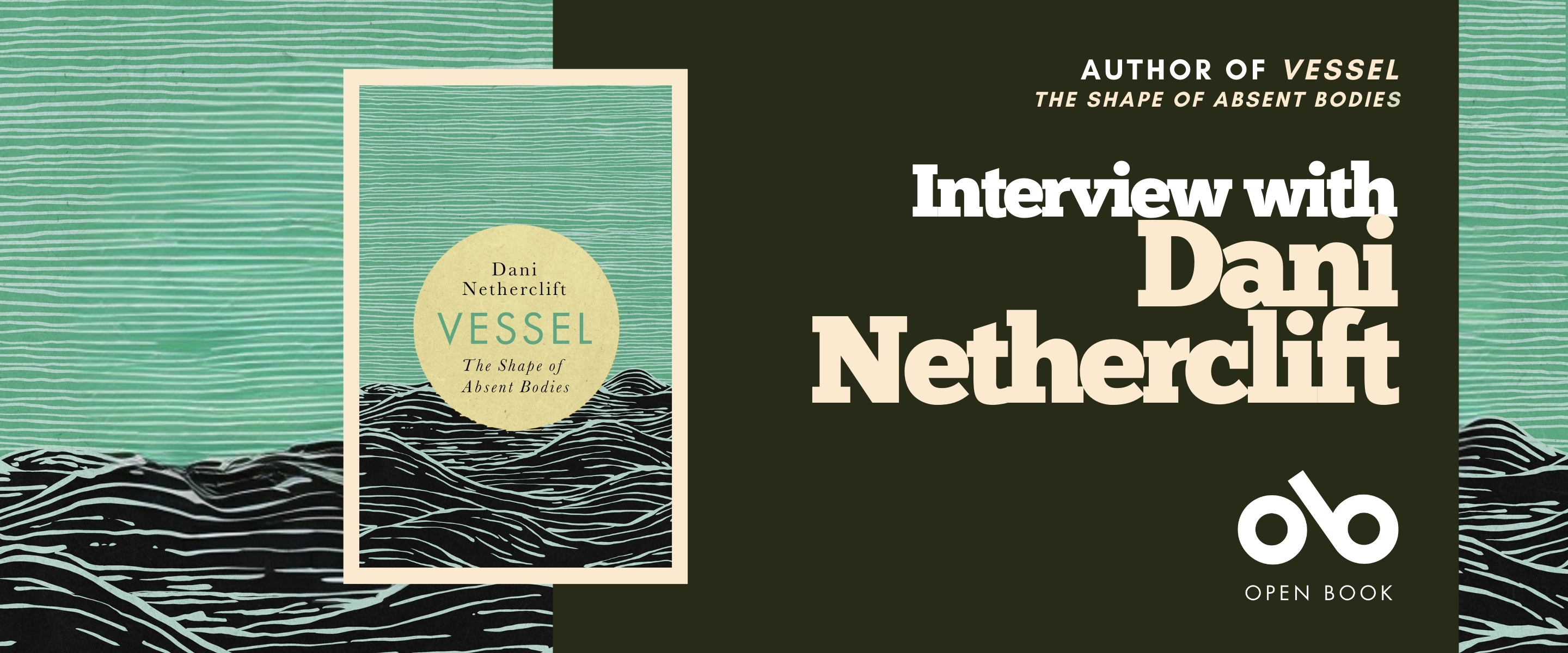
Our featured title today, Vessel: The Shape of Absent Bodies (Assembly Press), is a unique, genre-bending work of memoir, literature, history, and translation by a very exciting author who writes from the heart, and from her own personal experiences.
Drawing from the death of her father and brother in rural Australia, Dani Netherclift explores what it means to live with disappearance rather than proof. She considers how imagined endings become a way of surviving, and how language itself begins to carry the weight of what is gone. Patient and fearless, Vessel is a quiet, powerful meditation on mourning, embodiment, and the fragile human need to say goodbye.
This searching, lyrical memoir circles the experience of loss and the questions it leaves behind. Through myriad forms, it reflects on how death is understood when bodies are absent and grief has no clear ending. The writing returns again and again to the spaces where certainty dissolves, where memory fills what cannot be seen.
We we're thrilled to dig deeper into this fascinating new work in this True Story Memoir interview with the author!
Open Book:
Tell us about your new book and how it came to be. What made you passionate about the subject matter you’re exploring?
Dani Netherclift:
My book, Vessel: The Shape of Absent Bodies, began as what’s called the creative artifact of a creative arts PhD. The research—or thesis—question was about form: how one might go about writing a book-length, chapter-less lyric essay. Inherent in that research, though, was a subset of subject matter about how we grapple with the idea of writing about the dead body.
More than that, I was thinking about how we might use writing to assimilate how we deal with the bodies of our loved ones as they metamorphose from a state of presence to one of absence. I witnessed the drowning deaths of my father and brother when I was eighteen years old, and it took a very long time for me to work out how to write about the fact that I saw their living bodies disappear and then simply never saw them again. Vessel was an exploration in making meaning of that disappearance.
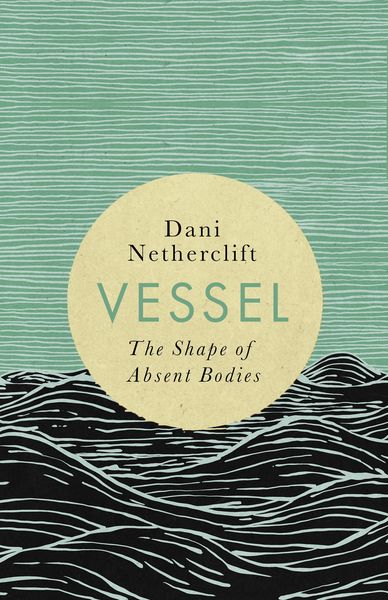
Vessel: The Shape of Absent Bodies by Dani Netherclift
OB:
Is there a question that is central to your book? And if so, is it the same question you were thinking about when you started writing, or did it change during the writing process?
DN:
Because the lyric essay as a form delves into unfinishedness, non-linearity, and fragmentation—and, as Deborah Tall and John D’Agata put it in their seminal essay in The Seneca Review, forsakes the “art of persuasion in favor of idiosyncratic meditation”—I didn’t come to Vessel with a fixed idea or question.
Your CanLit News
Subscribe to Open Book’s newsletter to get local book events, literary content, writing tips, and more in your inbox
In the very first draft, I composed all the fragmented pieces of writing—vignettes, if you will—on separate pages. When I’d written about five thousand words, I printed them out and placed them into loosely thematic piles. That process revealed that the largest theme in the work was the mysteriousness and opacity of the dead body.
OB:
What was your research process like for this book? Did you encounter anything unexpected while you were researching?
DN:
Because this book was written as part of a PhD, there was a great deal of research involved, and many rabbit holes explored. I read everything I could find on the lyric essay, but the other side of the research focused on how writers, poets, artists, historians, and anthropologists have written about the body, and about how bodies form their own stories. It was a tremendous gift to have the time to read so deeply and widely.
Something unexpected that arose during the writing of Vessel was that my mother let me go through my late brother’s personal possessions. Coincidentally, I had already been writing and thinking about this very subject in the manuscript. I found journals my brother had written when he was the same age I was—eighteen—when I saw him drown. In them, he was so alive, revived in a way, and this discovery ended up forming a kind of natural resolution to what I had been meditating on through the writing.
OB:
A lot of nonfiction prizes and anthologies have expanded to welcome more personal nonfiction as well as strictly research-based nonfiction. What do you think of this shift within the genre?
DN:
It’s great from my point of view. My favourite writers are women around my own age or older who write in different ways about their lives and what it is like to live them—writers like Anne Carson, Deborah Levy, Helen Garner, Olivia Laing, Kate Zambreno, Sarah Manguso, Annie Ernaux, and others.
I can’t get enough of women writing about the significance of female lives, and about how they think through writing—moving between the quotidian details of daily life and the larger themes of art, history, politics, and feminism. This practice of constantly observing the world, taking it in, and turning to the page with that as one’s research material feels vital to me.
OB:
What does the term creative nonfiction mean to you?
DN:
This was something I explored in my thesis, particularly in thinking about the lyric essay as distinct from the broader umbrella of creative nonfiction. I was interested in writing within a specific set of conventions—using white space as a way of “writing” what is unspeakable or unknowable, for instance, and embracing the genre’s meandering nature.
Another aspect of the lyric essay that appealed to me is the way it can emulate how memory works: imperfectly, non-linearly, and in small vignettes that spark associations and lead elsewhere. I couldn’t have written this book as a traditional memoir—my sister had already done that twenty years earlier. It took these genre conventions to give me a framework for getting the words onto the page.
For me, creative nonfiction quite literally means being creative and experimental with nonfiction. It’s a tree with many branches, including the limb of the lyric essay, and I find it useful to sometimes name those branches more precisely so we can better describe what we’re writing, reading, and thinking about.
OB:
Did you write this book in the order it appears for readers? If not, how did it come together during the writing process?
DN:
For the most part, I wrote Vessel in the same order it appears for readers, though there was some swapping of sections during revision and editing. When I write, I keep a section of composition notes at the end of the manuscript where I place ideas or fully formed fragments that don’t yet have a home. I constantly reread these notes so I’m familiar with what I have, or I print them out so that while writing another section I’ll suddenly think, “That note would follow beautifully from this.”
The act of mosaicking the fragments together so they work seamlessly as a whole is one of the most satisfying parts of this kind of writing.
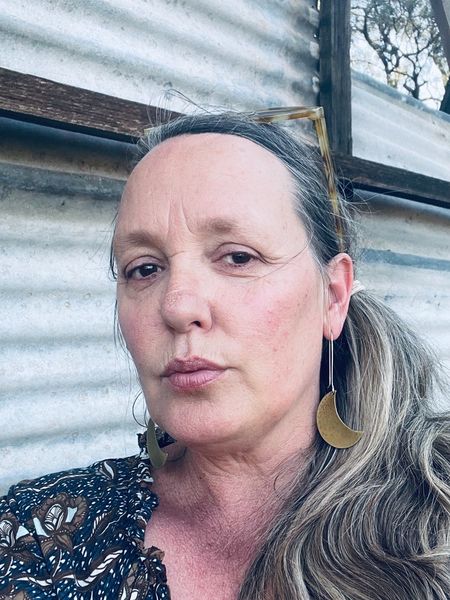
Dani Netherclift
OB:
What defines a great work of nonfiction, in your opinion?
DN:
For me, great nonfiction illuminates new ways of thinking about a topic. I loved Carol Mavor’s Serendipity: The Afterlife of an Object and the way it moves through objects via art, archive, culture, philosophy, theory, and Mavor’s own experiences. She uses image and poetic language in a way that really resonates with me.
Anne Carson’s Nox is another work of creative nonfiction I admire deeply. Every time I read it, I find something new, and I love introducing it to readers unfamiliar with Carson. Wrong Norma is another of her books that I find extraordinary. The best nonfiction always inspires me to return to the page myself—I wrote an essay in 2025 about Serendipity, and there’s a chapter on Nox in my thesis.
OB:
What are you working on now?
DN:
I lost my mother in the middle of 2025. I had known, in theory, that it was coming, but not suddenly—without a long period of decline. When I traveled to Europe in early 2024 after submitting my PhD, my mother said, “I hope I don’t die while you’re away,” and that sent me into freefall. It made the reality of it unavoidable.
I thought about Roland Barthes’s Mourning Diary—the fragments he wrote after his mother died—and decided to write something like a mourning before the fact. In this new work, I reflect on Barthes’s book, on anticipatory grief, and on how we read daily about escalating climate change while reassuring ourselves that “mother earth” could never falter.
Returning to this manuscript now, after my mother’s death, has been immensely comforting. I revisit a time before she died. This is something AI can’t approach: the knowledge of loss, and the ways reading and writing can help assuage it. That feels profoundly and irreducibly human.
______________________________________
Dani Netherclift is a poet and essayist living and writing on unceded Taungurung Country in Australia. Dani has a PhD in Creative Writing with a specialization in the elegiac lyric essay. Her shorter essays and poems have been widely published in Australia in literary journals and anthologies. She has won or been otherwise commended in multiple writing competitions. Visit her online at dani.netherclift.com.au.