Dustin Galer Investigates Responsibility, Disability, and the Human Cost of Systemic Failure in BLAME
The death of one man becomes the starting point of a much larger investigation in Blame: Death, Disability, and the Search for Justice for Guy Mitchell (ECW Press), a work of narrative nonfiction that investigates exactly how a system meant to protect vulnerable people can fail so completely.
When 38-year-old Guy Mitchell died in 2012, the circumstances surrounding his death shocked investigators. As acclaimed author Dustin Galer traces the events leading up to that day, he explores a network of caregivers, agencies, and oversight bodies where warning signs were missed, accountability was blurred, and opportunities to intervene slipped away. Drawing on extensive research, and the voices of those closest to Guy, the book reconstructs not only what happened, but how it was allowed to happen.
Part investigative account, part social history, Blame examines the difficult questions raised by Guy Mitchell's story while exploring broader issues involving disability, caregiving, and public responsibility. It is a deeply reported and compassionate work that challenges readers to consider where accountability begins, and who bears the responsibility for society's most vulnerable.
Today on Open Book, we interview the author about this fascinating work of nonfiction!
Open Book:
How did your memoir project first start? Why was this the right time to tell your story?
Dustin Galer:
Blame began with a story that wouldn't let go of me. At first glance, it appeared to be the tragic death of a man with developmental disabilities under circumstances that raised difficult questions. But the deeper I dug, the more I realized it was really a story about much more than a single event.
What fascinated me was that everyone involved seemed to have a different explanation for what happened. Family members, caregivers, professionals, administrators, and government officials all viewed the story through different lenses. As a historian, I'm naturally drawn to questions that don't have simple answers, and this was one of them.
I became interested not only in what happened to Guy Mitchell, but in what his story revealed about disability, caregiving, public policy, and the ways institutions shape people's lives. Once I started researching, it became clear to me there was a much larger story to be told.
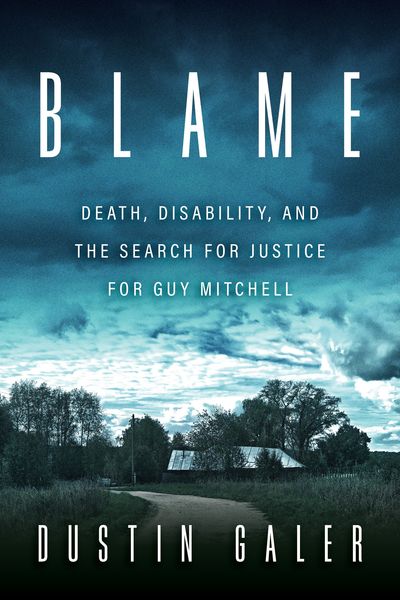
Blame: Death, Disability, and the Search for Justice for Guy Mitchell
OB:
Is there a question that was central to this project? And if so, did you know the question when you started writing or did it emerge from the process?
Your CanLit News
Subscribe to Open Book’s newsletter to get local book events, literary content, writing tips, and more in your inbox
DG:
Blame asks readers to consider: when something goes terribly wrong, who is responsible?
Most people want a clear answer. We want to identify a single person, decision, or failure that explains everything. What I discovered was far more complicated. Responsibility can be shared across individuals, organizations, systems, and even societal attitudes.
The book explores accountability, but it's also about vulnerability, care, and the gap between what society promises and what it delivers. It's a story about how good intentions can collide with imperfect systems and how the consequences of those failures are often borne by the people least able to protect themselves.
OB:
Did you use any materials, documents, interviews, or other research that became part of the writing process?
DG:
As a historian, I wanted to reconstruct events as accurately as possible and place them within their broader social and historical context.
I reviewed thousands of pages of records, including coroner's inquest materials, government reports, court documents, newspaper archives, organizational records, and historical sources. I also conducted extensive interviews with people connected to the story.
One of the most challenging aspects was dealing with conflicting accounts. People remember events differently, especially when those events are emotionally charged. Rather than searching for a single definitive perspective, I tried to understand why different people interpreted events the way they did.
That process ultimately helped me build a fuller picture not only of what happened, but of the world in which it happened.
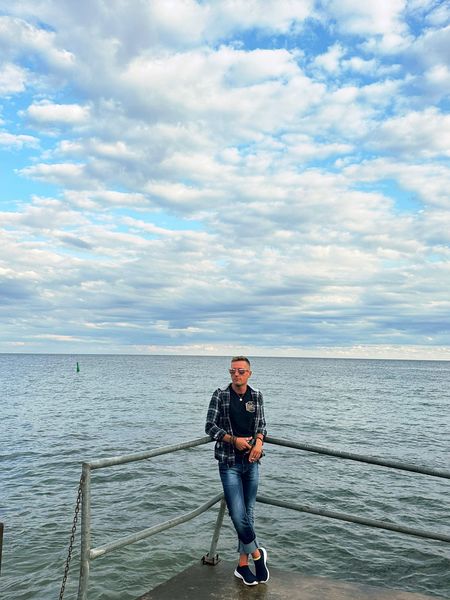
Dustin Galer (Photo by Manav Saini)
OB:
When you're reading memoirs, what stands out to you and makes a really great book? Were there any published memoirs you found inspiring structurally or otherwise while working on yours?
DG:
The structure evolved considerably over time.
My earliest attempts were much more straightforward and chronological, but I eventually realized that approach wasn't capturing the complexity of the story. The challenge was finding a way to tell an intensely personal story while also exploring the broader systems surrounding it.
Eventually, I stopped thinking of the book as a simple narrative and started thinking of it as an investigation. Each chapter introduces readers to different people, institutions, and perspectives that shaped Guy's life and ultimately influenced the events surrounding his death.
The result is a story that gradually expands outward—from one individual and one family to much larger questions about disability services, public policy, and accountability.
A great nonfiction book teaches you something, moves you emotionally, and lingers long after you've finished it. Accuracy and research are essential, but what elevates it is empathy—letting you see the world through someone else's eyes and understand lives you'll never live yourself.
The best nonfiction also doesn't shy away from complexity. It resists easy answers, avoids clean moral lines, and trusts the reader to sit with ambiguity and think deeply about difficult questions.
_________________________________
Dustin Galer is an award-winning writer, biographer, and historian known for his writing on disability history and labor. He has his doctorate in history from the University of Toronto and is the author of Beryl: The Making of a Disability Activist and Working Towards Equity: Disability Rights Activism and Employment in Late Twentieth-Century Canada. He lives in Hamilton, ON.