Highly Acclaimed Poet Derek Beaulieu Passionately Explores His Craft, and Implores Other Scribes to DO IT WRONG
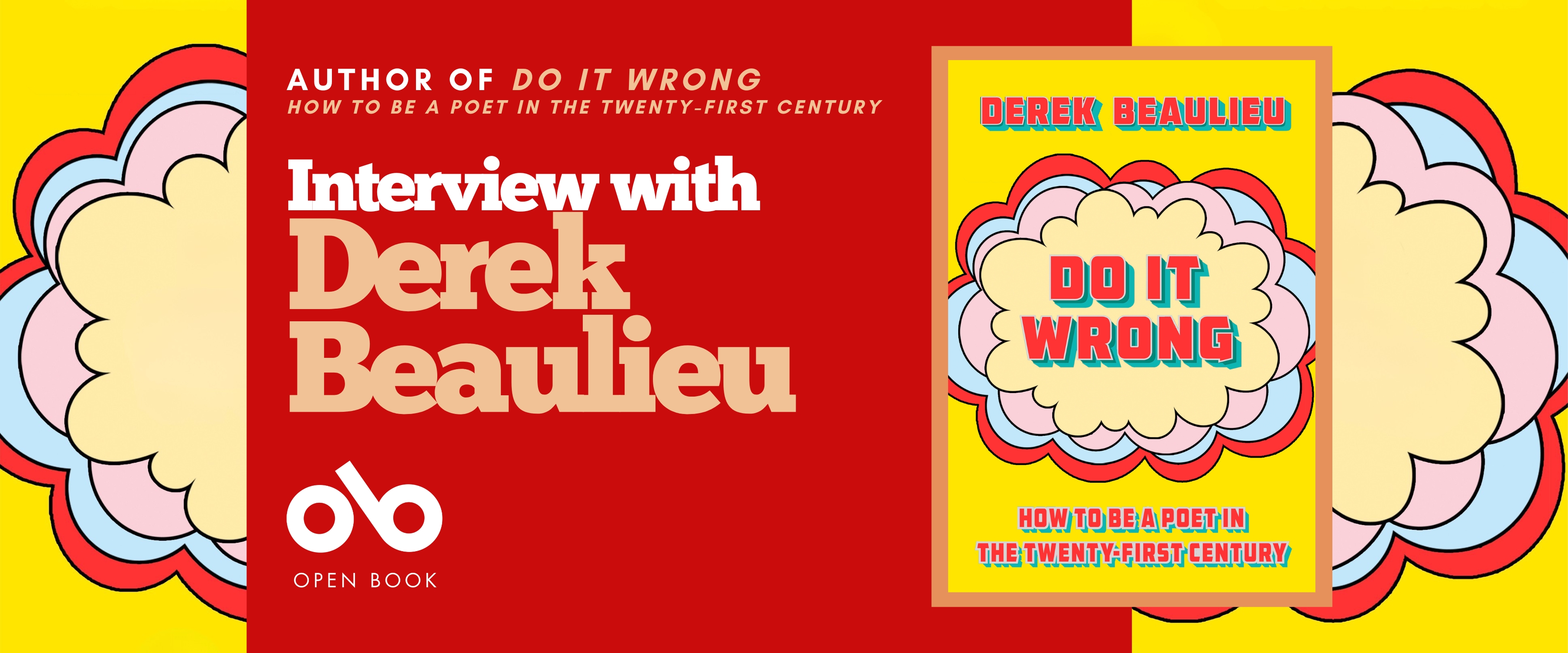
Poetry handbooks often focus on rules, technique, and best practices. Do It Wrong: How to Be a Poet in the Twenty-First Century (Assembly Press) starts from a different place, asking what happens when you ignore the usual advice and forge your own lyrical path.
Drawing on two decades of teaching, acclaimed author Derek Beaulieu offers a series of short essays, provocations, and creative challenges aimed at writers who feel stuck, constrained, or simply curious about other ways of working. Rather than presenting poetry as a craft to be mastered through formulas, he passionately goes to bat for experimentation, risk-taking, and the willingness to follow unexpected ideas wherever they lead.
Playful, practical, and occasionally mischievous, Do It Wrong is as much about community as it is about writing. Beaulieu shows the reader that creativity thrives when assumptions are questioned and when writers give themselves permission to make strange choices. This enlightening tome implores us to rethink not only how poems are written, but also how they are taught, shared, and discussed
Check out our interview with Derek! Right here on OB:
Open Book:
In your eyes, what impact does poetry have on the world?
Derek Beaulieu:
Poetry, like other art forms, is an opportunity to express not only our own point of view, our experiences, and our thinking, but also to draw people together, to ask questions, to provoke and be provoked, all in service of making something larger than ourselves. With the political situations being what they are, I think that any chance we have to talk to each other with care and passion, with engagement and excitement, is a good thing.
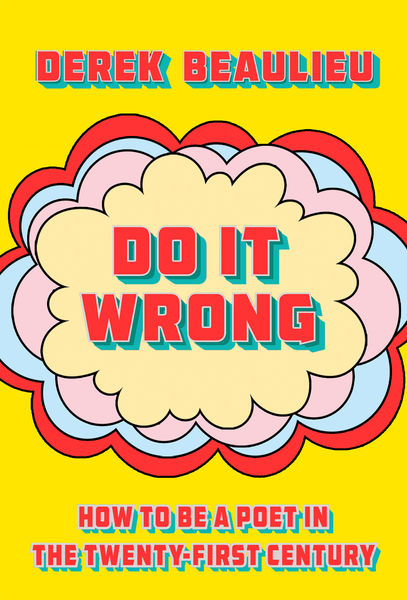
Do It Wrong: How to Be a Poet In the Twenty-First Century by Derek Beaulieu
OB:
What role do you think poetry plays as a reflection of the world or the societies that we live in?
DB:
Poetry, like other art forms, is constantly evolving and growing; as Walt Whitman said, it is “large and contains multitudes.”
OB:
Are there any new poetic forms that have inspired you in recent years?
Your CanLit News
Subscribe to Open Book’s newsletter to get local book events, literary content, writing tips, and more in your inbox
DB:
Poetry, like other art forms, has splinters and factions—specific cadres of writers who assert passions for particular topics and forms. I am fascinated by the fibre and found-material work of poets like Astra Papachristodoulou, who include weaving, sewing, and craft in their poetry. I think that science-based work like that of Adam Dickinson and Christian Bök offers new ways of understanding the natural world that stretch beyond eco-poetic discourse. I’m also inspired by the lyrical perspectives of J.R. Carpenter, Karen Solie, and Vidyan Ravinthiran; the playful explorations of Gregory Betts, Susan Holbrook, and Holly Melgard; and the visual poetics of Douglas Kearney, Kevin Stebner, and Cia Rinne.
As a writer, each of these poets—and many more—offers challenges and “what ifs?” For me, the best poems ask questions, offer opportunities for growth, and challenge what we thought the limitations of our poetic definitions were.
OB:
How has your poetry developed or evolved from work to work?
DB:
Each time I publish a book, it’s my attempt to reach out and ask questions: “Is this a poem? Why not?” “What could come next?” “What do you see that I’ve missed?”
I hope that each book provokes both the reader and me to continuously redefine what a poem could be when let loose from current definitions, when it’s freed to become something I couldn’t predict. If, as Margaret Avison said, “the best response to a poem is another poem,” then I hope each book asks both the reader and me to make something new in response.
I’ve worked through textual writing, fiction, frottage, photocopy degeneration, dry-transfer lettering, printmaking, erasure, collaboration, found and collaged writing, concrete and visual poetry, and haiku—all as a means of keeping myself surprised.
OB:
What part of the creative process in writing poetry is most important to you?
DB:
The most important thing for me—what I try to do as a poet—is to push my own expectations. I strive to make work that I haven’t made before, question my own definitions of success, and create work that leaves me wondering, leaves me wanting to talk to other people and hear their perspectives.
The time it takes is the time it takes, but I do find that questions and thoughts occur throughout the day and night, so I always have a notebook with me for ideas to follow up on, books to read, and questions to ask.
OB: Is the world of poetry more exciting now than it has been in the past? In what ways?
DB:
I don’t think it’s more exciting than it has been in the past. Rather, I think poetry has always changed, evolved, and reflected its readership in a cracked and warped mirror. Often, the voices from years ago that were doing the most challenging, strange, and genre-pushing work have faded from prominence. I would encourage people to look up writers such as David Melnick, John Riddell, N.H. Pritchard, Judith Copithorne, and Roy Kiyooka.
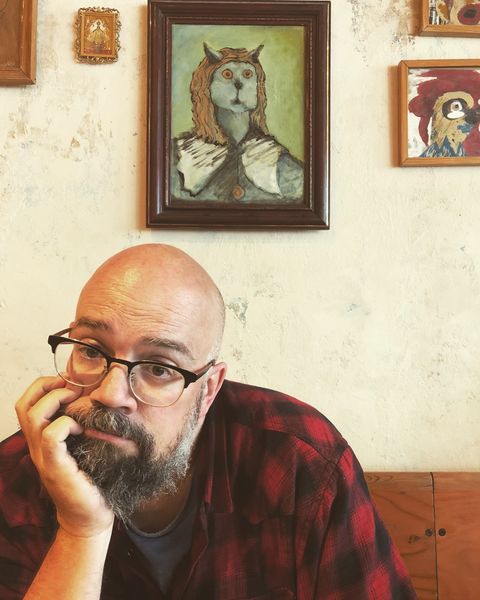
Derek Beaulieu (Photo by Kristen Beaulieu)JPG
OB:
What new voices excite you at the moment, whether in Canada or beyond our borders?
DB:
Within Canada, I am excited and enthralled by writers like Lorna Goodison, Nasser Hussain, Helen Hajnoczky, Kevin Stebner, and Kyle Flemmer. Internationally, I wholeheartedly endorse Eric Sneathen, Steven Elly, Vik Shirley, Holly Pester, Astra Papachristodoulou, Sam Winston, Briony Hughes, Frederic Forte, and Tonya Foster. Some of these writers may not be “new,” but they are new-ish in Canadian conversations.
And there are so many strange and wonderful authors working in fiction as well. I’d encourage readers to look up Isabel Waidner, Paul Griffiths, Aaron Tucker, Kate Briggs, Benjamin Labatut, and Oli Hazzard.
OB:
What are you working on now, and how would you like it to challenge and affect readers?
DB:
I am very excited to be launching Do It Wrong: How to Be a Poet in the 21st Century this spring with the fine folks at Assembly Press. Do It Wrong is a series of short essays and statements that endorse poetic exploration, dispute measuring poetic success through money, question benchmarks in our classrooms and discourses of grades and awards, and argue on behalf of poetic community.
Poetry can be bigger, weirder, more fun, and more supportive if poets adjust our thinking and stop seeing each other as competition. I’ve been teaching for almost twenty years, and I’ve spent much longer than that in classrooms, and Do It Wrong proposes a new classroom and a new community dynamic—one that foregrounds collaboration and mutual support.
As Jack Spicer wrote, “Poems should echo and re-echo against each other. They should create resonances. They cannot live alone any more than we can.”
______________________________________
Derek Beaulieu is the author/editor of over twenty-five collections of poetry, prose, and criticism. His most recent volume of fiction, Silence: Lectures and Writings, was published by Sweden’s Timglaset Editions, his most recent volume of poetry, Surface Tension, was published by Toronto’s Coach House Books. Beaulieu has received the Queen Elizabeth II Platinum Jubilee Medal for his dedication to Albertan literature. He is the only graduate from the University of Calgary’s Department of English to receive the Faculty of Arts ‘Celebrated Alumni Award’ and the only graduate in creative writing to receive Roehampton University’s Chancellor’s Alumni Award. Beaulieu has served as Poet Laureate of both Calgary and Banff and is the Director of Literary Arts at Banff Centre for Arts and Creativity.