Ink & Imagination – Open Book Author & Illustrator Dialogues with Lisa Frenette & August Swinson
in the vibrant and wonderful debut picture book from Lisa Frenette and illustrator August Swinson, a feather sets off on an unexpected journey after a sudden gust sweeps it from the wings of a soaring red-tailed hawk. It drifts from a squirrel’s nest to a woman’s hat to the top of a sandcastle, searching for a place that feels just right. Each stop along the way highlighted with a burst of colour and curiosity for young readers.
The Wandering Feather (Owlkids) brings warmth and light to a story about finding the place you truly belong. The feather’s eventual discovery and inclusion in a child’s dreamcatcher is both tender and meaningful, and shows a heartwarming measure of respect to an important Indigenous cultural object. Bright, expressive illustrations from Swinson help turn this simple quest into a captivating experience for young readers.
We've got a brand new Ink & Imagination interview with both of the creators of this exciting book, in which they ask each other questions about the writing and artistic process, and how their new work came to be. Check it out here!
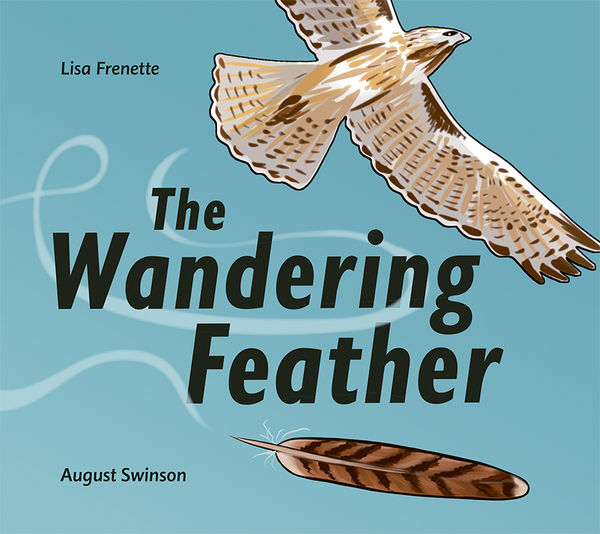
The Wandering Feather by Lisa Frenette (Illustrated by August Swinson)
Ink & Imagination – Open Book Author & Illustrator Dialogues
Illustrator to Author
August Swinson:
A story like this has many possible directions it could go. The situations the feather gets in, the characters it meets. Did you have options that you ultimately had to scrap in finishing the story?
Lisa Frenette:
When I first started writing, I wasn’t sure exactly where the feather would go or end up. All I had was this little idea in my head and I ran with it. As I wrote, the ideas just seemed to flow. I imagined so many possible places for the feather to travel, but ultimately I narrowed it down to three — the nest, the woman’s hat, and the sandcastle — to stay true to the “rule of threes” common in picture books.
AS:
There is a Mi'kmaw cultural element to your story. What would you like young Mi'kmaw readers to get out of this, and what would you like young non Native readers to learn?
LF:
My hope is that young Mi’kmaw readers see themselves in the young Mi’kmaw girl — someone loving, caring, and aware of the value and importance in everything around her. For all readers, I hope they remember that they are unique and special, and that even if they don’t feel like they fit in, there are always people who will love them exactly as they are.
AS:
Do you have a story you are currently working on, and do you see this becoming a series?
LF:
I have a few ideas bouncing around in my mind for my next story. I think The Wandering Feather will remain a standalone, but my next project will definitely incorporate Indigenous elements. I can’t wait to share it.
AS:
Was it difficult to let your story go and have someone else visually represent your ideas?
Your CanLit News
Subscribe to Open Book’s newsletter to get local book events, literary content, writing tips, and more in your inbox
LF:
I was actually very excited to see the story transform from words on a page into beautiful illustrations. I’m thrilled with how it turned out — it’s even better than I imagined.

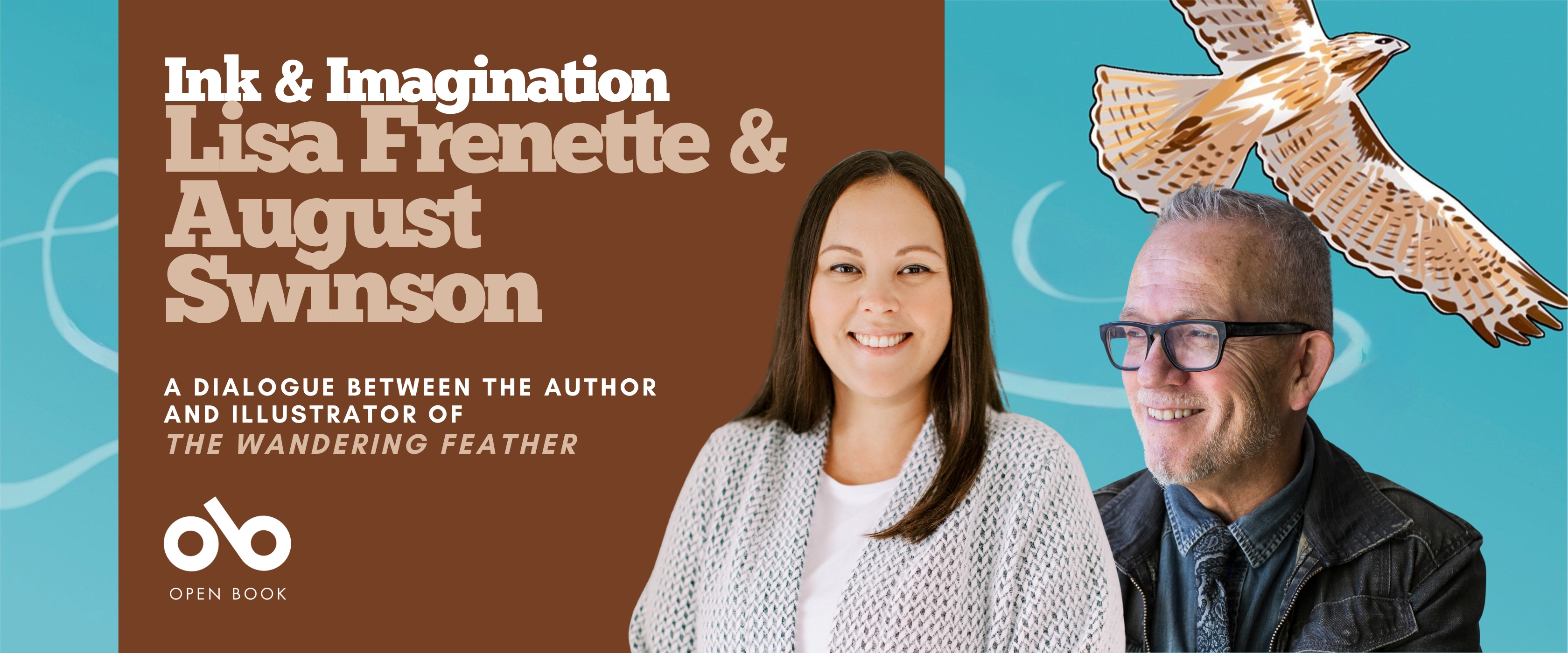
Lisa Frenette and August Swinson, author and illustrator of The Wandering Feather
Author to Illustrator:
Lisa Frenette:
When you first read the story, which moment immediately came alive for you in pictures?
August Swinson:
The very first page grabbed me. Being able to draw nature, in my own way, is the best feeling. Depicting nature feels very natural and at ease for me.
LF:
Which character kept you sketching the longest to get just right, and why?
AS:
That would be the young girl. Even though the main character is the feather, she’s the human presence readers will connect with. I wanted to get her just right.
LF:
How did you land on the book’s overall look — the style and the colour choices?
AS:
I’ve been told I have a recognizable illustration style, and this book definitely looks like my work. The look emerged naturally. For colour, I lean toward realistic tones — blue skies, green trees and grass, bright colours for a young girl’s bedroom. The beach scene was especially fun; I tried to convey a darker mood as the feather gets soaked along with the sandcastle. Really, the story itself dictated the visual style. It’s a lovely, straightforward children’s story, and I didn’t want it to feel too cartoonish.
LF:
Was there a spread that really pushed your sense of pacing or layout?
AS:
The early spreads set the tone for the whole book. The squirrel in the tree spread especially pushed the pacing. Transitioning from country to town in the bird’s eye view was also important — that spread, showing the river, fields, and edge of town, is one of my favourites. But the beach scenes were the most fun to draw. Trying to convey sand texture and a sense of distance across the water added those convincing elements that make a spread come alive.
______________________________________
Lisa Frenette is a Mi’kmaw and settler writer and editor with a love for storytelling and Indigenous literature. She is a member of Eskasoni First Nation and lives in Mississauga, Ontario. This is her first picture book.
August Swinson is an artist and member of the Mississaugas of Scugog Island First Nation, currently living in Kitchener, Ontario. August works in a variety of styles and uses a mix of hand drawn and computer generated illustrations. Influenced by the beauty of nature and the classic Canadian landscape, and memories of his childhood living on the Scugog Island reserve, his illustrations evoke a sense of fun, and something familiar that reminds us of a more innocent age but from a new perspective. This is his first picture book.