PRECEDENCE by Pujita Verma Makes a Case for the Importance of Being Heard
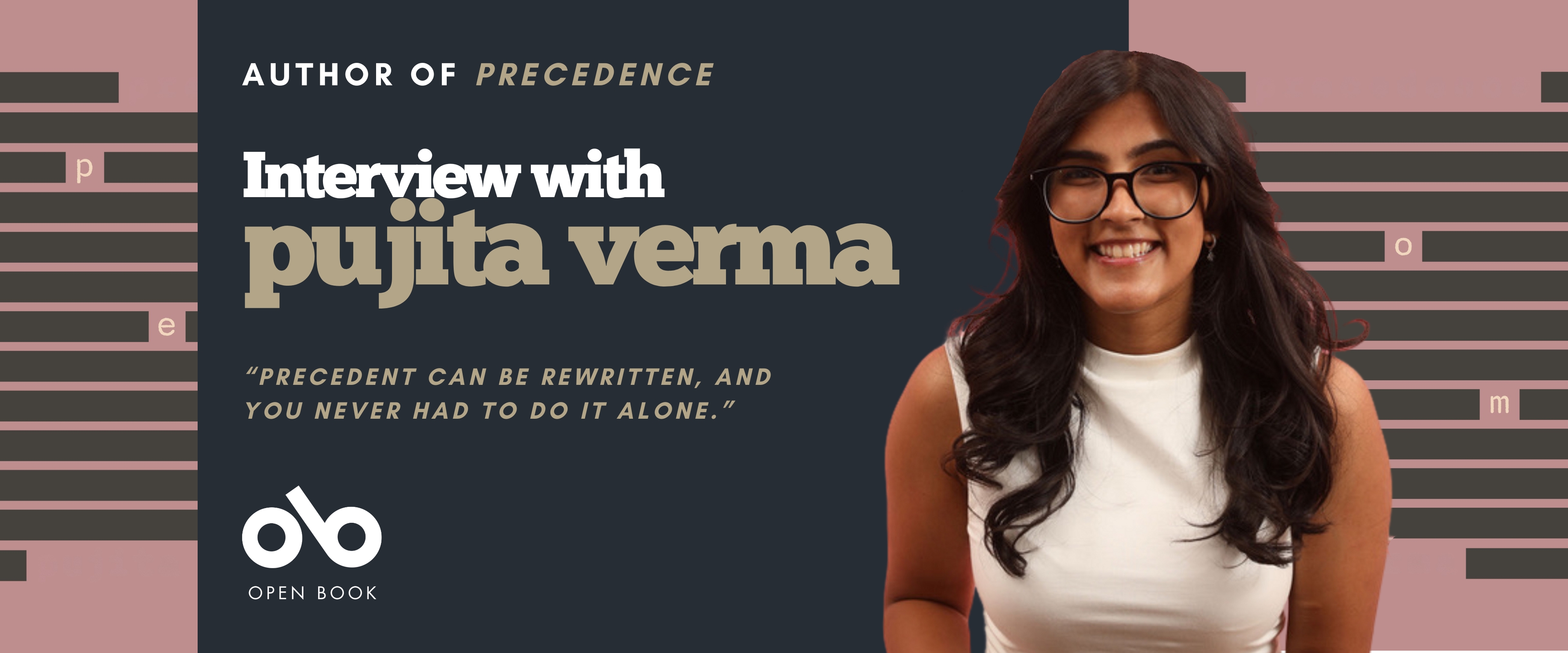
Precedence by Pujita Verma banner
Precedence (Brick Books) begins with a real legal case that brings a young woman back home to face her father in a Canadian courtroom. The experience is shaped by distance, family history, and the limits of systems meant to offer justice. The author of this fascinating work, Pujita Verma, writes with restraint and clarity, keeping the focus on what it means to show up and speak under these conditions.
The book examines how international legal processes often fail survivors of childhood sexual abuse, while also recognizing the women across generations who offered care, guidance, and protection. Their support makes it possible for Verma to move forward and to speak publicly, even when the outcome is uncertain.
At its core, Precedence asks what changes when someone decides to act. It considers the personal and cultural consequences of coming forward, and how relationships, love, and adulthood are reshaped in the aftermath. Direct and thoughtful, the book makes a strong case for attention, accountability, and the importance of being heard.
We're very excited to share this Line & Lyric interview with Verma for our readers!
Open Book:
Did you write poems individually and begin assembling this collection from stand-alone pieces, or did you write with a view to putting together a collection from the beginning?
Pujita Verma:
I hadn’t planned to write this as a collection at all. On the contrary, all my poems were conscious of how they avoided this book’s themes. My purpose for writing Precedence materialised during the 2023 Emerging Writers’ Residency at the Banff Centre. I was bringing poems to my program mentor, Sharanpal Ruprai, and she encouraged me to read ferociously, write into my own story, and take the poems for long walks.
I think it’s interesting how when we try to escape what defines us, everything starts to revolve around it. My writing took off with a new momentum during those two weeks in the mountains. I found myself revisiting old poems within a larger context and purpose. It was only after printing them all out, pinning them to the walls, and staring at them for days on end that a collection started to stare back at me. Everything I wrote in the two years that followed fit right into place.
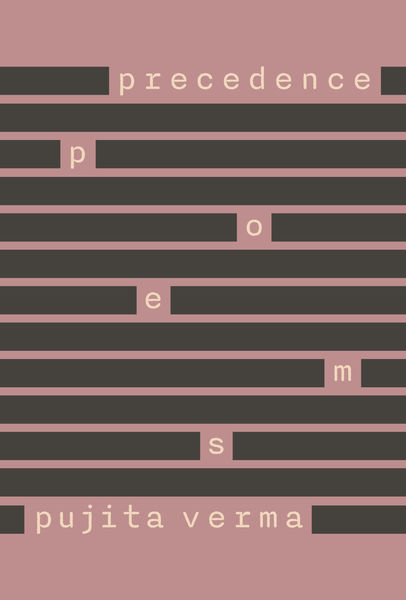
Precedence by Pujita Verma
OB:
Was there any research involved in your writing process for these poems?
PV:
In one section of the book, the poems exist in conversation with text materials from my own court case. I’d dug up emails, a publication ban order, my impact statement, and any traces of court filings or online references I could find. The result was a large selection of legal lexicon to experiment with, interpret, and respond to. I remember writing the case conviction out on a poster board, cutting up each word, and rearranging them until a whole new meaning emerged.
Your CanLit News
Subscribe to Open Book’s newsletter to get local book events, literary content, writing tips, and more in your inbox
OB:
What’s more important in your opinion: the way a poem opens or the way it ends?
PV:
I’m tempted to suggest that the opening is the most important: to invite the reader in from a place of curiosity, set the stage with intention, and propel their interest through the rest of the poem.
However, I find myself thinking a lot more about where poems land. I’ll often write multiple endings to the same work and read the whole piece over and over until one stands out. I’ll ask myself: Did I answer the poem’s questions? Do I need to? Do I want to resolve the tension, or leave it suspended? Is there room for interpretation? Am I arriving somewhere unexpected?
Perhaps the way I write is informed by the way I read. I don’t often complete entire poetry collections in one sitting. I carry them around. I’ll keep pausing and coming back to them. There’s significance in the lasting finality of a compelling thought, image, or dialogue in that final line I read. I wonder, if someone was going to put my book down after this poem, what would I want to leave them with?

Pujita Verma
OB:
Who did you dedicate the collection to and why?
PV:
In place of a dedication, there’s a redacted bar on its page. The precedents that allow me to publish a collection like this seemed too large to dedicate to a single force. I hadn’t included one in my manuscript. During the design stage, it was filled in with a single black bar. I’m aware of the symbolism in the book’s dedication being redacted—there can be many possible interpretations. I lean toward the one where the redaction represents a glimpse of myself at fifteen, and a compilation of silences by anyone who feels self-censored by their experiences.
OB:
What advice would you give to an emerging or aspiring poet?
PV:
Although poetry is a practice of articulation, it can be helpful to hear how others interpret your work. Trust the integrity of your own story, but seek opportunities to improve your craft and receive feedback. Take a creative writing course. Share a poem with a friend. Apply for that mentorship program. Rework that poem you wrote last year, even if it doesn’t feel like your own work—treat it like an exercise in time travel. As you refine your voice, you’ll be able to resonate with your own work more deeply and be more attentive to what your poems demand of you.
_________________________________
Pujita Verma is a poet and illustrator currently living in London, Ontario. Her work has appeared across the Toronto Transit Commission Network and CBC’s The National. She won awards from the League of Canadian Poets, the Toronto Arts & Letters Club Foundation, and the Eden Mills Writer’s Festival, and was runner-up for the Janice Colbert Poetry Award. Pujita was Mississauga’s Youth Poet Laureate from 2018-2020, and she studied Political Science at Western University. As an active member of London’s literary scene, Pujita is currently serving on the committee for Antler River Poetry.