Ray Robertson Defends the Act of Independent Thinking in THE RIGHT TO BE WRONG
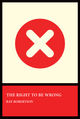
In an era that prizes certainty and punishes dissent, disagreement has begun to feel like a moral failure. Prolific author Ray Robertson's new nonfiction title, The Right to Be Wrong (Cormorant Books), steps into this tension and asks when holding the “correct” view became more important than thinking carefully, changing one’s mind, or admitting error.
The book takes aim at fundamentalism in all its forms, political and personal, secular and religious. It examines how rigid belief systems flatten public debate and turn difference into betrayal, whether through outrage, exclusion, or cancellation. Along the way, it raises uncomfortable questions about what happens to art, politics, and everyday conversation when curiosity gives way to purity tests.
Sharp, accessible, and laced with keen humour, even as it tackles serious ground, The Right to Be Wrong makes a clear case for intellectual humility and independent thought. All while arguing that the freedom to be mistaken is essential if we hope to learn, grow, and live with one another in a divided world.
Check out our interview with the author! And pre-order the book, which will be released in just over a week and available at all your favourite indie booksellers!
Open Book:
Tell us about your new book and how it came to be. What made you passionate about the subject matter you’re exploring?
Ray Robertson:
I began writing The Right to Be Wrong during the pandemic. Ordinarily, I do a pretty good job of ignoring what most people call reality, but during the two-year-long lockdown, the world was suddenly a whole lot harder to hide from. I wasn’t just glancing at newspaper headlines anymore, as was my custom—I was even frequently reading some of the articles, and not just the ones in the sports section.
Every morning, instead of going directly to my work desk as usual, I would read yet another example of nauseating self-righteousness, brazen intolerance, or dedicated divisiveness. The world, it seemed, was a slow-motion, sloganeering car crash I couldn’t stop Googling.
Eventually, I did what any writer would do: I started writing a book so that I could better understand what I was thinking and feeling. As E.M. Forster wrote, “How can I tell what I think until I see what I say?”
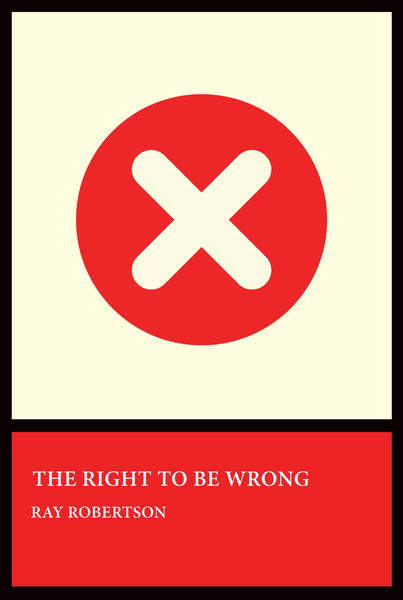
The Right to be Wrong by Ray Robertson
OB:
Is there a question that is central to your book? And if so, is it the same question you were thinking about when you started writing or did it change during the writing process?
Your CanLit News
Subscribe to Open Book’s newsletter to get local book events, literary content, writing tips, and more in your inbox
RR:
There is a question that’s central to The Right to Be Wrong, but the book’s focus did change during its long gestation period.
The question I started with was: why is it so difficult for us to allow other people the same privilege that we demand for ourselves—namely, the right and the freedom to think and believe what we think and believe?
Unfortunately, early drafts of The Right to Be Wrong were marred by my anger at others; specifically, those people who insist that only they are in possession of the truth about right and wrong and that any deviation from the official party line is immoral and should be punished. I didn’t see the anger in the manuscript—I was too angry to see it—but early readers certainly did. With their help, and after much time and many rewrites, I came to recognize that the book was tonally tainted and simply didn’t work.
The book wasn’t saying what I truly believed; it was only saying what I was thinking in that impassioned moment. In my blanket castigation of others, I was often guilty of the same intellectual narrow-mindedness and moral smugness that had initially driven me to write the book in the first place. I felt like a politician or media pundit—anything the other side could offer in the way of supercilious rage, I could answer with something angrier and more arrogant. It was as if I were responding to someone else’s obnoxious patriotism by being just as flag-waving and insufferable myself.
OB:
What do you love about writing nonfiction? What are some of the strengths of the genre, in your opinion?
RR:
The main appeal of writing nonfiction, for me, is that you usually begin with a subject and a world that already exists—unlike with a novel, where you’re responsible for creating an entire universe.
Of course, once you’ve embarked on a nonfiction project, what you eventually come to miss is the liberating freedom to invent an entirely new world, which is probably why I’ve tended to alternate between fiction and nonfiction over the years.
OB:
What defines a great work of nonfiction, in your opinion? Tell us about one or two books you consider to be truly great.
RR:
Good writing is good writing—fiction, nonfiction, whatever. A good book tends to have a strong, compelling voice, singular sentences, and a roving, inquisitive intelligence, along with a sense of humour.
I regularly reread Virginia Woolf’s essays and am always reminded of how even the humblest literary forms—many of her essays were book reviews—can intellectually incite and aesthetically inspire. I also admire Anthony Burgess’s book reviews, which, like Woolf’s, are small works of art disguised as journalism.
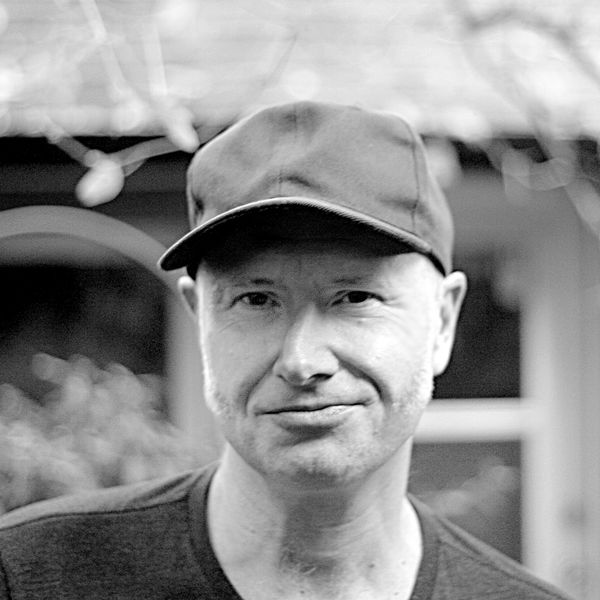
Ray Robertson
OB:
What are you working on now?
RR:
I’ve been writing a lot of nonfiction recently—The Right to Be Wrong will be published in late February of this year, and another nonfiction book, Dust: More Lives of the Poets (with Guitars), appeared in November 2025—so it makes sense that the book I’m working on now is a novel.
It’s called Three Men in a Shed: A Novel in Six Episodes. It’s composed entirely of dialogue and takes place over five and a half hours during a single November evening.
It’s about drugs, race, alcohol, pornography, Montaigne, cell phones, stray dogs, social media, the Virtue Police, God, Greta Thunberg, experiments in happiness, monogamy, the Atari Generation, babies, the death of rock and roll, Shakespeare, and selfies with Hitler—among other things.
_____________________________________
Ray Robertson is the author of nine novels, seven collections of non-fiction, and a book of poetry. He has been a finalist for the Hilary Weston Writers’ Trust Prize for Nonfiction and the Trillium Book Award, and long-listed for the Charles Taylor Prize. His work has been translated into several languages. Born and raised in Chatham, Ontario, he lives in Toronto.