Read an Excerpt from DOUBLES, the New Novella by Nora Gold
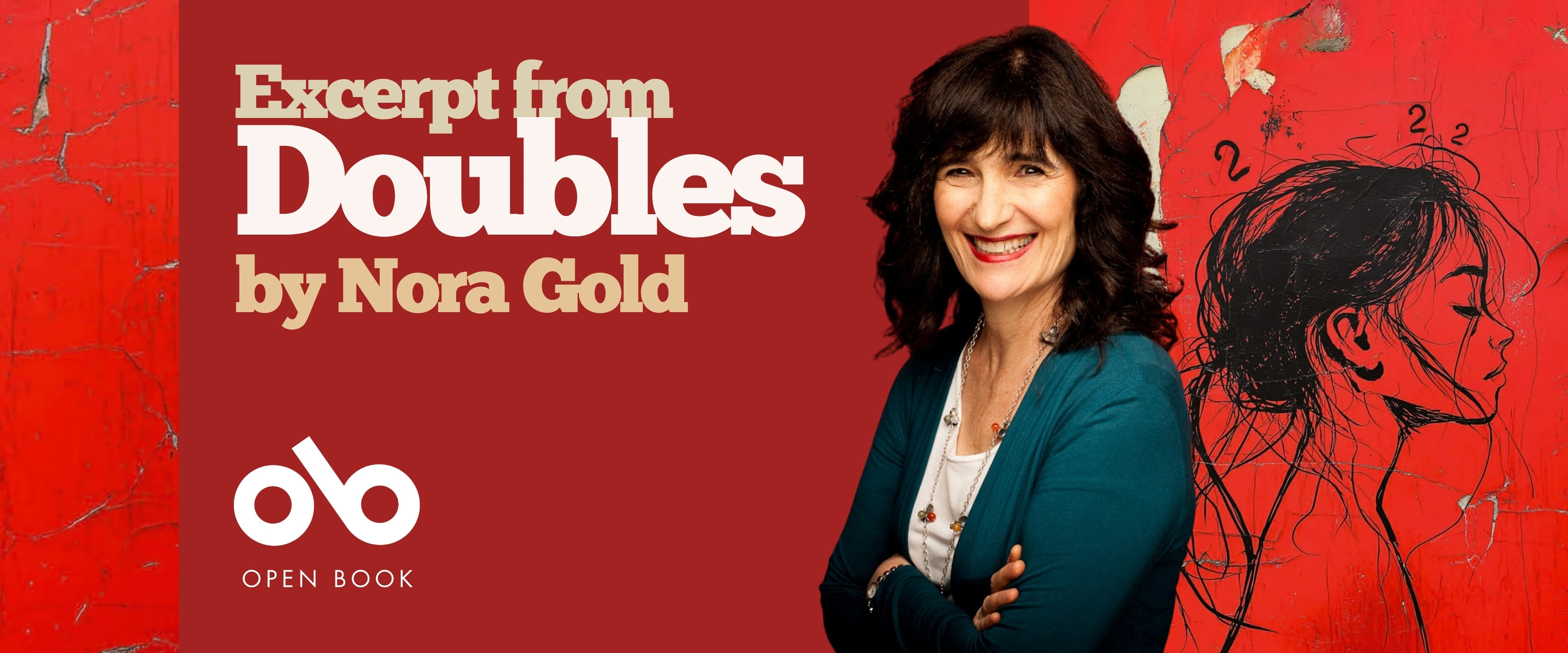
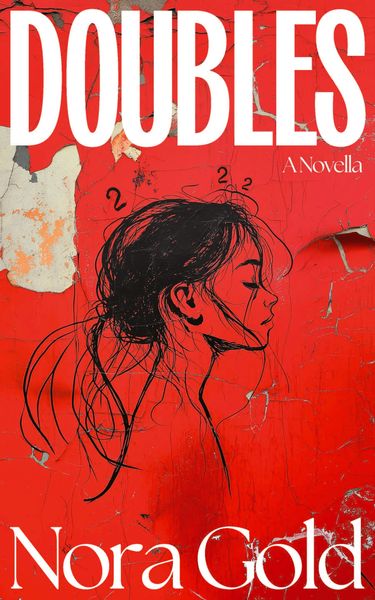
In the new novella, Doubles (Guernica Editions), prize-winning author Nora Gold centres the voice of a twelve-year-old girl navigating life inside a 1968 institution for troubled youth, where intelligence and obedience do not offer the protection they should.
The narrator is sharp, funny, and deeply drawn to math, someone who starts out trying to be the “good girl” that the system expects. Over the course of six months, that identity begins to unravel. What changes her is not a single moment, but the steady pressure of the environment around her, where rules, authority, and survival do not always align.
Gold keeps a close and unsentimental focus on the protagonist, allowing the girl’s perspective to show humour and unease in equal measure. Doubles looks back at a period that still resonates strongly, especially as more has come to light about institutional care in Canada, and shows how quickly a young person can be reshaped by the conditions they are placed in.
We've got a special treat for our readers today, with an excerpt from this new novella, right on the day of publication!
An Excerpt from Doubles by Nora Gold
(Note: Doubles is set in 1968 in an institution for troubled youth, where the protagonist, a 12-year-old, math-loving girl, has been placed by mistake. This excerpt is her written response to a question she has been asked, one week after her arrival there, by a visiting trustee.)
QUESTION FROM A FRIENDLY TRUSTEE TO ALL THE KIDS AT VALLEYVIEW CHILDREN’S FARM:
WHAT ARE YOU LEARNING HERE?
August 21, 1968
You ask what I’m learning now. As you know, there is no schooling here at all, so I’m studying math from an old, green math book I found in the library. Here’s yesterday’s problem from this book: Two people are traveling toward each other on two different trains. William’s train is traveling at 45 mph and Mary’s train is traveling at 60 mph. Mary and William began their journeys 500 miles apart. At what point in the 500 miles will Mary and William meet?
Doubles by Nora Gold
This question wasn’t hard mathematically; I solved it in less than 5 minutes. But the rest of this problem took me a while. There’s a lot to it, more than meets the eye. First of all, the 500 miles. That’s the name of a song, which starts “If you miss the train I’m on…” So it’s entirely possible that either William or Mary will miss their train. And if they do, what will happen then? Perhaps they’ll never meet. Maybe their meeting will just float around forever in the realm of Might-have-been or of What-if. Such as the “What-if” of What if my mom hadn’t died and my father hadn’t then turned into a crazy person? Or What-if I hadn’t been put in this awful institution? (Don’t be annoyed by my insults of Valleyview. You said we should tell you the truth.)
Your CanLit News
Subscribe to Open Book’s newsletter to get local book events, literary content, writing tips, and more in your inbox
This math problem in my book also raised other questions. I learned last fall at school, in Mr. Marcus’ history class, that William and Mary co-reigned in England from 1689 to 1694. So were the William and Mary in my math problem the king and queen of England? Answer: No, they were not. Because they didn’t have trains yet in the 1600s. If I were still at school, for this correct answer I would have gotten a mark of 10 out of 10. A 10 out of 10 = 10 over 10, and 10/10 = 1. Isn’t this strange – that two 10s can be made to equal just 1? Or if, instead of dividing 2 10s, you add them together, or multiply or subtract them, and then they transform into 20, 100, or 0. This feels like magic to me.
With William and Mary, there is also a geographical question: What 2 cities in England are located 500 miles apart? Where were William and Mary each coming from, and where were they going? Mr. Marcus said you can’t learn history without knowing geography because, for instance, if Germany weren’t bordering on France, and always pushing its shoulder against France’s, there wouldn’t have been so many European wars. Last fall he put up a map of Europe so we could see how, if Russia weren’t so big and so cold, its snowy winter wouldn’t have stopped the Nazis. My grandma came from somewhere near Russia called Ukraine. Mr. Marcus said 60 million people died in the war, and 10% of them were Jews. 10% of 60 million is 6 million. A million has 6 zeros in it; isn’t that funny, that 6 million is a 6 with 6 zeros after it? 6,000,000 is a big number; even 1/10 of it is a lot of people. Someone said the number 6 million is a lie, but it’s not. If Mr. Marcus said it, it’s true. And anyway, numbers can’t lie. Only people can. For instance my sister Vicky saying to me, as I was getting dragged away from my home by 2 people in black – the people who put me in this stupid institution: “Don’t make a fuss, just go with them. You’ll be back soon.”
If you never had Mr. Marcus as a teacher and maybe didn’t know that geography is linked to history, you’d find geography painfully boring. Last year, all we did with our geography teacher was memorize the capitals of 10 countries, and for each country its 3 most important national products. France’s capital is Paris and its #1 industry is perfume. My mom had a beautiful sweet smell – Dad said it was her natural perfume, like a flower. In Paris, there are perfume bottles shaped as elephants, violins, and pineapples. France has real pineapples, too, and other fruits, as well as cows, beans, peas, and horses. There are 18 regions in France, each with its own climate and crops. One region grows flax and hemp. I’m not sure what hemp is but it sounds sexy, sort of a cross between a hip and a hump, with someone humping a hip.
In France the #2 industry is wine, which means that after perfume, wine contributes the most to France’s Gross National Product. I think it’s gross. Picture a whole country of perfumed drunk people, reeking of sickly sweet fragrances, with liquor on their breath. Millions of people staggering around, stinking. The way Dad does when he’s drunk. Lucky for the French that their third main industry is hair tonic, which (according to a counselor I overheard talking in the kitchen here) is what you consume for a hangover, to help you feel better. Also this counselor recommended eggnog. Fortunately, France also has lots of eggs (these come from chickens). We have chickens, too, at home. Some of the people in France were chickens during the war, such as the government in Vichy (which is where Vichy water is from, produced by natural springs), but other French people were brave and stood up to the Nazis. I hope I would be brave, too, if I was in a war, but I’m not sure. Sometimes when I’m scared I wet my pants.
Dr. Nora Gold
World War 2 was supposed to be “the war to end all wars,” but it wasn’t. There will probably be a WW 3, and also a 4, 5, 6, 7, and 8. Yesterday Russia invaded Czechoslovakia – everyone here is talking about it, and it’s all over the TV – and this was on top of the war already in Vietnam, and other wars also in other places. Dad has an American cousin whose son is a soldier in Vietnam. I wonder if he wets his pants, too. Vietnam is far away, but that war was probably started for the same reason as WW 2, and also the one in Czechoslovakia. Somebody wants somebody else’s land or money or something they produce. In Vietnam I think that would be rice, but I’m not 100% sure what their main crop is. We didn’t do Vietnam in geography.
“Look around you,” Mr. Marcus said, “and you’ll see history and geography everywhere.” This is why I made sure to watch the Russian invasion yesterday on TV in the rec room when the news came on at 6:00. 6 o’clock, 6 million Jews, 6 zeros in 6 million – does this mean anything, or is it just coincidence? Mr. Marcus doesn’t hold much with coincidences. I miss being in school – or anyway I miss Mr. Marcus. I never took to my other teachers, not even my math teacher, Mr. Snot, because he said girls don’t have a head for math. I have a head for math. Or maybe not a head, but anyway a heart for it – in my heart I love math. Perhaps a heart isn’t as good as a head – or maybe it’s even better. Anyway, Mr. Snot is not his true name – it’s Sonat – but Snot is what we all call him behind his back. Called him; I’m not there anymore.
Here at Valleyview, all I get to learn is the math that I pick up from my green book. Which brings me back to William and Mary. There is still one last question inside William and Mary’s problem, and it may be the most important one of all: Why were they traveling toward each other? This might have a simple answer, but at the same time this question could be philosophical. Next to where I found my green math book in the library here, there was an orange book called Introduction to Philosophy, which one rainy afternoon I riffled through. It contained many long, strange words I didn’t understand, but one that I did, and that kept recurring over and over – the main word in this book, I think – was the word why. It appeared at least 10 times on every page; there must have been thousands of whys in that book. It was interesting to browse through it for a while, but then it got boring because every answer just led to another why.
Anyway, returning to my “why” question: Why were William and Mary traveling on separate journeys toward each other? Was there a political reason? A romantic one? Or something completely different? And what did they do if they didn’t end up meeting and their separate trains merely flew past each other on nearby tracks? Did they desperately wave to each other through the window glass, the way people did in the old movies my sister Vicky and I used to watch with Mom, such as 4:50 From Paddington and The Lady Vanishes? The lady in that movie vanished. She did. She was here today, gone tomorrow – or, in Mom’s case, here 10 months ago, then gone the next day. Which is, as the first chapter of that philosophy book was called, “The Fate of All Humans.” Then again, what if William and Mary did actually meet up (wherever that was in geography – at whatever intersection of longitude and latitude numbers – and whenever it was in time or history, in whichever numbers on a clock or calendar), and fly into each other’s arms? What if they both flung themselves forward, their lips gluing together with passion?
Probably this is what happened. Almost certainly the purpose of their meeting was romantic. Because love, love, love. Love is all you need.
____________________________________
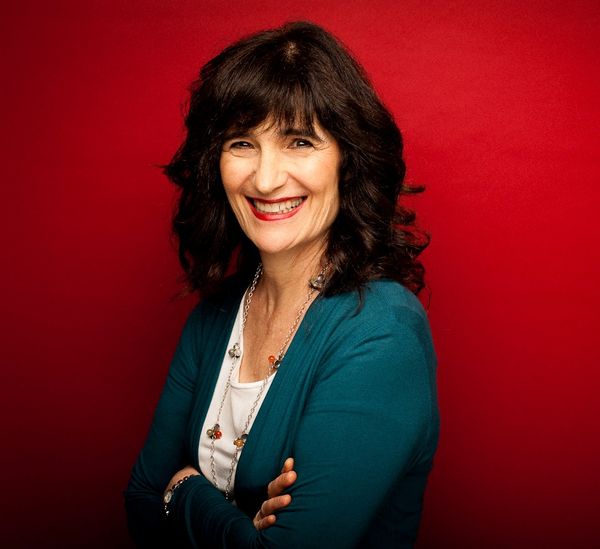
Dr. Nora Gold is the prize-winning author of five books and the recipient of multiple awards, including a Canadian Jewish Literary Award, a Vine Canadian Jewish Book Award, and a Canada Council translation grant. Her writing has been praised by Cynthia Ozick, Alice Munro, and Publishers Weekly, and has received international acclaim, including from the New York Times Wirecutter, Los Angeles Review of Books, and Hadassah Magazine. A former professor, Gold is also the founder and editor of the prestigious literary journal Jewish Fiction (www.jewishfiction.com), which has published 650 stories originally written in 23 languages. She’s appeared on podcasts in Canada, USA, Spain, India, and Australia, and has over 100,000 followers on LinkedIn. noragold.com