Read an Excerpt from ECHO-MIRROR by Famed Dub Poet Klyde Broox
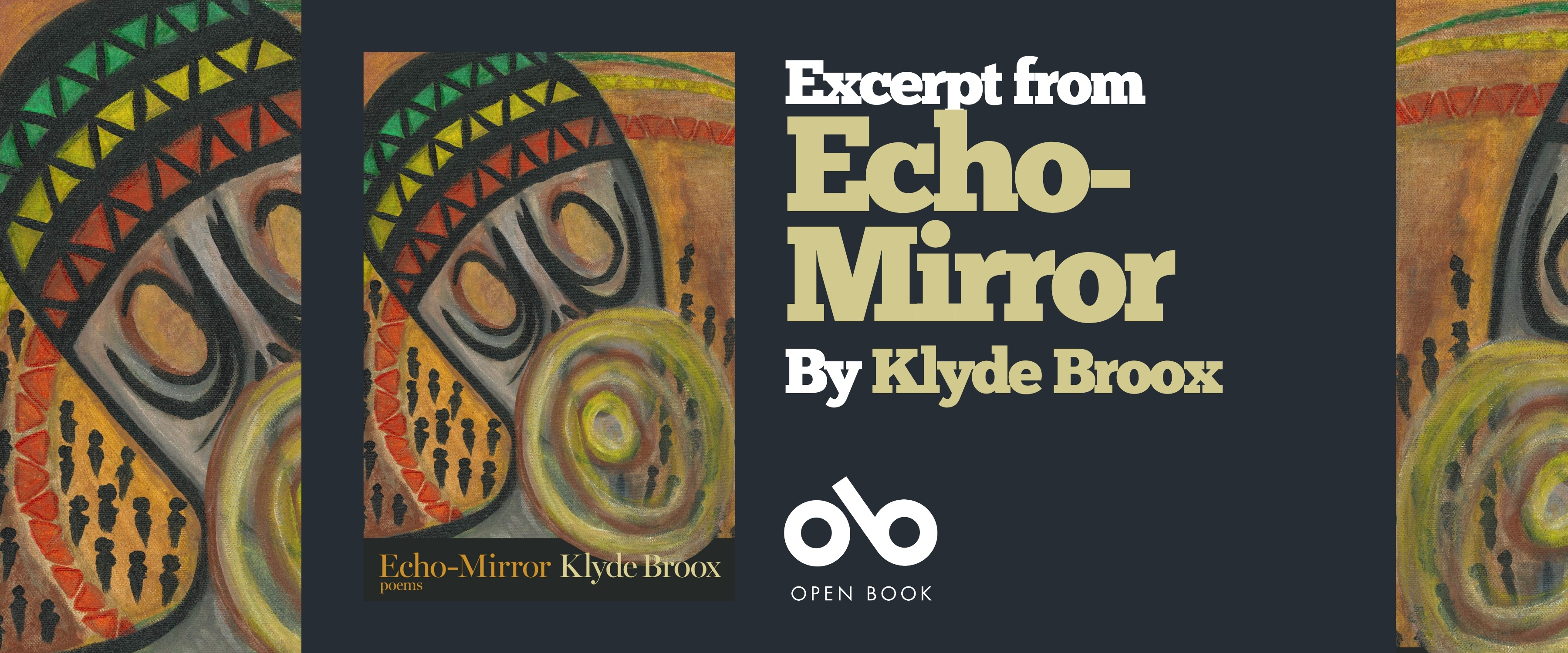
Spoken word and written poetry collide in Echo-Mirror (Wolsak & Wynn), a collection that gathers decades of work from one of Canada’s most respected dub poets. These poems carry rhythm in each line, and though they were originally meant to be heard aloud, they maintain their power in print, where legendary dub poet Klyde Broox's language cuts through cleanly.
Across the collection, questions of language, inequality, and injustice are balanced deftly with reflections on family, memory, and loss. The poems challenge the dominance of English, confront systemic racism, and celebrate Black voices with urgency and pride. There is anger here, but also care, humour, and a steady insistence on dignity.
With Echo-Mirror, Broox offers both a retrospective and a renewed call to action. A much-loved performer known for his commanding stage presence and commitment to community, Broox brings that same energy to the page, creating work that speaks to the present moment while honouring the struggles and voices that shaped the world we live in.
We've got some selected poems from this wonderful collection to share with our readers, so check them out now!
An Excerpt from Echo-Mirror by Klyde Broox
Underground Railroad Cheat Code
Oh Canada, hello, Canada
you know, Canada, Canada
Canada, please, lend me your ears, sorry
if any listener/reader/reviewer
is still hearing, reading or
Your CanLit News
Subscribe to Open Book’s newsletter to get local book events, literary content, writing tips, and more in your inbox
reviewing me like I’m a “foreigner”
me deh ya two decades over
now long removed from being a “newcomer”
yes, I was born in Jamaica but mi kno seh
mi, originate in Africa and I confidently
consider myself a “person of colour”
however, if you don’t mind and could be so kind
as to never, ever, refer to me as a “BIPOC”
please, please, just call me “Black”
and please, kindly, humour me
write “Black,” like me, with an uppercase B
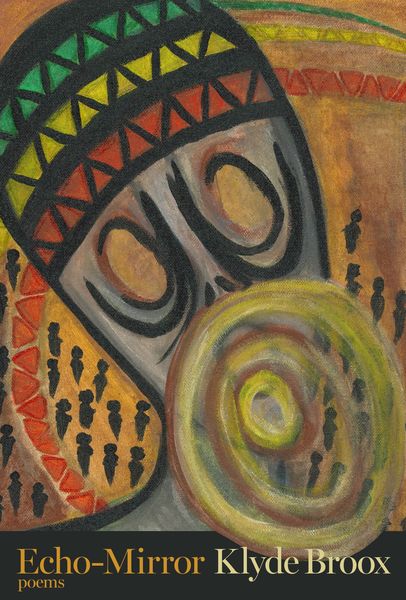
Echo-Mirror by Klyde Broox
Also, with due respect, please kindly accept
my sincere apologies, I am sorry that I am not very sorry
if you’re feeling any bit of unease, please, forgive me
but excuse me, the Underground Railroad story
makes me feel more than a bit “uneasy”
making it about me makes me
feel sort of, er, “queasy,” you know
well, we know, you can’t really know
but I hope that now you might be able to see how
underground railroading might be excluding my journey
Underground Railroad story is not my biography
please, don’t attach it to me, so literally
when I came to Canada I was already
free!
via Air Canada, that is how I came
proper passport, valid visa, legal ID; in my own name
Underground Railroad code, I don’t fully download
my entry mode was via a wide-open “overground railroad”
Harriet Tubman was a real-life wonder woman
but Underground Railroad was not my journey
Canadian society stop trying to underground railroad me
as Black as I be, when I came to Canada, I was already free
could read, write, count, calculate, ruminate and articulate properly
was already a slightly known literary entity
Harriet Tubman Institute, time to tell the whole truth
common Canadian plantation-era narrations decorate Canada
as a place lent, meant to serve as a “haven” from enslavement
“North Star of Hope,” the “escape to Canada” trope
thanks for the years of philanthropy
but they can never outweigh
those two hundred years of chattel slavery
immediate post-“emancipation” Canada
as a whites-only immigration destination, explicitly
denying entry to free people from Africa and the Caribbean
So, welcome to Canada every refugee
it should be better here than where you used to be
everyone is free to fight for equity in this fine country
join the line, and since you are right behind me
after I hear about your journey
I will share my autobiography, briefly
Underground Railroad story: no, not me
those days were too early to be in my biography
when I came to Canada, I was already free!
My Best Friend Is White
(for Duncan Cruickshank)
My best friend is white, and I am Black
I am Black but my best friend is white
and racial realities bite when my white best friend
reacts typically white to my coloured insights
concerning matters of equal rights
And then I wonder, is my best friend
more white than best friend
less best friend than white?
maybe, I don’t know, I don’t know
maybe my best friend considers me
more Black than friend, less friend than Black?
I am Black but my best friend is white
my best friend is white, and I am Black
no stone unturned for honesty’s sake
more lessons learned with each mistake
great friendships may bend, but they never break
I know my friend is not a fake
my best friend is white, and I am Black
I am Black but my best friend is white, so what?
I am not any less Black because of that
I am Black and my best friend is white
my best friend is white, and I am Black
but that’s all right; in my best friend’s face
I see what I know to be features of one earthborn race
Long Night’s Journey Out of Yesterday
Black Boy born and raised somewhere between being
Invisible Man or “Most Wanted”; be quick or be dead
long night’s journey out of yesterday
overnight clouds enshroud sunrays of today
mental chains to cast away; bright light on the journey
Philosophy and Opinions of Marcus Garvey
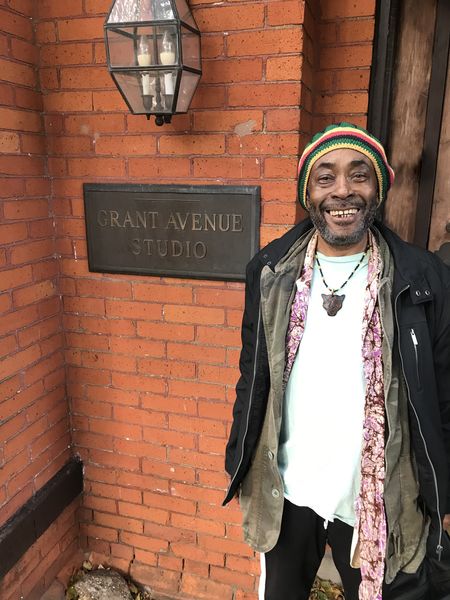
Klyde Broox
No pie in the sky; Blood in My Eye
A Long Way from Home
I dream perennially
that I shall return to My Green Hills of Jamaica
memories of island sunshine
brighten brooding Harlem shadows
No Name in the Street, Blues for Mister Charlie
“in the bigger picture,” Nobody Knows My Name
but “I Have a Dream” that guides my eyes
“Go Tell It on the Mountain,” emancipation was not liberation
resistance must now become self-deliverance, by “Rivers of Babylon”
even within our own motherland, mental chains to cast away
long night’s journey out of yesterday
Echo-Mirror. Copyright Klyde Broox, 2026. Excerpt printed by permission of Wolsak & Wynn.
__________________________________
Outrodubtion by Susan Gingell (excerpt)
Dubpoet Klyde Brooks chose the title “outrodubtion” for the afterword to his final self-selected collection, Echo-Mirror, and this outrodubtion continues in spirit his similarly named life
celebration. He died at sixty-six on January 20, 2024, in Mississauga Hospital, near Hamilton, Ontario, his home since emigrating from Jamaica in 1993.
Clyde Broox (b. Delveland, Jamaica; June 29, 1957) became Klyde Broox in an exercise of linguistic sovereignty, but, wanting to retain whatever personal history he had written as Clyde Brooks, modified his name’s spelling while retaining its original sound. In a biographical note on The Arty Crowd website, he had pointed to the name change as “an example of how dub updates/renews/refreshes and liberates language,” and as “a balancing of the dislocations of resettlement.” Broox’s Rastafarian name, Durm-I, marked his connections to both Africa (“Durm” is a childhood anagram for “drum”) and Rasta (In “Bongoman Was the First Dubpoet,” Broox punned using Dread Talk/Iyaric in referring to “Rasta’s far-seeing eyes [I’s].” Broox claimed that “all dubpoets have a spiritual connection to Rasta, and that “dubpoetry is steeped in . . . a ‘mystique of dreadness’” that is more than dreadlocks, which Broox wore only briefly. Dreadness is also encoded in the Rasta tam and colours he made part of his performance persona. Dubpoetry’s dreadness, Broox explained, encompasses Rasta’s spirit of “struggle, resistance, and self-liberation.” Furthermore, Rasta philosophy fundamentally grounded his belief in the power of words to inspire change, though oral peoples widely if not universally believe that words have magical potency. Voiced sounds are, after all, sonic energy, so they can make things happen.
Broox deserves to be remembered as an innovative, award-winning practitioner of dubpoetry – unlike other dubpoets, Broox wrote “dubpoetry” as one word, arguing the term is sounded without a break between “dub” and “poetry” – a reggae-derived, Black-Atlantic-translocated, political performance poetry, which he successfully brought to stage, page, video and his Facebook page. He, along with other Canadian dubbers, memorably reloaded the Canadian can(n)on by rub-a-dub styling Canadian poetry, and he uniquely reloaded the dub can(n)on by packing it with ammunition from the wired and academic worlds. Among his innovations were establishing meta-dub as a subgenre and using it to become the foremost dub theorist; creating the genre of the performance essay; and memorably coining new, politically impactful words.