Read an Excerpt from KOH-I-NOOR, the Adventurous Debut Novel by Michael Eddy
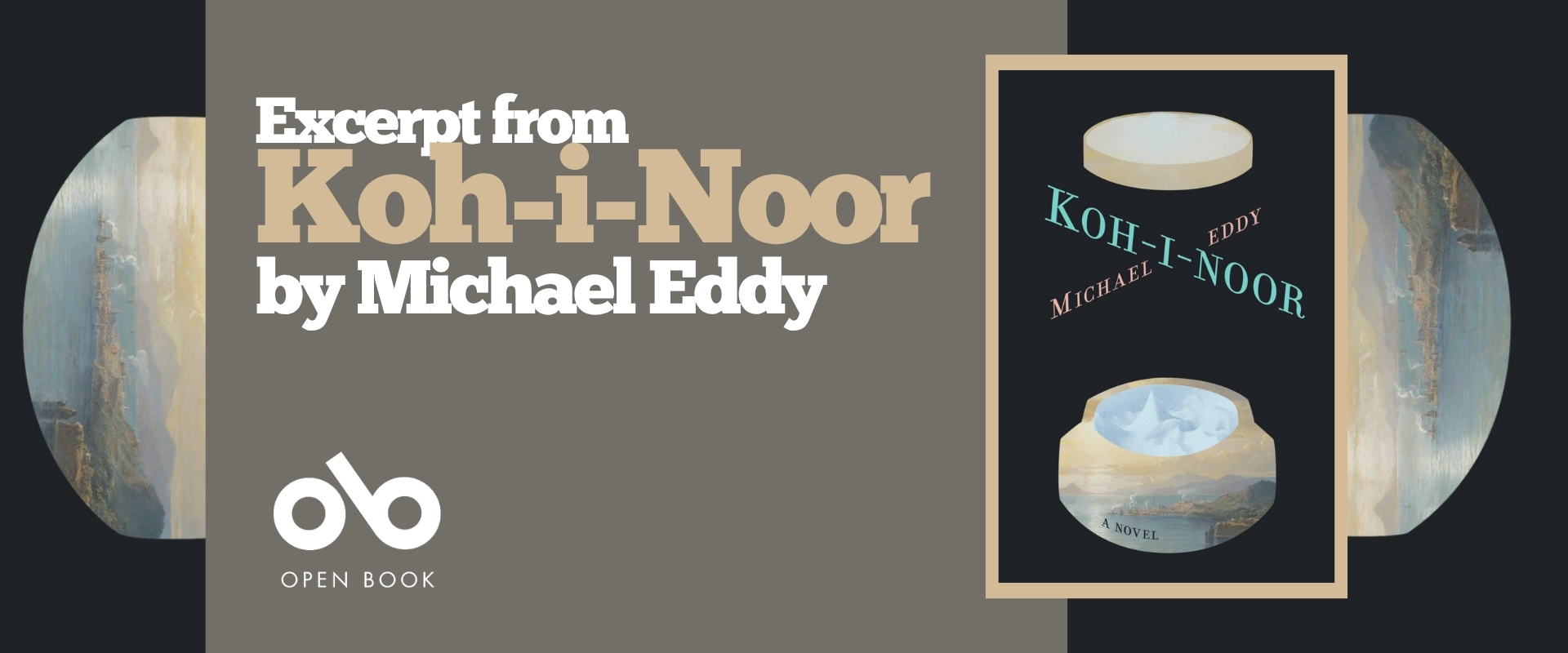
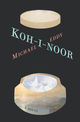
Trying to build a better world is one thing. Figuring out how to live in it is another. Koh-i-Noor (Book*hug Press) follows a young man whose search for purpose becomes increasingly complicated as his ideals clash with the realities of work, money, and ambition.
In his debut novel, Michael Eddy sends Sean Lohan from Nova Scotia to China after the aspiring entrepreneur decides to create a socially conscious business rather than follow an easier path. Meanwhile, his closest friends are pursuing their own grand ambitions in California and Cuba, each discovering that changing the world is rarely as straightforward as they imagined. The novel blends satire with a coming-of-age story, asking what happens when convictions are put to the test by globalization, technology, and the compromises that are part and parcel of adult life.
Today, we're featuring an excerpt from Koh-i-Noor, which offers a glimpse into Eddy's sharp, funny, and delightfully ambitious novel as this intrepid protagonist begins to navigate a world where idealism is never quite enough.
An Excerpt from Koh-i-Noor by Michael Eddy
“Why do we not look at New Age art in this course?” the teacher asked the auditorium.
“Because it isn’t postwar,” some genius responded.
“Because it’s cultural appropriation?” a voice submitted.
“Because it’s triggering,” a provocateur added.
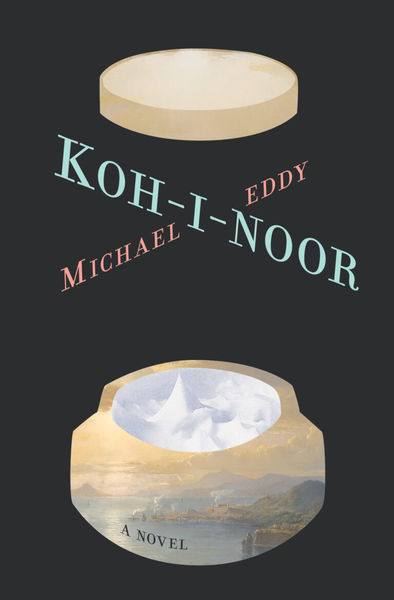
Koh-i-Noor by Michael Eddy
“Because it was always derivative,” the teacher corrected, rolling up his carbon-coloured turtleneck sleeves. “Hippie art looks exactly as we would expect it to. Not because it was made under the influence of hallucinogens, but because of the world view—because of the political concepts—of the hippies. Well, high art, if you’ll excuse the pun, isn’t a priori optically psychedelic. It does not presuppose sensitivity to one particular aesthetic. But if the artist making the work is using drugs in order to escape to a fantasy world where power doesn’t exist, where not factories but thin, shaggy youngsters or hepcats make the hamburger patties you eat, then the art they make may picture a world beyond, perhaps, but it either offers no ideas about how to get there or transcendental pap, a cheap moral fix. And this desire for harmony can be reactionary without even knowing it: Perfect worlds—worlds without class conflicts, without the petrochemical fault lines dividing space—achievable in the blink of an eye, just by cutting the apparently very dainty ribbons of the Judeo-Christian background they had seceded from with the force of a burning incense stick. Hai-yah. Oh, and someone in the audience will want me to mention just how white this demographic is. The racialized worker takes a pass on the expressway to enlightenment.”
Sean frowned in the dim custody of his elective, “Postwar Art History: 1945—1989.” For some reason, the teacher routinely went on screeds about hippies and New Age movements. New age was a term that, though broadly descriptive of his parents and others of their generation who explored alternative traditions of spirituality, Sean nonetheless felt as a personal slight. But while he initially resented the black-clad history teacher’s harsh diatribes, little by little the roots of doubt that had been creeping since his own essentially godless adolescence were tapping into a sort of dark nourishment. His parents’ practices weren’t bad, Sean rationalized, but they didn’t help the cause of anti-capitalism—or did they? He was still trying to understand exactly what capitalism was and what it did. It was a little confusing, and he couldn’t help but doodle coats of arms and emblems as he listened.
Your CanLit News
Subscribe to Open Book’s newsletter to get local book events, literary content, writing tips, and more in your inbox
Our lives are mediated by commodities, produced in the capitalist mode.
Every interaction takes on the character of a measurement, an assessment of value, a rationalization of cost and benefit, even though it happens unconsciously or even structurally.
People are things to us, and things take on personalities that people are deprived of.
Andy Warhol was an artist who reflected this and made it obvious, but he stopped at the simulacrum. The avant-garde before him had claimed a different route, convinced they could outmanoeuvre the commodity form by taking the high road; the avant-garde after him aimed for the institutional jugular, blanching symbiotically and beautifully as the virility of history drained out; and the avant-garde now doesn’t exist.
There were numerous words Sean confronted for the first time. He tried many times to grasp the word reification; it was slippery but he thought he understood it. Reification is when objects and institutions take on the appearance of not having been made by workers, of having arrived whole and complete on this Earth as if from God’s conveyor belt.
Alienation produces reified objects; it’s the process by which a worker sells their labour power, essentially their time on Earth, to produce things that bear no sign of their labour, autonomous, cold, cruel things that migrate through the market like hateful living creatures.
Given this premise, which Sean strained to understand, picturing cans of soup or cartons of instant macaroni and cheese, why then should the black-clad teacher mock the hippies? After all, they had helped bring in a percentage of ecological and fair-trade products to this city, for example, in their health food stores and their permeation of the farmers’ market. The back-to-the-landers, moreover, dropped out to face this particular issue head-on, and the teacher had no kind words for those who tried to hide away in off-grid deserts. Sure, they couldn’t achieve perfect purity, but did the history teacher expect everyone to do everything? The puzzle of how society would have to be arranged for that to take place perturbed Sean. During one class where the teacher was discussing the role of commercial art galleries in defining the history of art, Sean raised his hand.
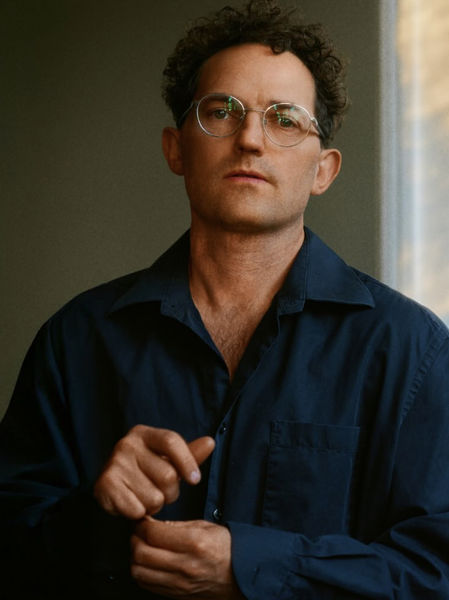
Michael Eddy
“How could people get things, how could they exchange things without using money? Is it always capitalism if we use money?” he asked, quite off topic.
The teacher tried to clarify, “No, no, the problem isn’t the exchange of objects or the existence of currency, the problem is in the capitalist production of surplus value.” Noticing Sean’s blushing face, the teacher offered to illustrate how society could be organized otherwise by sketching a profile of the French utopian socialist Charles Fourier. In the nineteenth century, Fourier had hatched architectural plans for the phalanstery, a sort of semi-urban, semi-rural “grand hotel” where workers could live and work quasi-autonomously, whose whole point was the “emancipation of the passions” and the “triumph of sensual pleasure.” If never realized at scale, these promises of co-operatively run work-life places became an influential impulse in later experiments across the world. “There was real hope,” waxed the teacher in the moonlight glow of the projector, “in the form of anarcho-syndicalist factories in the early decades of the twentieth century, prior to economic centralization in the Soviet Union and elsewhere, in the spontaneous organizing that filled the vacuums between various state formations. Of course, there was the production of actually useful goods—in contrast to a lot of manufacturing today—but we also witnessed how once in the hands of workers, the machines and the self-organized factory could be means to personal liberation and creativity, production and leisure intertwined, work transformed beyond recognition. That is, until the Bolsheviks betrayed us and installed their paternalistic regime, which we all know about,” the historian said. His eyes lost their twinkle as he gestured dismissively to the audience and trailed off, “and then all the rest is kitsch…”
Sean nodded, but the image felt as remote as a fairy tale. He had never really been inside a working factory, besides his parents’ workshop, which wasn’t really a factory.
The course hadn’t resolved the unsettling contradictions he saw between criticizing the system and taking part in it. The teacher seemed to talk the talk, but did he walk the walk? Was this theory useful if the teacher still shopped at the same grocery chain as everyone else, and comforted himself with faraway fantasies like we all do? But then again, the design and business classes Sean took left a bitter taste in his mouth as well. They described how the world functioned pragmatically, but it was clear those faculty were no more connected to the production process than anyone else. The secret urge was to resolve this tension.
_________________________________
Michael Eddy studied art in Halifax and Frankfurt and spent five years in Beijing. His writing has appeared in various publications, including C Magazine, esse, and Peripheral Review. Born in New York City and raised in Halifax, he now lives in Montreal. Koh-i-Noor is his debut novel.