Read an Excerpt from REBELLIOUS BODIES AND RADICAL ACTS, Edited by Alex Bulmer & Debbie Patterson
Performance takes on new urgency and possibility in Rebellious Bodies and Radical Acts (Coach House Books), an anthology that centres disabled and Deaf artists working at the forefront of contemporary theatre. The book opens up the rehearsal room, the stage, and the creative process itself, asking what happens when bodies so often excluded from performance are treated not as limitations, but as sources of knowledge and power.
Across essays, poetry, interviews, and critical reflections, contributors speak directly about how they make work and why it matters. Their writing shows how disability shapes artistic practice in concrete ways, from how movement is imagined to how audiences are addressed. The collection’s anchor is the full text of Alex Bulmer’s Perceptual Archaeology (Or How to Travel Blind), alongside excerpts from works by Niall McNeil, Debbie Patterson, Audrey-Anne Bouchard, and others, each offering a distinct approach to storytelling, form, and embodiment.
Edited by Alex Bulmer and Debbie Patterson, Rebellious Bodies and Radical Acts argues for a theatre that is more curious, more expansive, and more honest about whose experiences are allowed onstage. These artists write from the edges and insist on being heard, not by asking for inclusion, but by reshaping the very terms of live performance and inviting audiences into unfamiliar, transformative terrain.
We're featuring an excerpt from the collection for our readers, as a special preview before the February 10th release. Pre-order your copy here!
An Excerpt from REBELLIOUS BODIES AND RADICAL ACTS, edited by Alex Bulmer & Debbie Patterson
An Urgent Call for the Inclusion of Disabled Artists in Canadian Theatre
I’ve been a working theatre professional since the mid-eighties. About fifteen years into my career, I was diagnosed with multiple sclerosis, which has transformed my abilities and my artistic practice. I’m currently a full-time wheelchair user with an artistic practice that is more focused and vision-driven than ever before in my life.
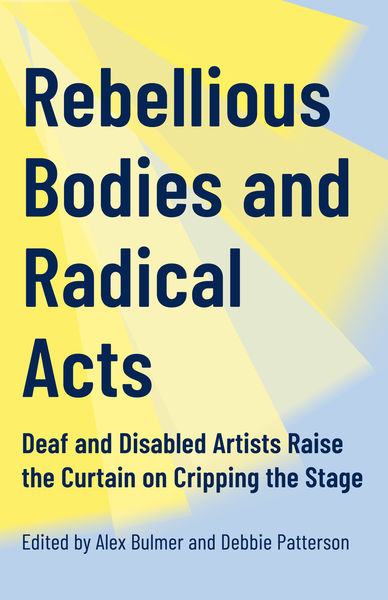
Rebellious Bodies and Radical Acts, edited by Alex Bulmer & Debbie Patterson
When I first started experiencing the effects of multiple sclerosis, even though they were very mild, I thought I had to quit working professionally. All my training had been very physical. I believed actors needed to be physically versatile in order to work professionally. I didn’t think audiences wanted to see physically disabled bodies onstage. I didn’t think directors would be interested in working with actors with physical disabilities. I assumed the ableism in theatre was justified: just as you wouldn’t hire a blind bus driver, why would you hire a Disabled actor?
I decided to transition to directing and writing—aspects of live theatre that I could still do while remaining comfortably seated. But I missed performing. I tried various strategies to work around my disability, to keep acting in spite of my disability, but it all felt awkward and disingenuous.
One day I was in New York and had just been to see Cirque du Soleil. I was still walking with the use of forearm crutches. I arrived at a restaurant where I was meeting some friends. It was kind of cramped, and when I walked through the restaurant, I noticed that the other diners were on high alert. People were shuffling their chairs or moving their bags or coattails to make sure I had room to get through. It struck me as funny that they would make such a fuss. But I also recognized that the feeling they had watching me walk through the room was the same feeling I had had watching acrobats earlier that day. Seeing a person risking a fall, stretching themselves to the limit of their abilities, is compelling no matter where the limit of those abilities lands. That was the day I realized that there was something compelling about the way I move, that the story my body was telling was a story people wanted to hear.
Theatre happens in the body. When we watch theatre, we are watching bodies onstage. The body of an actor tells a story the moment they walk onstage, whether they mean to or not. A person’s age, gender, size, colour, rhythm, hairstyle, fashion sense, areas of tension, gait—all these things tell an audience something about who we are. And when we go to the theatre, we are physically present with our bodies in space, sharing space with the performers. When a performer speaks, they use their body to create vibrations that travel through the air and enter our bodies as sound. It is an intimate physical exchange. We breathe together, our hearts sync up, we respond viscerally to each other.
Your CanLit News
Subscribe to Open Book’s newsletter to get local book events, literary content, writing tips, and more in your inbox
As I learned to embrace—rather than reject, deny, minimize, or try to hide—the transformation of my abilities and the story my body was telling, I discovered the benefits of disability to my artistic practice. I tapped into a deeper authenticity. Disability doesn’t let you get away with artifice. You can’t pretend to be something you’re not. Disability demands a kind of honesty and vulnerability I had never been able to access before.
As a woman, I felt freed from judgment about my physical appearance. As an able-bodied performer, I was never able to shake the feeling that aspects of my body were being judged against some societal ideal of feminine beauty. Once I became Disabled, I no longer felt like I was “on display,” with no agency in defining what sort of image I wanted to present. There was no longer an ideal I was supposed to be striving for. I could just be who I was.
In my daily life, I found myself having to take greater risks: doing things physically that I wasn’t sure I would be able to do safely. Things like crossing the street, working with power tools, carrying hot things in the kitchen. Things that had once been routine suddenly became risk-filled adventures. This capacity for risk fed into my work as an artist, giving me greater freedom to explore the unknown.
I learned to embrace the disruptions of disability as opportunities for invention rather than barriers to artmaking. If you need to get from one side of the stage to the other and you can walk, that’s the choice you’ll make every single time. Once you can’t walk, every other possible way of moving across the stage suddenly becomes available. You might crawl, roll, slither, scoot on your bum, walk on your hands, ride something with wheels, be carried. The disruptions of disability give way to limitless possibility.
Theatre is a storytelling medium, and narratives have the power to change society. Stories shape our beliefs, and beliefs guide our actions. The stories we tell matter. It has been proven that telling one’s own story can have positive physiological effects, such as relieving anxiety, improving health outcomes, or reducing pain. Stories have tremendous power.
When Disabled people are excluded from our storytelling mediums, our lived experience is never represented. When stories about disability are created by people without disabilities for people without disabilities, we are misrepresented.
I decided to start a disability theatre company to support the development of Disabled theatre artists and stories from the lived experience of disability. I felt privileged to have had access to training and professional experience prior to becoming Disabled, and I wanted to use that privilege in service of others.
From the outset, I knew most people would assume a disability theatre company existed to provide therapeutic recreation. They would not assume Disabled performers were exploring complex ideas through a sophisticated aesthetic aimed at offering audiences powerful experiences of self-discovery.
Disabled artists have been so excluded from storytelling that simply telling our stories is a radical act.
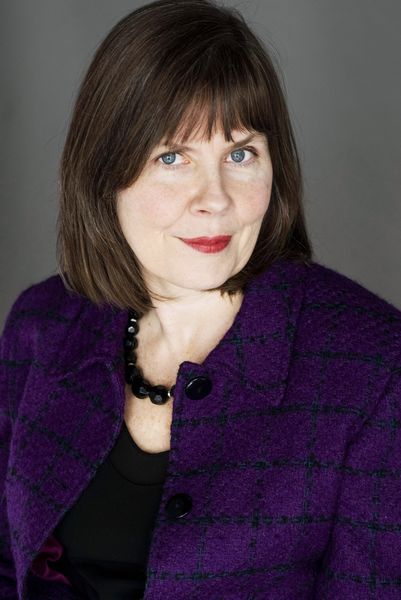
Debbie Patterson (Photo by Kevin McIntyre)
I was recently on a panel with a playwright who spoke about adapting a memoir written by the father of a severely Disabled son. In adapting the work, he interviewed the child’s mother, who expressed a wish to outlive her son. The playwright framed this as an act of generosity. He later spoke about writing a play about Tracy Latimer’s father, who killed his Disabled daughter, framing it as an act of love and mercy.
As a Disabled person, I have strong opinions about leniency toward parents who kill their Disabled children or romanticize death wishes for them. We know most parents who murder their children claim to have acted in the child’s best interests—and we know judges and juries are far more likely to believe this when the child is Disabled.
Rather than seeing these acts as heroic, I see evidence of a society that fails to support Disabled children and their families. I see isolation, fear, and an unnameable aggression directed toward Disabled lives.
The first victims of the Nazis’ eugenics agenda were Disabled children. Disabled people were labeled “useless eaters” and dehumanized to make their disposal easier. When we presume to decide whose life is worth living, we open the door to fascism. Ableism harms everyone.
This is why theatre created by Disabled artists is vital. Our audiences may not be Disabled yet—but they all have imperfect bodies. They have vulnerabilities. They need to know they are worth more than their ability to produce. They need to know they are worthy of care.
They need Crip wisdom.
They need our stories.
And we must be ready to answer the call.
Rebellious Bodies and Radical Acts: Deaf and Disabled Artists Raise the Curtain on Cripping the Stage. Copyright Alex Bulmer & Debbie Patterson, 2026. Excerpt printed by permission of Coach House Books.
____________________________________
Debbie Patterson is a playwright, director, and actor. Trained at the National Theatre School of Canada, she was a member of the Acting Company of the Stratford Festival in 2023. She is in demand across the country as a consultant on crip aesthetics/accessibility and as a dramaturge versed in disability aesthetics. She lives a wheelchair-enabled life in Winnipeg (Treaty 1). is a playwright, director, and actor. Trained at the National Theatre School of Canada, she was a member of the Acting Company of the Stratford Festival in 2023. She is in demand across the country as a consultant on crip aesthetics/accessibility and as a dramaturge versed in disability aesthetics. She lives a wheelchair-enabled life in Winnipeg (Treaty 1).
Named one of the most influential disabled artists by UK’s Power Magazine, Alex Bulmer is an award-winning writer, actor, director, and educator with over thirty years of practice across theatre, film, radio, and television. She is fuelled by a curiosity of the improbable, dedicated to interdependent practice, and deeply informed by her experience of becoming blind.