Read an Excerpt from Some Fascinating New Nonfiction in READING WITH MY GRANDMOTHER
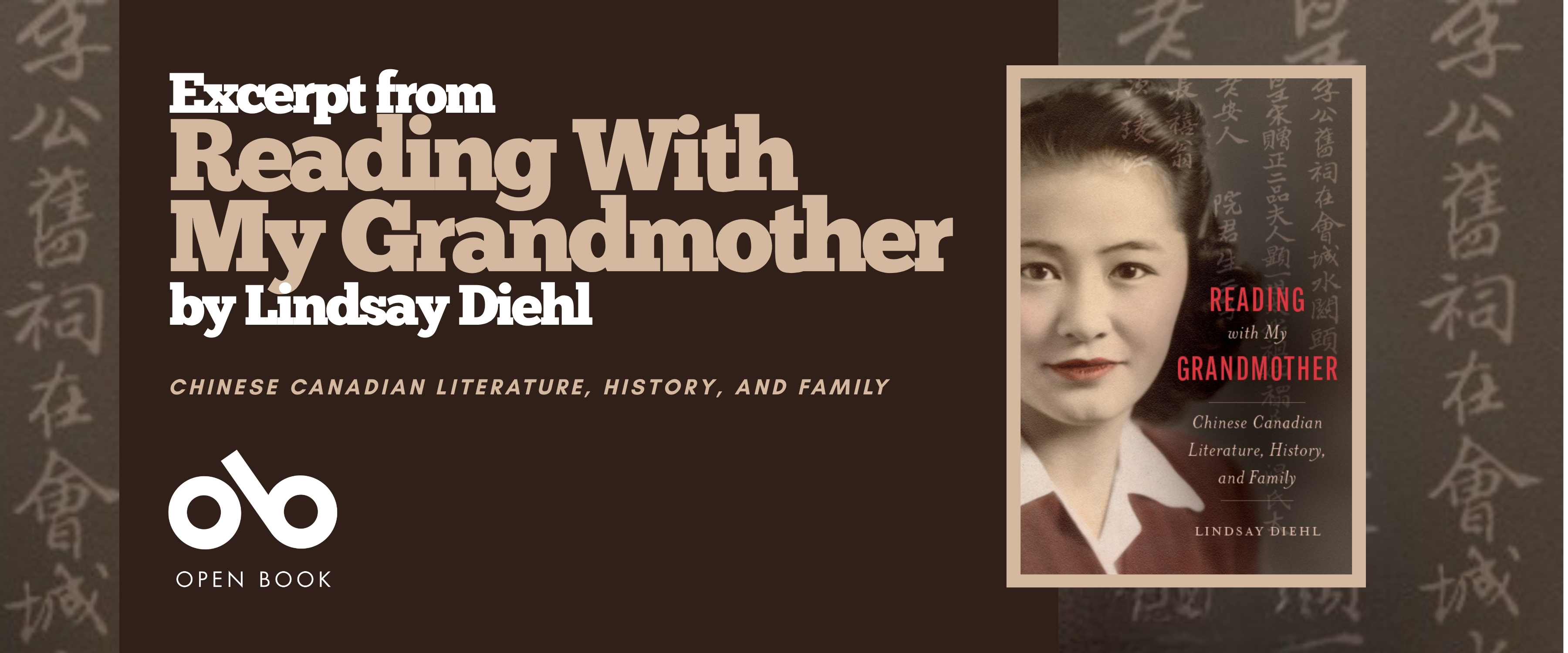
Personal archive and literary study dovetail in Reading with My Grandmother (Wilfrid Laurier University Press), a new nonfiction title from author and academic Lindsay Diehl that shifts gears deftly between scholarship and lived experience. Letters, photographs, and family stories become part of the critical lens, shaping how Chinese Canadian writing is read and understood.
Diehl places well-known texts in proximity to these personal materials, looking at works by Fred Wah, Judy Fong Bates, and Paul Yee alongside inherited narratives. Rather than keeping at a safe distance, this approach draws the author into the frame, illuminating how reading is shaped by memory, family, and history. The result is a method that is analytical and reflective, and that is as attentive to the spaces between words as it is to those in plain view.
This fascinating book engages ongoing conversations in Asian Canadian studies about voice, form, and method. Reading with My Grandmother considers how stories are carried forward, what gets left out, and how readers are asked to rethink familiar narratives about the past.
We've got an excerpt from the introduction of this title right here, for all of our cherished OB readers!
An Excerpt from the Introduction to READING WITH MY GRANDMOTHER: CHINESE CANADIAN LITERATURE, HISTORY, AND FAMILY by Lindsay Diehl
Sometimes when I miss her, I still go back there.
In my mind, I retrace the steps: following the pathway around my mother’s house, unlatching the gate into the backyard, and going down the steps to the basement apartment, where my grandmother is living.
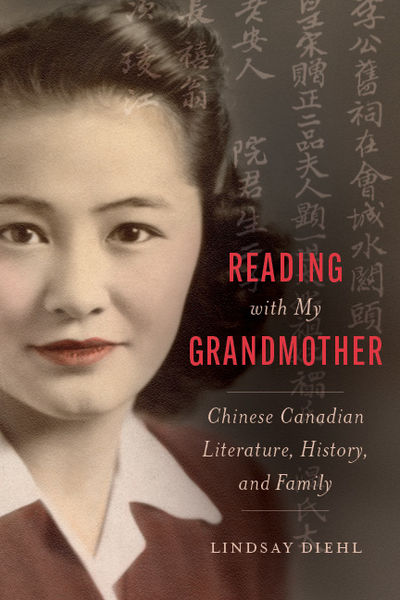
Reading with My Grandmother: Chinese Canadian Literature, History, and Family by Lindsay Diehl
I am an undergraduate student, awkward in my gait and bent slightly forward to bear the weight of my backpack. All morning and afternoon, I have been going to classes at the university, trying not to slip into daydreams—only taking brief moments to gaze out the window at the grey, overcast skies. It has become almost routine for me to visit with my grandmother after my classes have ended for the day. Several days a week, I get off the bus early, going over to her place to have a cup of tea, and maybe a bite to eat, before going home to my own apartment on the other side of the city.
At her front door, I pause briefly to knock and announce my presence. “Grandma,” I call out, “It’s me.” When I step through the door and into her kitchen, I feel a rush of warm air greet my rain-slicked face. Across the room, Grandma looks up from her crossword puzzle and smiles. She is sitting in her usual spot at the kitchen table, behind small piles of books, newspapers, and magazines. I drop my backpack on the floor and kick off my boots. Instinctively, I go to the stove to put the kettle on. I am anxious to get settled in—to hear what kind of stories my grandmother might share with me today.
Some of my most cherished memories are of sitting at my grandmother’s kitchen table, listening to her stories. And, to feel close with her—to remember her little smiles and playful expressions—I often go back there. I have come to think of her stories as gifts that she passed on to me. In a way, they have entered my life, where they continue to “give”—to shape my reflections about who I am and where I come from. As much as they are her stories, they have also become my own.
Your CanLit News
Subscribe to Open Book’s newsletter to get local book events, literary content, writing tips, and more in your inbox
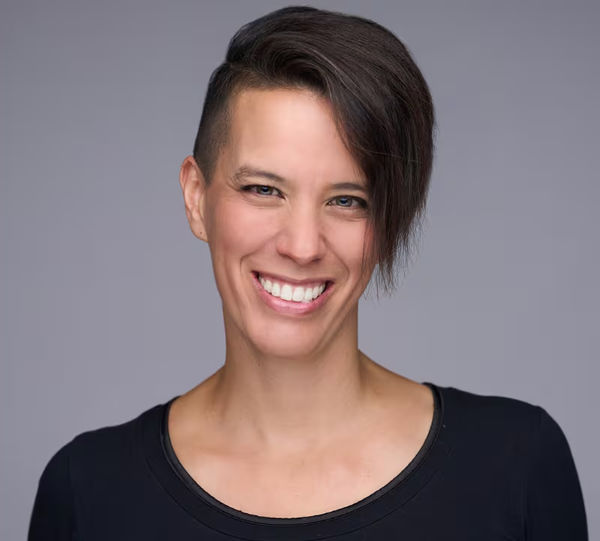
Lindsay Diehl
But, at the same time, I know that there are gaps in my knowledge, especially since my grandmother’s stories are rooted in another time and place. The more I have researched and learned, the more the stories grow complex and nuanced, opening up new insights and questions. I am also aware that I have brought my own thoughts to bear on these stories, breathing my perspectives and experiences into them. While my grandmother, who was second-generation Chinese Canadian, was distanced from the language and culture of her immigrant parents, I am even more so. Not to mention, some of her stories deal with experiences of racism and poverty that are beyond what I am able to fully imagine; she endured a measure of vulnerability and insecurity, especially as a child, that I will never know. Finally, the disparity between my grandmother and me is complicated by my mixed racedness—and my ability to pass as white—which shields me from some of the most virulent forms of racial discrimination.
For these reasons, I have sat with my grandmother’s stories close to me for many years, appreciating what separates us but also holds us together. I have struggled over questions of when and how to share her stories. In the end, a significant part of this book is based on my desire to move through these questions—to reclaim and disclose family memories with integrity.
________________________________________
Lindsay Diehl is an Assistant Professor of English at the University of Manitoba, specializing in contemporary Canadian literature and Asian Canadian studies. Her research, which focuses on Chinese Canadian writing, has been featured in such journals as Canadian Literature, Canada & Beyond, and English Studies in Canada. She lives and works in Winnipeg, Manitoba, on Treaty One territory.