Read an Excerpt from THE DISAPPEARING ACT by Maria Stepanova (translated by Sasha Dugdale)
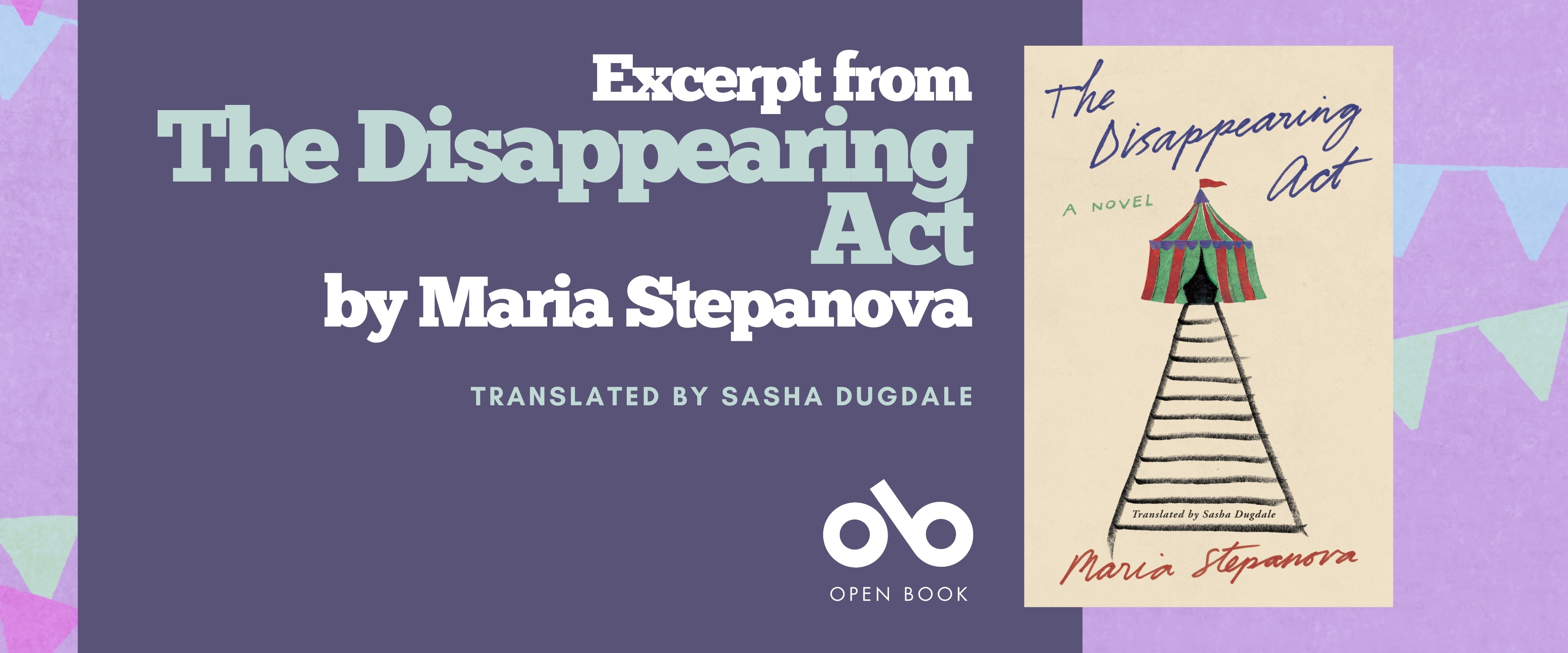
Exile and reinvention take centre-stage in The Disappearing Act (Book*hug Press), a spare and searching novel by Maria Stepanova, the acclaimed author of In Memory of Memory. The story follows a writer known only as M, living abroad after her homeland declares war, and cut off from language, certainty, and the sense of who she once was.
When M travels to give a literary reading, a string of small mishaps leaves her stranded in an unfamiliar coastal town without her phone or contacts. Suddenly untraceable, she feels both exposed and oddly free. Shame, grief, and the weight of her nationality press in, yet so does the possibility of slipping away from those trappings. Memories of childhood surface alongside encounters with a troupe of circus performers who offer her a fleeting chance at reinvention.
Shifting between dream and waking life, past and present, The Disappearing Act traces the fragile desire to vanish and begin again. In clear, hypnotic prose, the novel reflects on identity, language, and the uneasy freedom of being untethered from everything that once defined you.
We've got an enthralling excerpt from the novel to share with our readers today, in advance of the release next week! Check out this special preview!
An Excerpt from The Disappearing Act by Maria Stepanova (translated by Sasha Dugdale)
In the front row, right next to the ring door curtain, in a delightful new world, and one that was totally indifferent to her, the novelist M fell back into her childhood, or perhaps out of her own self, as a key falls out of a pocket. From outside came the roar of thunder and gusts of wind striking the canvas, but inside there was a great brightness, a glittering, and miracles she could only watch with her mouth agape and her fist pressed against her belly. I don’t know what happened in the first half of the show, which she’d spent being measured for her crystal coffin, but in the second half everything was just as when she, as a four-year-old, had been finally allowed into the room to see the festive table, lit with sparklers that reflected off the dark-red glasses of fizzy pop—and the sight made her clap her hands in grateful wonder at the benevolent maternal universe.
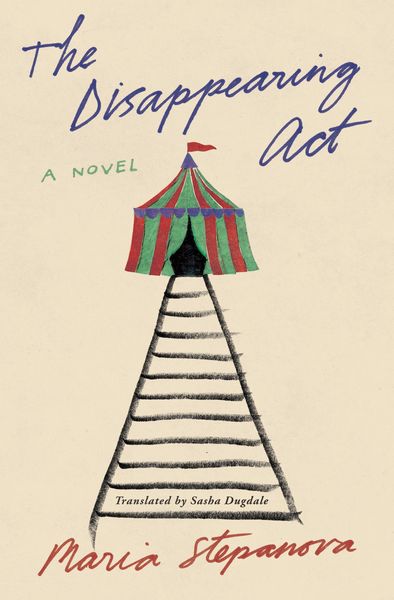
The Disappearing Act by Maria Stepanova (translated by Sasha Dugdale)
A powerful blonde woman in an ornate corset rode into the ring. She performed marvels, vaulting on the back of a white pony; the pony so patiently reliable it might have been a solid little bed on short legs, trotting around in a circle and not in the least hindering its rider from assuming poses or even lying right across its back. Then a helper, a man in black, appeared and began throwing balls to the beautiful blonde rider who caught and juggled them high above her head, while the pony slowed obediently to a walk so the audience could see how cleverly it was all done. Now the lights were dimmed and there was a drumroll and the helper in black ran to the pony, putting blinkers over its eyes, clearly to prevent it from taking fright. Then he began lighting flaming torches, which he tossed to the rider, and she caught them, whirling them through the darkness, juggling one after another until a ring of bright fire had appeared over her head. The people of the town of F applauded all this so loudly as if their delight had reached its peak and nothing more wondrous could be shown to them—and yet there was plenty more to come.
After this, if you can believe it: real lions! M even wondered whether she was still lying in the sarcophagus, dreaming. She was in a civilized country, where the use of animals in circuses was no longer respectable, even in its furthest provinces. But here were genuine, fearsome lions, with huge and powerful paws, and they roared at their trainer as he went from one to the next, commanding them to sit or to lie down or to leap — and then, to the sound of a hushed moan from the audience, he took off his jacket, bent down, and put his head right into the open jaws of the mightiest beast, standing like that for a moment and then withdrawing his head, unharmed. There was ecstatic applause. The lions ran around the ring like clockwork toys and then disappeared, manes and tails and all, vanishing as if it really had been a dream.
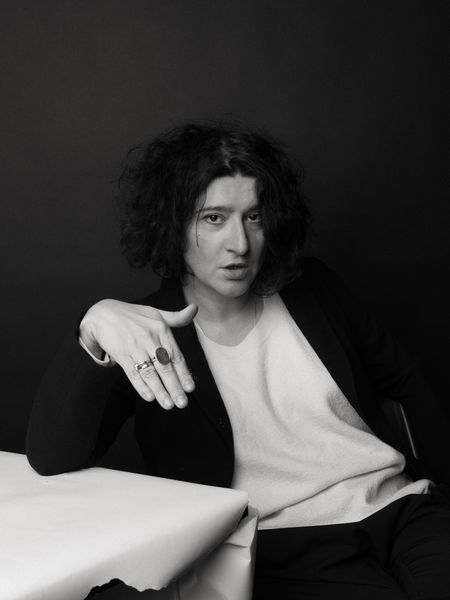
Maria Stepanova (Photo by Andrey Natotsinsky)
This spectacle brought something to mind, vaguely and at the same time quite distinctly, as when you rummage in a bag, knowing both what it contains and what it definitely doesn’t (a poisoned snake, say, or the fingers of a pickpocket). M had almost recalled what it was she was groping for in the ragbag of her thoughts when all of a sudden a girl taking tiny steps in tulle-clad legs came rolling out into the ring on top of a huge blue globe. She moved from one corner to another, swaying her body to the music of a fiddle and entirely distracting M from her efforts to remember. Next, some aerial acrobats; M recognized them from the program the tattooed woman had thrust into her hand (together with a phone charger to feed her dormant cell phone back in the hotel). The program had promised many varied delights: acrobats flying high under the dome of the tent; human pyramids; a mind reader. The high point of it all was yet to come, on the following day, when she fully intended to become a vital part of the show herself, embedded at its heart, even if, like the stone at the heart of an apricot, she was ultimately dispensable. But that evening everything the program had promised came true: a strongman in a stripy leotard squatted and then straightened up, bearing on his shoulders the incredible weight of an antique automobile — an impossible feat of strength! An old woman in a shawl called several men and women out of the audience and told them their names and where they came from. Aerial acrobats swam under the dome of the tent like fishes, flying from darkness into light, from trapeze to trapeze; and M herself was transported, filled with a joy, that didn’t seem rightfully hers. She couldn’t quite dispel the thought that she must be dreaming all these wonders, but when she came out into the night, which bristled and shone like a wet animal, and followed the crowd as it gradually dispersed through the town, her shoes were damp and there was mud stuck to the soles and so she knew it must have been real, that it must have actually happened.

Sasha Dugdale, Translator of The Disappearing Act
And now she remembered what it was she’d been trying to recall, and even squeaked with joy at the recollection: Imagine a picture that has hung above your bed for many years, a picture of a sleepy wood and a path lit by the sun, and every night as you fall asleep you dream you are suddenly inside this picture and walking down the path, stepping over tree roots, with no idea of where it will lead you. The empty bedroom now lies behind you, and no one back there knows any longer where you are, or even who you are. M had a similar picture in her head — or not really a picture, but a book she’d once read and had forgotten about, in the way that we forget those things we once loved so utterly and gave our hearts to, to love forever. Now the book had once again been opened in her head as if a set of double doors had been thrown back and M stood on the threshold.
Your CanLit News
Subscribe to Open Book’s newsletter to get local book events, literary content, writing tips, and more in your inbox
The Disappearing Act. Copyright Maria Stepanova 2026. Excerpt printed by permission of Book*hug Press.
_________________________________
Maria Stepanova is an award-winning poet, novelist, essayist, and journalist. She is the author of many books, including the poetry collection Holy Winter 20/21 and the acclaimed novel In Memory of Memory, both translated into English by Sasha Dugdale. In Memory of Memory won Russia’s Bolshaya Kniga Award and the NOS Prize in 2018 and was later awarded the Berman Literature Prize in 2023. It was also nominated for several other awards, including the International Booker Prize, the Dublin Literary Award, the National Book Award for Translated Literature, the Warwick Prize for Women in Translation, and the James Tait Black Memorial Prize. Stepanova has received numerous international literary awards, including the prestigious Andrey Bely Prize and Joseph Brodsky Fellowship. She founded and served as Editor-in-Chief of the independent, crowdsourced online journal Colta.ru, which engaged with the cultural, social, and political reality of contemporary Russia until the full-scale Russian invasion of Ukraine, when all dissenting media in Russia were forced to shut down. As a prominent critic of Putin’s regime, she had to leave Russia and is now living in exile in Germany.
Sasha Dugdale is a UK-based poet and translator. Her sixth book of poetry, The Strongbox, was published in 2024. Dugdale’s translation of Maria Stepanova’s In Memory of Memory was a finalist for the International Booker Prize and won the MLA Lois Roth Award. She has translated two of Stepanova’s poetry collections, including Holy Winter 20/21 and War of the Beasts and the Animals, as well as work by several other Russian-language women poets, including Elena Shvarts and Marina Tsvetaeva.