The Acclaimed Author of FRET, Nadia Bozak, Takes on Our Writers as Readers Interview
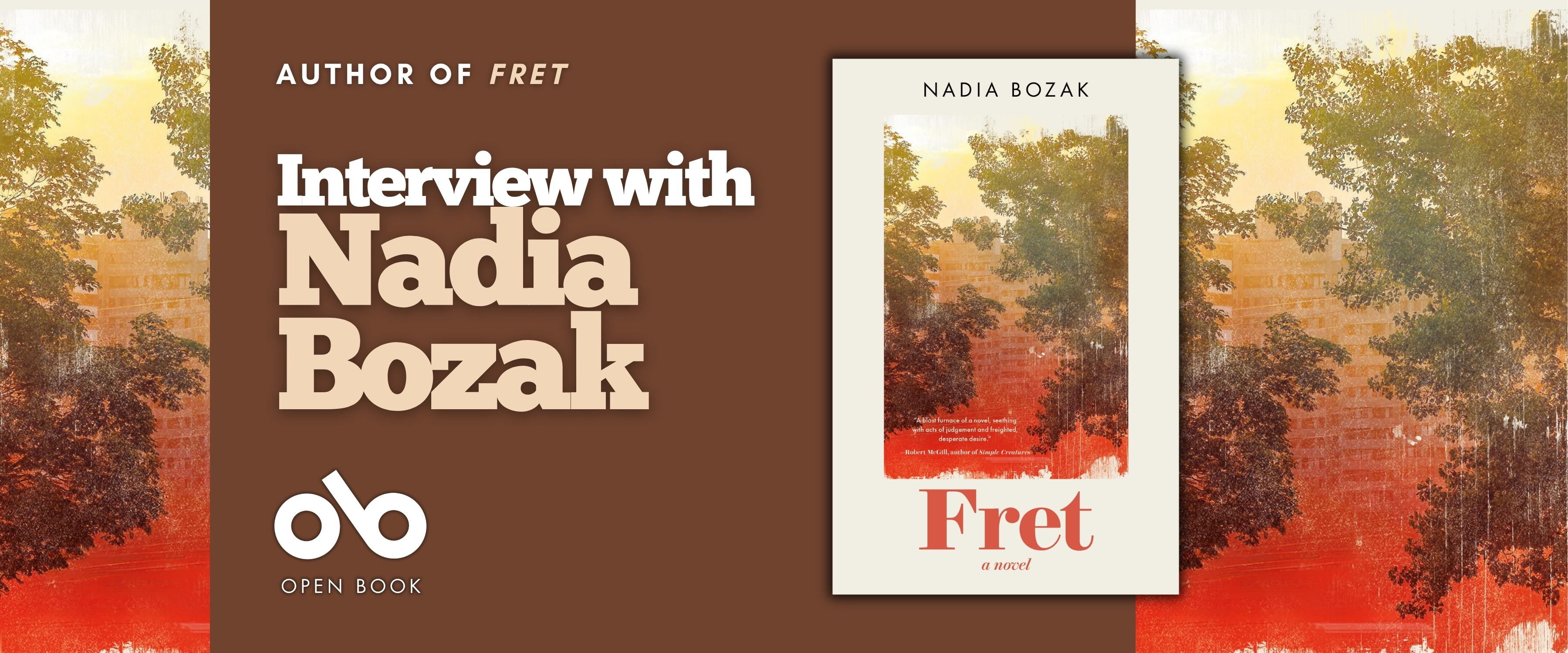
Today we're featuring our last title of the Summer 2026, in Fret (ECW Press) by acclaimed writer and academic, Nadia Bozak. The fifth book from the author follows Kate, a once-rising indie rock star who has settled into life and a middle-aged, single mother with her aspirations for fame and fortune in the music business long-shelved.
In the midst of a mighty heatwave, one single incident involving a stolen car throws Kate's life into chaos. She loses her job, her children, and is publicly shamed by all. Determined not to let her life come crashing down fully, Kate navigates a cold social system in a warming, dangerous world, and finds new connections in the community that bring her back to her glory days as a fledgling musician, when all seemed possible. She even goes as far as to edge toward a reunion and reconcilation with her former bandmate and now arch-rival, who happens to be her own younger sister.
The novel is a celebration of finding your voice despite the pressures and perils of social and structural injustice, and using it to stem the tide of the many challenges that an unfair and changing world can bring to your doorstep. We're delighted to share this interview with the author, and to hear more about this poignant and powerful novel!
Open Book:
The first book I remember reading on my own:
Nadia Bozak:
Maudie’s Umbrella by Kay Chorao. Maybe it was this book, maybe another storybook, but this one seems the most familiar. My mother did me such a favour by saving many of my childhood books, so I have the same copy from my childhood, and I have read it to my own children many times. There is something so soft and hazy about this book, especially the illustrations (in pencil, I think, grey with yellow tones), so it feels like I’m dreaming myself back to childhood as I turn the pages. I remember that I loved the mystery of the story, how it is cleverly solved at the end, and how what Maudie Mole sees, or thinks she sees, is never reliable because she needs glasses and can’t see very well. I remember that the tricks of perception in the book fascinated me, and they surprised me each time, though I knew the story so well.
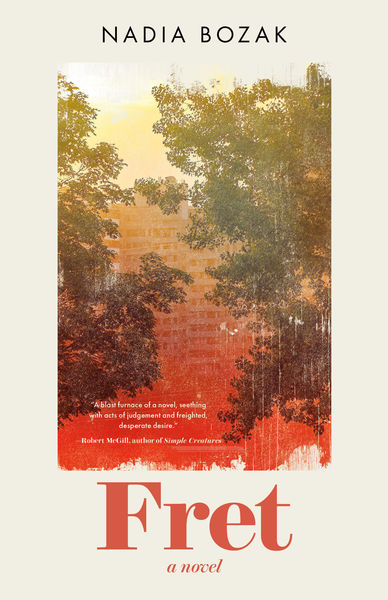
Fret by Nadia Bozak
OB:
The first adult book I read:
NB:
1984 by George Orwell. This one I remember because it was kind of my “spark bird” in terms of getting into more of an analytic reading experience, I guess at age eleven or so. Of course, this was one of those books you were supposed to read if you were at all countercultural, as I tried to be, but I remember thinking deeply about the messages in the book, and wondering what I would do in this kind of society. Would I conform or fight back? And how would you know your society is exploiting or oppressing you if that is all you’ve ever known? I also read it during the Cold War, which seems wacky now and a long time, in the 80s, but maybe in 1986, not in 1984, though at the time, it was the date on the cover that attracted kids in my orbit to read it. This is one book I keep meaning to read again, obviously because Orwell’s book keeps getting so much right.
OB:
A book that made me laugh out loud:
NB:
I love stories by Simon Rich. I read them in the New Yorker and elsewhere when I come across them. However, I recently purchased a copy of his Glory Days story collection so I can have an extended laugh whenever I need one. I find his stories so shocking sometimes that I laugh out of sheer disbelief, and I wonder if he cracks up as he’s writing. I think it was Salman Rushdie who I heard say in an interview recently that even the saddest most desperate stories need a dash of humour. I forget why he thinks that. But I would guess it’s to give the reader a break from bleakness, to indulge in a variety of emotions, and because we need to see the humour in things as a way to process and to survive in the worst of times.
Your CanLit News
Subscribe to Open Book’s newsletter to get local book events, literary content, writing tips, and more in your inbox
OB:
The book I have re-read many times:
NB:
I’ve re-read The Spare Room by Helen Garner a few times this year. It’s so well written, so subtle, the descriptions so precise and surprising. I keep reading it with the aim of figuring out how Garner accomplishes so much in such a slight book, but then I get lost in the prose and the emotional tumult of the story, enchanting me to the point that I forget about the craft lessons I am supposed to be watching out for. It’s a wonderful and unforgettable book, like all of Garner’s books that I have read so far.
OB:
The book I would give my seventeen year old self, if I could:
NB:
I would give my seventeen-year-old self something by Octavia Butler, likely Parable of the Sower. I know she (my younger self) would have found Lauren Olamina a compelling figure (I think she is about seventeen at the start of that book), and she would have related to Lauren’s love of reading and writing; as a young woman protagonist, she’s so cool. I also make this choice because she (my younger self) didn’t read a lot of books by Black authors, and I wish that I had done so, so that I had had a wider view of the world and more understanding of the structural racism, environmental degradation, and plethora of other social issues that Butler’s novel deals with so powerfully. At seventeen, I was steeped in reading Russian classics, which is fine, but I feel these books narrowed my awareness of the issues Butler continues to open our eyes to.

Nadia Bozak (Photo by Ainslie Coghill)
OB:
A book I feel strongly influenced me as a writer and why:
NB:
I have two books: A House on Mango Street by Sandra Cisneros and books by J.G Ballard, especially Crash, Concrete Island and Empire of the Sun. Why Cisneros: The way her bright, vivid prose conjures the child narrator Esperanza and her world and makes “everyday” experiences pop off the page with such clarity and intensity of feeling. Ballard seems the opposite of Cisneros in some ways as his narrators feel cold and distant at times, but if you pick up Concrete Island, as I did recently after not reading it for years, you’ll see it’s a mind-blowing read for the way the mundane and the bizarre/ shocking interact so seamlessly, thus defamiliarizing contemporary culture in the UK (and by extension in North America). I will say too that Ballard’s books that focus on car culture (like Crash and Concrete Island) are really influential as I take up some of the same themes in my work in terms of cars and how humans interact with them.
OB:
The book I plan on reading next:
NB:
I’ve got two books on the top of my pile: A Mouth Full of Salt by Reem Gafaar and Where the Jasmine Blooms by Zeina Sleiman. These books were recommended to me by Monia Mazigh, a friend, colleague, and acclaimed writer, as books to read by Muslim women authors in Canada. I’m looking forward to diving into these stories and learning from these two highly-recommended authors.
_________________________________
Nadia Bozak lives in Ottawa with her family and is a faculty member in the Department of English at Carleton University. Fret is her fifth book.