Sometimes Saving the World Means Breaking the Rules in LYING, STEALING, AND OTHER WAYS TO SAVE THE PLANET
Teen activism gets messy fast in Lying, Stealing, and Other Ways to Save the Planet (Annick Press), a sharp, funny YA novel that throws environmental politics, revenge, and high school grudges into the same chaotic mix.
John O’Neil used to think journalism would change his life for the better. Instead, one disastrous story turned him into the joke of the school. Now he's operating like a one-person blackmail operation, with local rich kid Lance McPhee firmly in his sights. When John discovers plans to expand a country club into a protected bird sanctuary tied to his late grandfather, he reluctantly teams up with the school birdwatching club to stop it.
What follows involves forged documents, break-ins, the dredging-up of old resentments, and a reunion with the former best friend who would rather never speak to him again. Award-winning writer Curtis Campbell keeps the pace quick and the humour dry, while still taking teenage anger and climate anxiety seriously. Lying, Stealing, and Other Ways to Save the Planet is part caper, part coming-of-age story, and fully aware that trying to do the right thing rarely looks clean.
Check out our interview with the author!
Open Book:
Tell us about your new book and how it came to be.
Curtis Campbell:
I started writing Lying, Stealing, and Other Ways to Save the Planet quite soon after the release of my first novel, Dragging Mason County. Delving further into Dragging’s setting was very appealing to me at the time, and I wanted to dig into other sides of Mason County. Dragging follows a group of teens trying to move the dial in their small town just a little by throwing a drag show. I was curious to see how other young people were trying to change that place. Pretty quickly I zeroed in on one of my own anxieties as a kid, which was the growing realization that we were staring down the barrel of climate catastrophe. The idea of writing environmental activists into Mason County became hard to pass up.
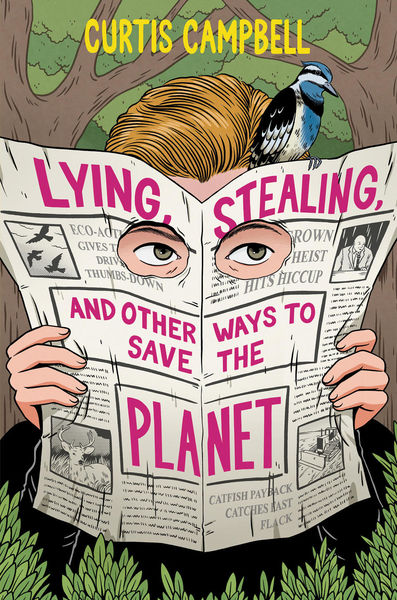
Lying, Stealing, and Other Ways to Save the Planet by Curtis Campbell
OB:
What, in your opinion, is unique about writing for young adults? What are some of the pleasures and challenges?
CC:
Writing in the first person present tense has become the standard for YA books. As a writer coming from the world of theatre, I was accustomed to writing in character voice and writing monologues, so it was surprisingly easy for me at the time. It lends itself to comedy quite well, and works well for my style of comedy. That’s always been a really nice plus.
But it does keep writers from moving into a more literary place, which can really paint you into a corner. It sometimes feels like I’m writing something that would work better on film, and I do think a lot of YA fiction is trending in that direction. I think we need to shake off our reliance on present tense if we want to move out of this novel-as-movie moment we’re in.
Your CanLit News
Subscribe to Open Book’s newsletter to get local book events, literary content, writing tips, and more in your inbox
OB:
YA features some strong genre themes and tropes. How do you feel about those elements of the genre?
CC:
I don’t think YA really is a genre to itself. If it is, I think we need to disabuse ourselves of that idea as writers and readers. Young adult is an age range of readers, with science fiction and fantasy and realism and horror all possible within the pages.
I think we owe it to YA readers not to talk about it as a genre, because in doing so we give rise to those tropes in the first place. Narrowing an entire spectrum of books into a single genre with a few commonly accepted plot elements seems irresponsible. It turns YA fiction into disposable content, rather than novels for an age group who deserve to read high-quality writing as much as anyone else.
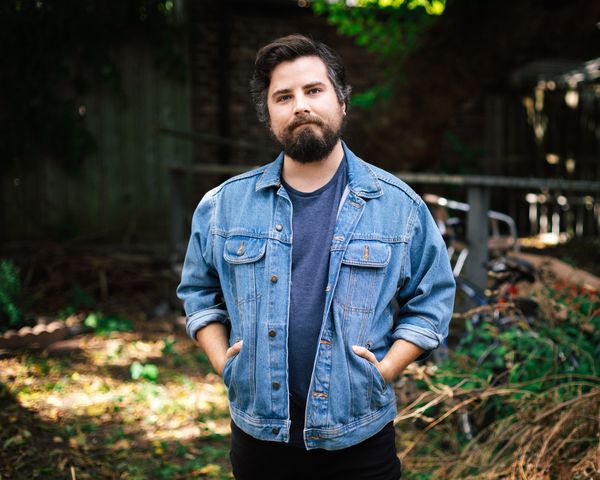
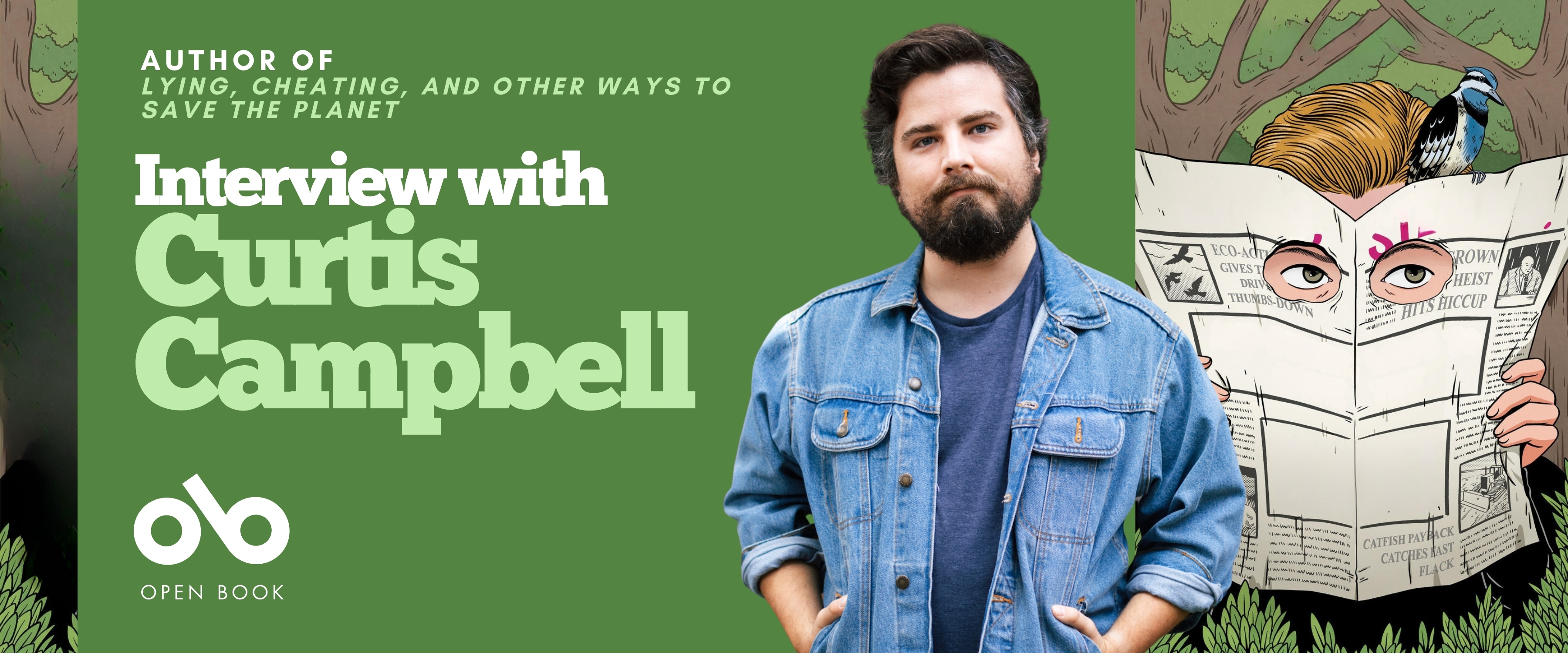
Curtis Campbell (Photo by Kevin Connery)
OB:
Was there a YA book you read as a young adult that is particularly meaningful to you?
CC:
I was a huge fan of Philip Pullman’s His Dark Materials, and I was completely taken in by Lois Lowry’s The Giver. Both were massively influential on my developing brain. A Series of Unfortunate Events was also a big deal for me as a kid. I had no idea you could be dark and funny at the same time.
OB:
What’s your favourite part of the life cycle of a book? What’s the toughest part?
CC:
The second draft is always the toughest part, I find. Complete torture. Having gone through all of those steps listed here, I think the part I like best is when I find out that there are a few kids actually reading the thing you’ve been rewriting for hours on end.
A friend of mine was teaching a theatre workshop at a middle school and told me he saw a kid with my book in hand. That was cool. So that’s probably my favourite part.
OB:
What are you working on now?
CC:
I’m working on a play at the moment, and a couple of novels in their very early stages. Their second drafts are far in the distance, and I’m really enjoying that distance.
______________________________________
Curtis Campbell is an award-winning novelist and playwright. His book Dragging Mason County was a White Raven Award winner, an Ontario Library Association Best Bets Top Ten Title, a White Pine Award nominee, and shortlisted for the Jacqueline Woodson Award for LGBTQ+ Young Adult and Children’s Literature. He lives in Toronto with an artist named Kevin and their dog, Pip.