The Illustrator's Studio with Brittany Lane - TAKING TURNS WITH TURTLES: A RESCUE STORY
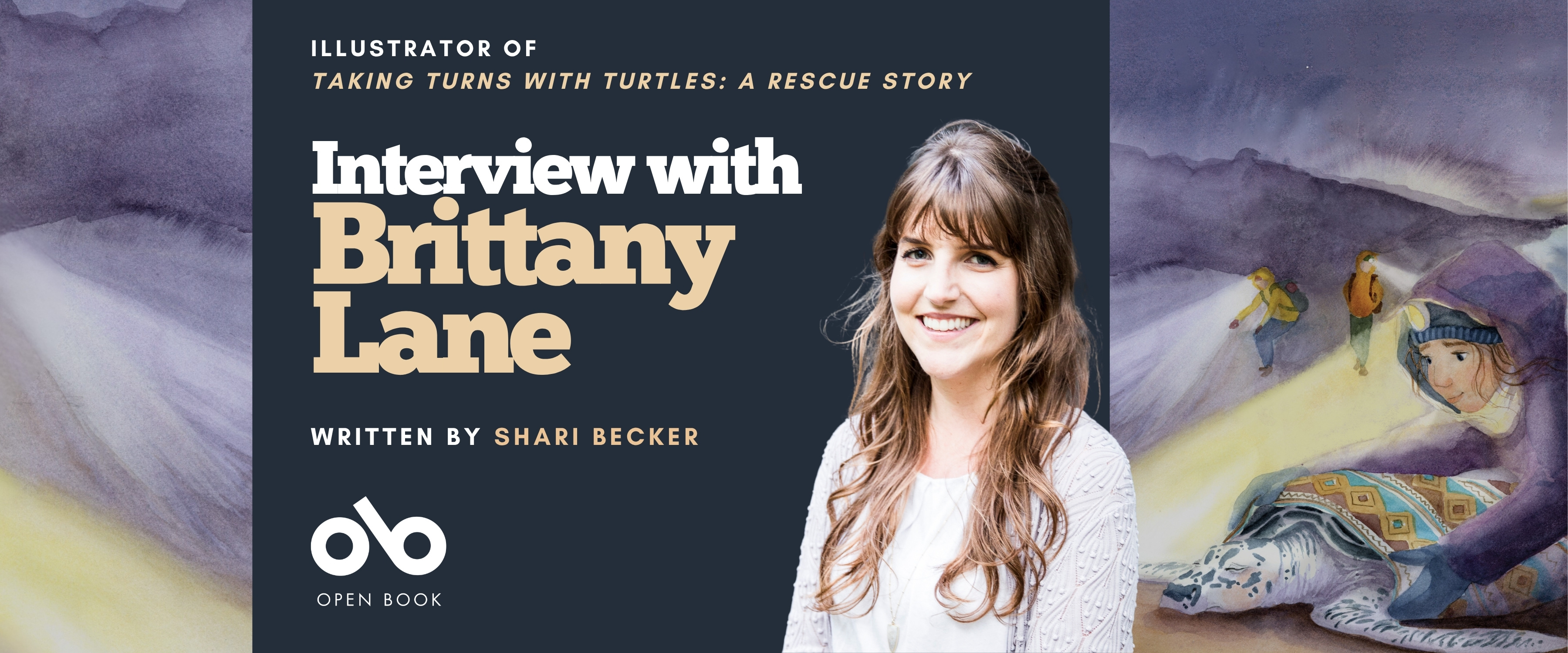
Before the sun is fully up, people are already walking the shoreline, scanning the sand for signs of life in Taking Turns with Turtles: A Rescue Story (Groundwood Books). The work is quiet but urgent, and on this particular morning, it leads to a cold-stunned turtle that needs help.
From there, the story takes the reader step by step through a network of care. The turtle is warmed, protected, and passed along to others, each person taking a turn in its recovery. Shari Becker keeps the focus on that chain of effort, showing how small actions add up, from the beach to the rehabilitation centre and beyond.
With soft, attentive artwork by Brittany Lane, the journey feels both immediate and expansive. By the time the turtle is returned to the ocean, Taking Turns with Turtles: A Rescue Story has built a clear sense of shared responsibility, grounded in real-world care and the impact of many hands working together.
We have a special The Illustrator's Studio interview with the artist behind these amazing illustrations, and we're delighted to share it here!
Open Book:
What was the strangest or most memorable moment or experience during the creative process for you?
Brittany Lane:
When Emma Sakamoto from Groundwood Books first reached out about this project, I had to do a double take. Before becoming an illustrator, I spent over a decade working in biology, including rehabilitating sea turtles—so it felt incredibly serendipitous to be illustrating a story connected so closely to my own past.
Around the same time, I had just had my first child. Groundwood was very supportive in helping me create a schedule that allowed me to balance new motherhood with the project. I’d work whenever my daughter napped, and at one point, I found myself painting at 3 a.m. because of a bout of postpartum insomnia. That was definitely a strange moment.
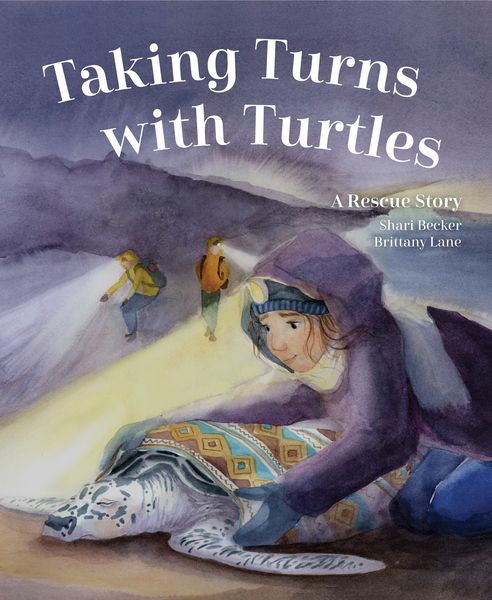
Taking Turns with Turtles by Shari Becker (Illustrated by Brittany Lane)
OB:
What do you need in order to plan and create your artwork—space, food, rituals, tools?
BL:
I need a cozy setup: tea, a snack, and my dog Luna beside me. She sleeps near a small electric fireplace, which adds to the atmosphere—I love working during storms for that same reason. During the sketch phase, I use a cheap, well-worn sketchbook so nothing feels too precious. I often work in silence, focusing on mood, with just the sound of the fireplace and Luna snoring. I even catch myself making the same facial expressions as my characters.
Your CanLit News
Subscribe to Open Book’s newsletter to get local book events, literary content, writing tips, and more in your inbox
When I move into final artwork, I shift into a more playful mindset. I’ll listen to upbeat music or podcasts like Creative Pep Talk or Conan O’Brien Needs a Friend while finishing the pieces.
OB:
How, if at all, does social media feature in your artistic process?
BL:
I have a bit of a complicated relationship with social media. It’s necessary for promoting your work, but it’s also easy to get caught up in comparisons. Instagram used to be a great space for sharing art, but recent changes have made it harder to reach audiences unless you’re creating video content. Since having my daughter, I’ve stepped back from posting regularly and have relied more on the books themselves to build recognition.
OB:
What’s your favourite part of the life cycle of an illustrated project? What’s the toughest part?
BL:
I love the thumbnail sketch stage the most. There’s so much freedom and possibility, and that energy often shows in the drawings. The hardest part is holding onto that same liveliness and simplicity when moving into the final artwork.
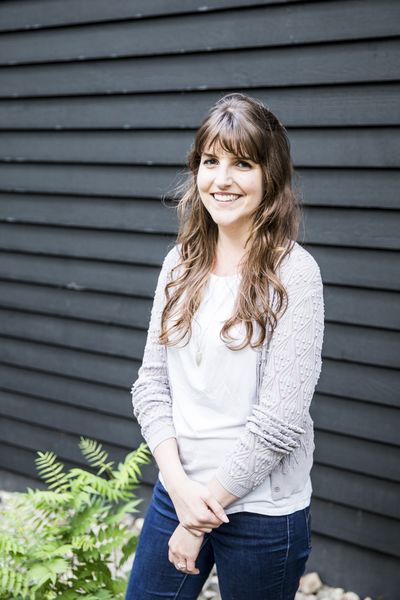
Brittany Lane (Photo by Scott Turnbull)
OB:
What are you working on next?
BL:
I’m currently working on a project with Greystone Books—the second in a trilogy focused on animals’ “sixth senses.” We’re in the thumbnail phase right now, and I’m excited about the range of perspectives and vibrant spreads I’ll get to create. I’d also love to collaborate with Emma and the Groundwood team again—Taking Turns With Turtles was such a rewarding experience.
____________________________________________
Brittany Lane is an illustrator and fine artist based in a small town in rural Ontario. She worked for a decade as a wildlife biologist before turning to illustration as a way to highlight and share the wonders of the natural world. Her debut picture book, Rock? Plant? Animal? How Nature Keeps Us Guessing, written by Etta Kaner, won the Silver Birch Express Award. The Day Dancer Flew, by Tiffany Stone, was named a CCBC Best Book for Kids and Teens, and an Ontario Library Association Best Bet.
Shari Becker has been writing and creating content for children and teens for over twenty-five years. Shari’s books include Sprouting Wings, which she co-authored with Louisa Jaggar, illustrated by Floyd Cooper, The Stellow Project and Maxwell’s Mountain. Her books have been named Junior Library Guild Selections as well as Bank Street Best Books. Shari is the founder of Whale Rock Literary Workshops, a master-level writing education company for kidlit authors. Shari lives in Toronto, Ontario, with her family.