Celebrated Poet Ronna Bloom Breathes Life into the Poignant Verse of IN A RIPTIDE
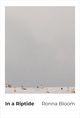
In a brand new collection of poetry, Ronna Bloom brings her singular wit and emotional acuity to bear in every word and line. In a Riptide (Brick Books) thrives in creating a space where humour, darkness, and wonder coexist without compromise. The result is a work that is alive with surprises, brimming with feeling, and keenly attuned to the strangeness of simply being human.
These poems move through a wide mix of moods and moments. The characters are worn out, confused, delighted, grieving, jesting, or just trying to get through the day. Strange and familiar figures appear throughout the collection. Emily Dickinson crosses paths with Bukowski, the Buddha steps into the shower, and even Sisyphus gets a moment to rest. The poems breathe through the chaos, offering brilliant flashes of clarity, mischief, and unexpected freedom.
We're thrilled to share this Poets in Profile interview with the author, and to dive even deeper into this wonderful collection of poetry!
Open Book:
Can you describe an experience that you believe contributed to your becoming a poet?
Ronna Bloom:
Being a kid, bewildered and ignored, I kept a diary. It's where I did my deep talking. It's where I was free.
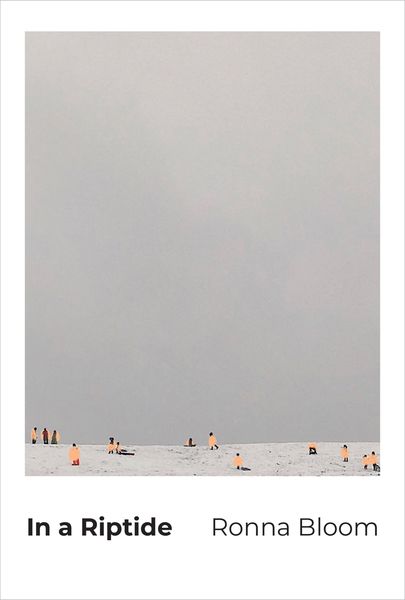
In a Riptide by Ronna Bloom
OB:
What is the first poem you remember being affected by?
RB:
“Mrs Snipkin And Mrs Wobblechin.” My grade 3 teacher recited it quickly and in a very high voice. I loved the sounds, the rhyme, the permission to be silly. I think schools might cringe now at the body shaming content. However, if you ever come to one of my readings and there's a q&a, if you ask for this poem, I will do it for you.
OB:
What one poem from any time period do you wish you had been the one to write?
RB:
“Song” by Allen Ginsberg. The line “the weight of the world is love.”
Your CanLit News
Subscribe to Open Book’s newsletter to get local book events, literary content, writing tips, and more in your inbox
OB:
What has been your most unlikely source of inspiration?
RB:
Hospitals.
OB:
Do you write poems individually and begin assembling collections from stand-alone pieces, or do you write with a view to putting together a collection from the beginning?
RB:
Oh for sure individually. Whenever I finish a book, I have no idea if there will ever be another one. I just write a poem and then a poem and then two years later I begin to see what I’m writing about and keep going. It’s only when I feel depleted that I begin to cull my notebooks and see what the whole is.
With my current book In a Riptide I wrote a poem a day in 2020 (a decision I made on a whim in January, before we knew what was coming). Many poems were written with illness and death in mind. But also I’m playful and kind of happy so there’s a lot of that. Only when my friend Alayna Munce read the manuscript did the structure become clear. The poem “Immeasurable” is about meeting a woman in the street who asked where she could buy some meat and nothing was open so I couldn’t help her and she walked away. The last line goes: “And I thought of the four people the Buddha met in his travels: sick person, old person, dead person, happy person with nothing, and I felt like all of them.”
Alayna suggested I put that poem first and make four sections: sick person, old person, dead person, happy person with nothing. The poems fell into their sections like a deck of cards. I could never have planned that. (Full disclosure: Alayna is also the publisher of Brick Books. Books selected for publication at Brick are chosen by a collective and in this instance, Alayna stepped back.)
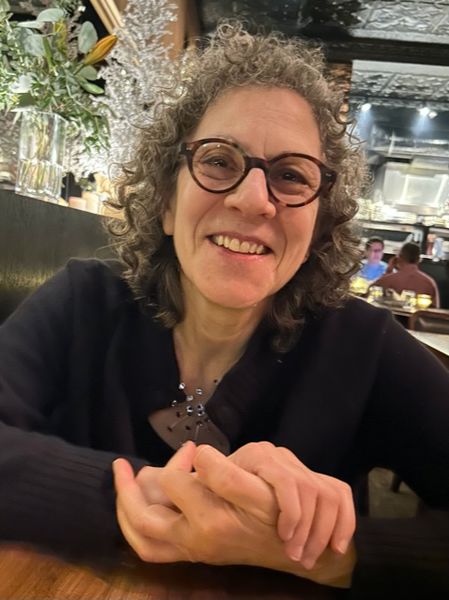
Ronna Bloom
OB:
What do you do with a poem that just isn't working?
RB:
Leave it alone. If it has energy in it, I’ll go looking for it later.
OB:
What was the last book of poetry you read that really knocked your socks off?
RB:
Here are a few: Karen Solie’s Wellwater; Myna Wallin’s The Suicide Tourist; Faith Arkorful’s The Seventh Town of Ghosts; Diane Seuss’s Modern Poetry; William Stafford’s The Way It Is: New and Selected Poems.
__________________________________
Ronna Bloom is a Toronto-based poet and educator and the author of seven books of poetry. Her work has been broadcast on CBC, recorded by the Canadian National Institute for the Blind, and translated into Bangla and Chinese. Ronna is also someone who puts poetry to work in the world; she has led many initiatives to bring poetry into health care settings, specifically developing the first Poet-in-Residence program at Mount Sinai Hospital/Sinai Health. Ronna’s most recent book is A Possible Trust: The Poetry of Ronna Bloom, selected with an introduction by Phil Hall (Wilfrid Laurier University Press, September 2023).