Story Sparks & Surprises with Anita Yasuda, Author of BOLLYWOOD BEAT!
A dance recital is exciting enough on its own, but Bollywood Beat! (Kids Can Press) captures everything that happens around it too, from the nervous energy backstage to the thrill of stepping into the spotlight for the very first time.
As two sisters prepare to perform, the theatre fills with jingling ankle bells, swirling scarves, and the buzz of family and friends gathering to cheer them on. When the younger sister suddenly freezes at the thought of going onstage, it takes a quiet act of encouragement from her older sibling to help her find her confidence. Before long, the audience is clapping, dancing, and celebrating right alongside the performers.
Anita Yasuda brings the rhythm of Bollywood dance to the page through playful, read-aloud language that practically begs to be performed, while Devika Oza fills every spread with rich colours, movement, and expressive characters. Bollywood Beat! is a joyful celebration of family, culture, and the courage it takes to step into the spotlight, even when your knees are shaking.
We've got a special Story Sparks & Surprises interview with the author, today on Open Book!
Open Book:
Every picture book starts somewhere. What was the spark for this story, and how did it evolve from your first rough draft to the final pages we see today?
Anita Yasuda:
Bollywood Beat!, illustrated by Devika Oza and published by Kids Can Press, grew out of my lifelong love of Bollywood's dazzling music, fashion, colour, and dance.
I grew up surrounded by Bollywood. My aunt was a well-known entertainment journalist in Mumbai who covered the Hindi-language film industry for decades, so it was always part of my world. My father and I also shared a love of classic Bollywood films from the 1950s and 1960s. It wouldn't have felt like home without the velvety voice of Talat Mahmood playing in the background.
At the same time, I remember how difficult it was to find South Asian representation growing up. In the 1970s, I had to wait for a short segment of South Asian programming on Citytv if I wanted to watch Indian dance. Years later, as a teacher, I still struggled to find children's books that celebrated South Asian stories and specifically showcased Bollywood dance.
I wanted to write a joyful, rhythmic celebration of Bollywood that highlighted the "masala," or blend, of dance styles that make it unique, from classical forms like Bharatanatyam to folk traditions like Bhangra and contemporary styles like hip-hop. I imagined the story unfolding through the eyes of two sisters and building toward a joyful Bollywood-style finale.
Your CanLit News
Subscribe to Open Book’s newsletter to get local book events, literary content, writing tips, and more in your inbox
I also wanted to weave in a subtle social-emotional learning theme. While the manuscript didn't change dramatically through revisions, working with my editor strengthened every page. I was also incredibly fortunate to collaborate with Devika Oza, whose vibrant illustrations capture both the exuberance of Bollywood and the emotional journey of the children beautifully.
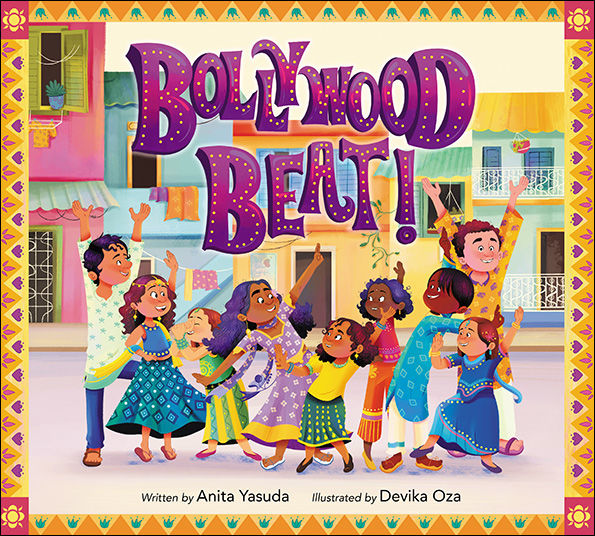
Bollywood Beat! by Anita Yasuda (Illustrated by Devika Oza)
OB:
Picture books pack big feelings into just a few words. How did you keep the heart of the book on the page without being too on-the-nose or "message-y"?
AY:
Having shared hundreds of picture books with children throughout my teaching career, I've learned that young readers are remarkably good at discovering emotional themes for themselves.
There are two full spreads devoted to the younger sister's experience with stage fright, along with a gentle solution that shows how an older sibling can offer support. Rather than spelling out the lesson, I wanted children to experience it through the story itself.
The repeated palindrome-inspired phrases also encourage participation and reinforce another important message: celebrating joy, confidence, and self-expression through dance.

Anita Yasuda, author of Bollywood Beat!
OB:
Rhythm, rhyme, repetition—sometimes they're superpowers, sometimes tricky traps. What's your secret for getting the sound and flow just right?
AY:
For me, every picture book has to be read aloud.
I don't just read my manuscripts myself. I also use the read-aloud feature on my computer. Hearing another voice, even a mechanical one, often reveals awkward phrasing or places where the rhythm isn't quite working. I'll revise, listen again, and repeat the process until the language flows naturally.
For Bollywood Beat! specifically, I imagined a young child bouncing from side to side in the rhythm of a Bhangra dance. The short, energetic palindrome-inspired phrases mirror that movement and capture the joyful way preschoolers naturally respond to music.
OB:
Representation matters. How did you make sure your characters or communities were portrayed with care? Who did you talk to or what research did you dive into?
AY:
Representation absolutely matters.
Although I was born in Canada, I'm South Asian, so this story comes from a place of lived experience. While writing the manuscript, I spent time reminiscing about Bollywood with my father, who has since passed away. We talked about our favourite songs, actors, and films, and those conversations became an important part of the creative process.
I also wanted to show how Bollywood has become something that brings together people from many different backgrounds and generations. That's why the recital audience is intentionally diverse, and why grandparents play such a visible role in the story. Many South Asian families live in multigenerational households, and I wanted that reality reflected on the page. I love the warmth and authenticity Devika Oza brought to those family moments.
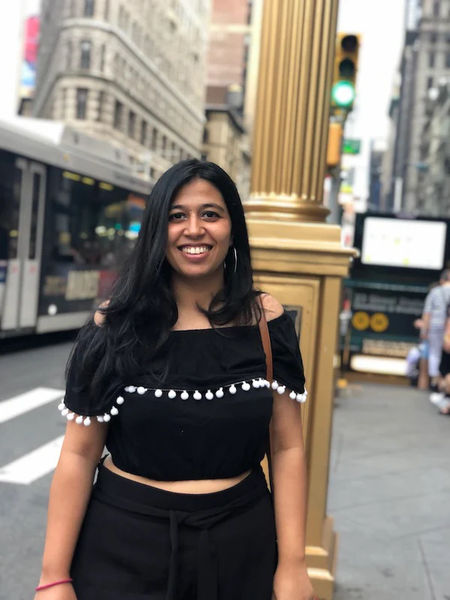
Devika Oza, illustrator of Bollywood Beat!
OB:
If a teacher or librarian built a storytime or lesson around your book, what's the activity or discussion you'd secretly hope they do?
AY:
I'd love to see children introduced to Bollywood as both a cultural tradition and a joyful form of artistic expression. It's helpful to explain that "Bollywood" combines the names Bombay (now Mumbai), where many film studios are located, and Hollywood. While Bollywood refers specifically to Hindi-language films, India actually produces more than 1,500 films each year in over twenty regional languages.
Teachers can make the story interactive by playing music, encouraging children to clap to the beat, dance with scarves or ribbons, use percussion instruments, play follow-the-leader, or even enjoy a round of freeze dance.
I also hope educators use the story to start conversations about stage fright. Feeling nervous before performing is something many children experience, and it's important for them to know those feelings are normal. When I read the book aloud, I ask children to cheer for the younger sister and notice how her older sister helps build her confidence by lending her a dupatta. From there, children can brainstorm their own ideas for supporting someone who's feeling nervous or share experiences of times they've had to be brave.
OB:
Looking back, what's one craft lesson—about process, collaboration, or publishing—that you wish you'd learned earlier?
AY:
Writing can seem like a lonely pursuit, especially when you're just beginning, but it doesn't have to be.
One of the most valuable lessons I've learned is the importance of finding community, particularly for BIPOC creators. I'm a co-host of SCBWI Canada East's BIPOC Talk alongside author Sade Smith, a group created by Nadia Hohn. It provides a welcoming space where BIPOC creators can connect, learn from one another, and openly discuss their experiences in publishing.
Having that kind of supportive creative community has made all the difference in my writing journey.
_______________________
Anita Yasuda is an award-winning Canadian writer of South Asian descent. She was born and raised in the rolling hills of southern Ontario. From a young age, Anita was passionate about writing and often found herself with a pencil in her hand, crafting stories. When she wasn’t recruiting friends to act out her tales, she was studying various forms of dance, watching Bollywood movies and dreaming of the stage.
Devika Oza is an illustrator from Kolkata, India, the “City of Joy,” renowned for its art, culture and food. Growing up in a land rich with folklore meant that storytelling has always been integral to her life. While pursuing a BA in multimedia and animation in a prestigious art institute in Kolkata, she discovered her passion for illustration, which led her to specialize in illustrating for children. She lived for five years in Toronto, Canada, and now resides in Dublin, Ireland.