A Short-Lived Community Lingers Long After it is Gone in TEMPORARY PALACES

A short-lived community leaves a long afterlife in Temporary Palaces (House of Anansi Press), a debut novel from Jeff Miller that circles back to one summer and ponders what, exactly, remains from that unique window of time.
In 2001, Rob, Ben, and Alex are part of a loose, shifting collective that takes over an abandoned house. It is messy, energizing, and full of purpose. Rob throws himself into activism, Ben begins to feel sidelined, and Alex documents the scene as it unravels. When the squat is broken up and Rob disappears, the moment ends as spontaneously as it began, and without true closure.
Years later, Ben and Alex reconnect, carrying more than they let on. Miller writes with a clear sense of distance, letting the past surface in fragments rather than grand revelations. Temporary Palaces is less about nostalgia than about what sticks: the unfinished parts of ourselves, the altered relationships, and the quiet recognition that some questions do not resolve with time.
We'll thrilled to share an interview with the author of this fascinating new novel as a special preview before the official release on April 21st! Go ahead and grab a copy on pre-order right here!
Open Book:
Do you remember how you first started this novel or the very first bit of writing you did for it?
Jeff Miller:
I started out as a writer by making a nonfiction zine about my life called Ghost Pine. I wrote true stories for years.
Then one day I wrote something different: a short scene about a man moving out of an apartment he’d lived in for years. On his final sweep, he finds a roll of undeveloped film in the back of his freezer. Knowing who it belongs to, he pockets it and later has it processed.
That moment introduced me to Ben Knotman, one of the novel’s protagonists. I didn’t yet know the other—photographer Alex Riopelle—but the scene hinted at who she might be and her relationship to Ben. Their connection across time and distance became the heart of Temporary Palaces. The scene didn’t survive beyond the first draft, but it gave me everything.
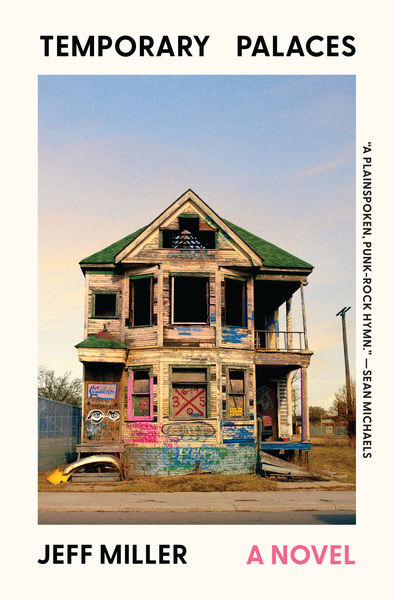
Temporary Palaces by Jeff Miller
OB:
How did you choose the setting of your novel? What connection, if any, did you have to the setting when you began writing?
Your CanLit News
Subscribe to Open Book’s newsletter to get local book events, literary content, writing tips, and more in your inbox
JM:
Although the novel is fictional, its punk and DIY setting comes from lived experience. Growing up in Ottawa in the 1990s, I was part of a vibrant punk and hardcore scene. DIY venues like 5 Arlington and Two Steps Above hosted touring bands, and local groups brought a distinctive energy. I wanted to capture that texture, grit, and sense of community in the book’s world.
OB:
Did the ending of your novel change at all through your drafts? If so, how?
JM:
This was my first novel, so it went through countless versions. Early on, when it was my MFA thesis at UBC, the story focused more on the restaurant Ben runs, including a dramatic explosion near the end. While it was fun to write, it distracted from the emotional core of Ben and Alex reconnecting. I eventually cut those elements to bring the focus back to their relationship.
OB:
If you had to describe your book in one sentence, what would you say?
JM:
“Things don’t have to last forever to be important.”
OB:
Did you do any specific research for this novel? Tell us a bit about that process.
JM:
I drew heavily on my own experiences but supplemented them with research after the first draft. I looked into events like the Northeast blackout and a squat that emerged from a protest in Ottawa. I also checked details about music, food, and technology of the time—everything from consulting a chef friend to remembering printing MapQuest directions. Rebecca Solnit’s essay “In the Day of the Postman” was especially helpful in capturing the era’s feeling.
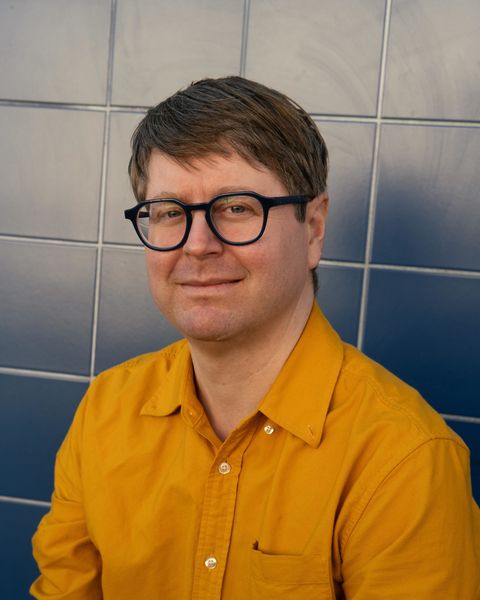
Jeff Miller (Photo by Paul Hammond)
OB:
Who did you dedicate your novel to, and why?
JM:
The book is dedicated to my friend Will Munro, whom I met in the punk scene. He went on to create influential textile art exploring queer histories and was behind the Vazaleen parties and The Beaver in Toronto. His name represents an entire community and era to those who knew him. He passed away in 2010, but his presence still feels close.
OB:
Did you include an epigraph in your book? If so, how did you choose it and how does it relate to the narrative?
JM:
The title came from graffiti I saw on a shuttered Dairy Queen in Ottawa: “All Palaces are Temporary Palaces.” I photographed it and shared it with my editor at Anansi, Douglas Richmond, who suggested using the image as a visual epigraph. Later, when I posted the photo online, a friend revealed they were the anonymous artist. That discovery made the connection feel even more meaningful.
_____________________________
Jeff Miller is the author of the award-winning creative nonfiction collection Ghost Pine: All Stories True. His stories have appeared in several anthologies, and he frequently publishes criticism. Jeff holds an MFA from the University of British Columbia and lives in Nova Scotia.