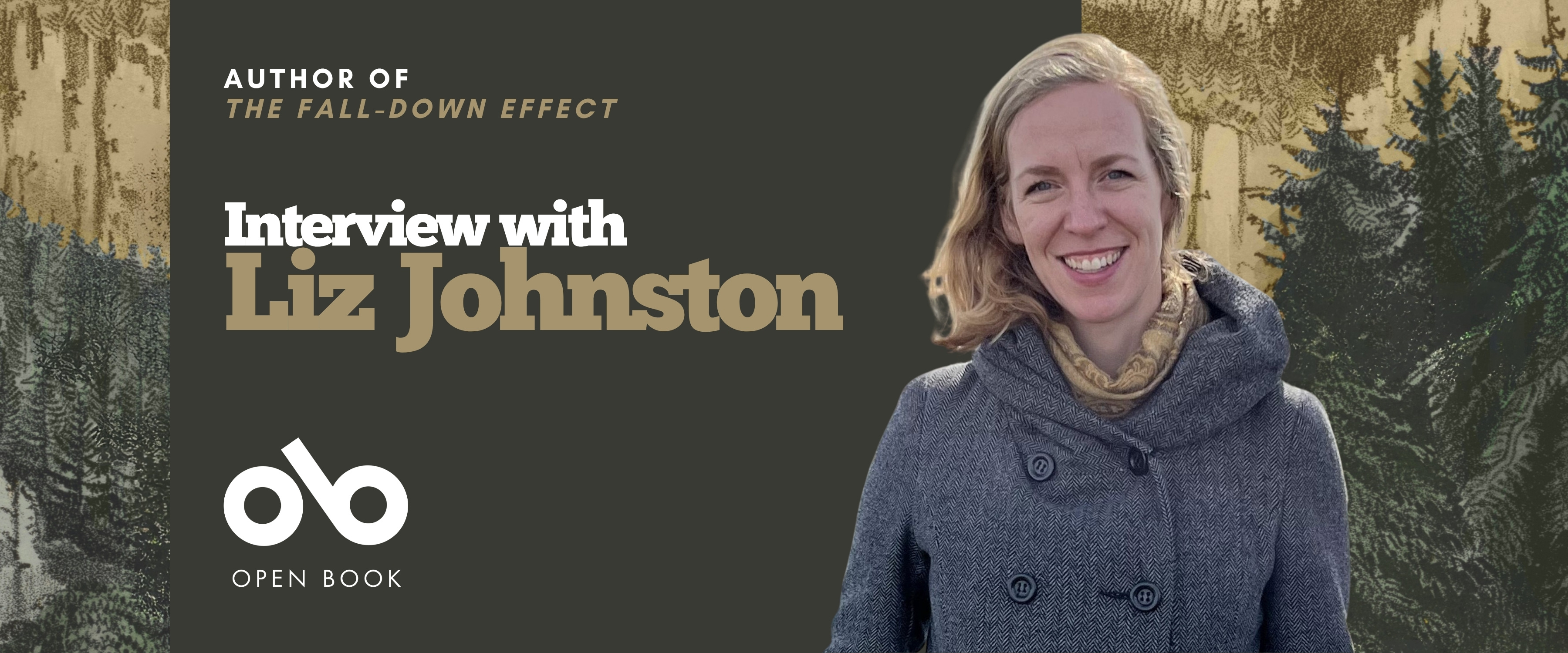
Open Book Interviews Liz Johnston About Her Exciting Debut Novel, THE FALL-DOWN EFFECT
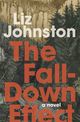
A single act of protest ripples outward through a family in The Fall-Down Effect (Book*hug Press), a debut that explores how public actions affect private lives. Set against a backdrop of environmental activism, the novel follows one family over decades as they try to live with the choices they have made.
Fern grows up in a small Pacific Northwest town, closely tied to her mother Lynn’s passion for protecting the land. But that same commitment pulls Lynn away from her family, leaving a fracture that never fully heals. Years later, Fern makes a radical decision of her own, one that forces her underground and leaves the rest of the family to deal with the fallout, both practical and emotional.
As time passes, distance and resentment build, until a crisis brings them back together. Exciting new author Liz Johnston traces these shifting relationships with a clear, grounded approach, keeping the focus on what is said and what is left unsaid. The Fall-Down Effect asks what responsibility looks like when personal bonds and political beliefs are in conflict, and what it takes to face the consequences of both.
We interviewed the author a few weeks in advance of the release of this captivating novel, and you can pre-order it right here!
Open Book:
Do you remember how you first started this novel or the very first bit of writing you did for it?
Liz Johnston:
I started drafting The Fall-Down Effect from the middle. I’m not much of an outliner, generally discovering my story through the drafting process, but from the moment I first conceived of this novel, I knew it would unfold in three parts set several years apart. The first scene I could see clearly enough to begin setting down came from the middle section: River, the youngest of my three sibling protagonists, is at his high school commencement ceremony, thinking only of his middle sister’s absence as he scans the auditorium.
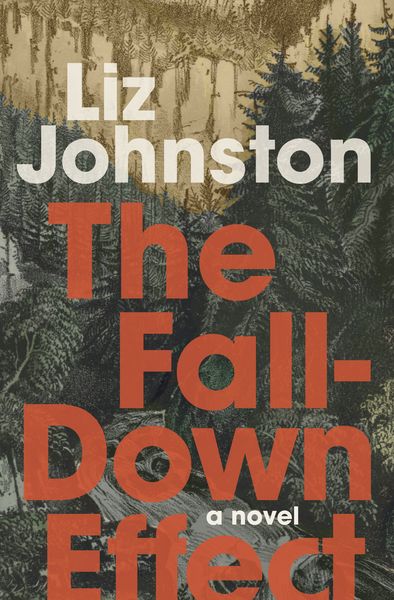
The Fall-Down Effect by Liz Johnston
OB:
How did you choose the setting of your novel? What connection, if any, did you have to the setting when you began writing?
LJ:
Setting is integral to The Fall-Down Effect, which revolves around forests, anti-logging activism, and wildfires. The town River, Sylvia, and Fern grow up in shares much with the place I grew up, Revelstoke, B.C., where many people work in lumber mills and pro-logging sentiments are part of daily life. I now live in Toronto, and returning to that landscape through fiction made me realize how deeply it has shaped my imagination.
OB:
Did the ending of your novel change at all through your drafts? If so, how?
Your CanLit News
Subscribe to Open Book’s newsletter to get local book events, literary content, writing tips, and more in your inbox
LJ:
Yes, it did. I had set the final section in 2020 before realizing what that would mean. When reality caught up with the timeline, I had to incorporate the pandemic rather than avoid it. I also made structural changes based on feedback from early readers, including cutting a coincidence that felt forced. My editor at Book*hug, Meg Storey, encouraged me to deepen the father’s backstory and rearrange key scenes, which ultimately strengthened the emotional impact of the ending.
OB:
Did you find yourself having a “favourite” amongst your characters? If so, who was it and why?
LJ:
My three sibling protagonists are dear to me in different ways, so my answer changes depending on the day. Fern is the most unlike me, but I admire her fierce passion and evolving sense of justice. I identify more closely with River and Sylvia. River shares my artistic sensibilities and uncertainties, while Sylvia’s sense of responsibility as the eldest resonates with me. Each of them reflects a different emotional truth.
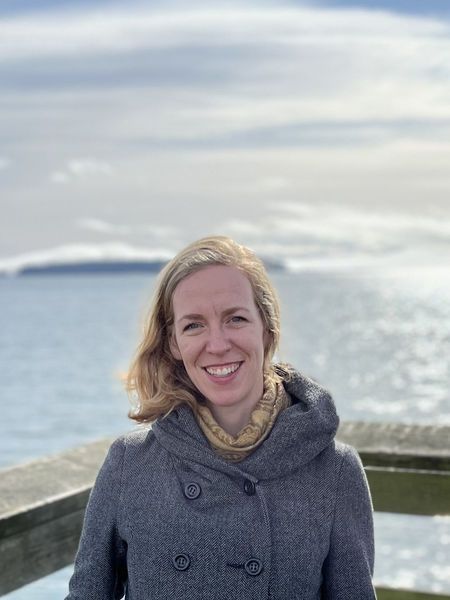
Liz Johnston
OB:
If you had to describe your book in one sentence, what would you say?
LJ:
The Fall-Down Effect spans three decades, exploring climate change, family, and activism through the intertwined lives of siblings growing up in a forested community.
OB:
What was the strangest or most memorable moment or experience during the writing process for you?
LJ:
I’m always struck by how much I forget while working on a long project. After stepping away for a time, I sometimes return to find scenes I don’t remember writing at all. At other times, I’ll notice resonances between moments in the book and can’t tell whether they were intentional or intuitive. That uncertainty makes the process feel a bit like discovering something rather than constructing it.
_____________________________________
Liz Johnston grew up in Revelstoke, B.C., and now lives and writes in Toronto. Her essays and short stories have appeared in Poets & Writers, The Fiddlehead, The Humber Literary Review, Grain, The Antigonish Review, and The Cardiff Review. Johnston is an editor of Brick, A Literary Journal. The Fall-Down Effect is her debut novel.