Susan Currie Connects the Profoundly Personal with Crucial Indigenous History in CAYUGA NATION
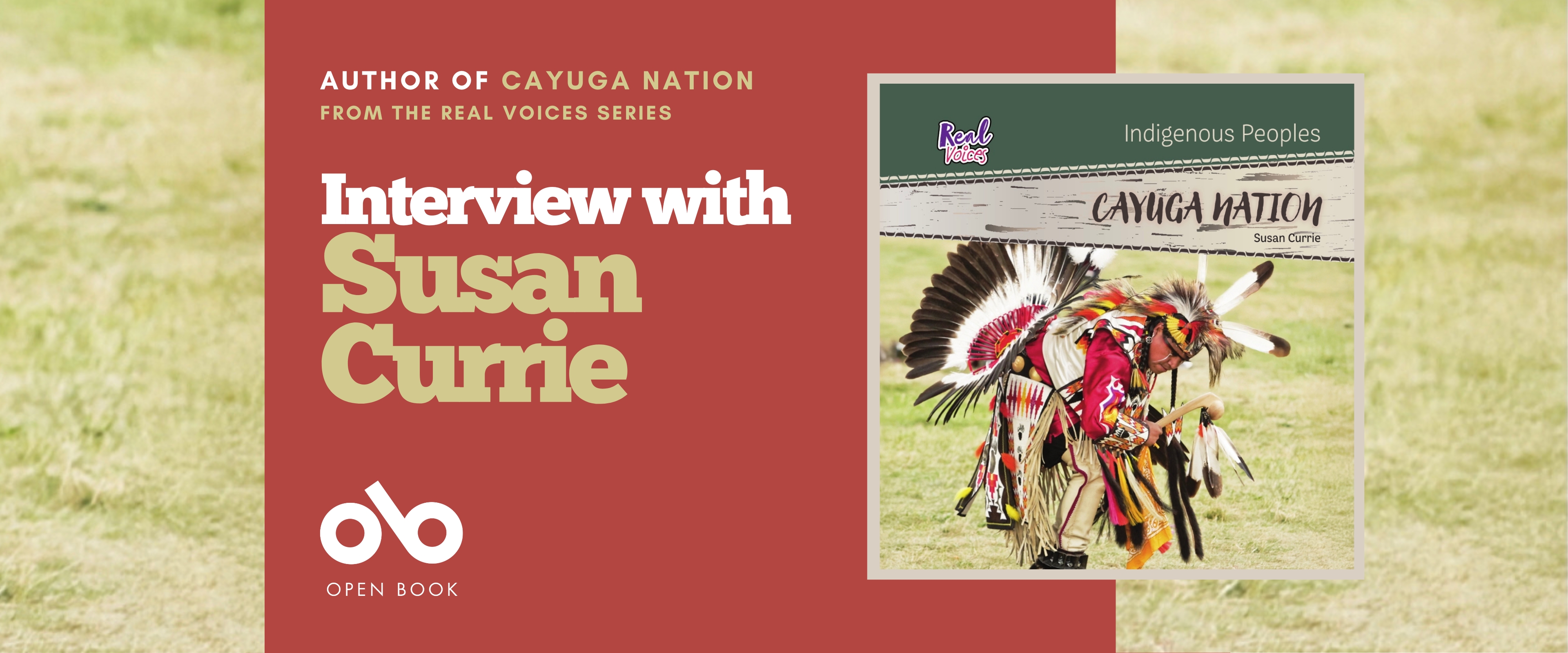
What happens when a deeply personal discovery becomes the inspiration for a children's book that reaches beyond individual memory and touches on collective history? In Cayuga Nation (Beech Street Books/Saunders Book Company), author Susan Currie transforms her journey of reconnecting with her Indigenous heritage into a powerful and accessible narrative for young readers. Raised as an adoptee without knowledge of her biological roots, Currie’s reconnection to her Cayuga family history, including their links to the Mohawk Institute and the wider Haudenosaunee community, inspired her to create a story centred on identity, heritage, and resilience.
This new book traces an arc from pre contact life through the difficult chapters of colonization under the Indian Act and into a future shaped by cultural resurgence. It does more than recount history. It honours what was lost and celebrates what is being reclaimed. With gentle magic realism and careful attention to what young readers can absorb, Cayuga Nation invites children to reflect on past injustices while imagining a future defined by healing, pride, and belonging.
At a time when knowledge of Indigenous histories remains urgent and essential, Cayuga Nation stands out as a timely and vital contribution to Canadian children's literature. It offers a window into the struggles and survival of the Haudenosaunee people and a bridge toward reconciliation and understanding. It is an invitation for new generations to learn, remember, and respect.
Read more about this powerful new work of nonfiction for young readers in this interview with the author!
Open Book:
Tell us about your new book and how it came to be. What made you passionate about the subject matter you're exploring?
Susan Currie:
The seeds for this book were really sown on the day that I learned about my Cayuga family history. I had grown up as an adoptee who had no knowledge of my biological background. But when I found my birth aunt, she told me about my family, our links with Six Nations of the Grand River, and our history with the Mohawk Institute, the residential school several of my family members attended. When I learned that information, my world completely changed.
I tried to make sense of my new background by writing a children’s book about a girl learning her own Haudenosaunee heritage, employing magic realism in the telling. And I kept trying to learn as much as I could about the Haudenosaunee Confederacy and the Cayuga Nation.
When Beech Street Books reached out to me to ask if I would consider writing a book about the Haudenosaunee, I really agonized, not sure if as an adoptee I was legitimate enough to do it. I reached out to Indigenous friends and colleagues, who were encouraging. Eventually, I decided to accept the challenge. I’m so glad that I did, because since then I have had a wonderful relationship with Beech Street Books and the Saunders Publishing Company. I’ve engaged in a number of writing activities with them, including a book about Autumn Peltier. And now, our relationship has continued through this new book about the Cayuga Nation. I feel very close to this book because it has been a chance for me to explore my own personal heritage.
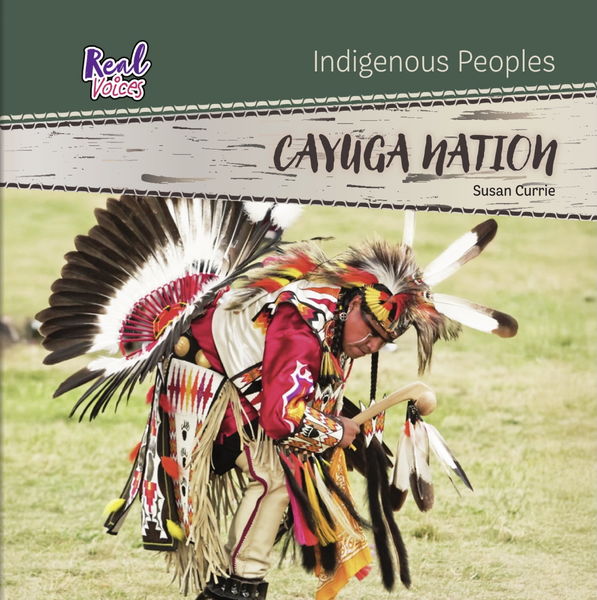
Cayuga Nation by Susan Currie
OB:
Is there a question that is central to your book? And if so, did it change during the writing process?
Your CanLit News
Subscribe to Open Book’s newsletter to get local book events, literary content, writing tips, and more in your inbox
SC:
As I wrote this book, I wondered if the act of learning about what was lost can help you to find it again. This book follows an almost cyclical format, initially detailing life as it was before first contact, then walking through the dark times of the Indian Act—the rise of reserves, the establishment of residential schools, the forbidding of cultural practices, and all of the other devastating parts of the history of Canada’s treatment of Indigenous people—and finally looking to a hopeful future, because the Cayuga Nation is reclaiming the rich language and culture that were there before the arrival of settlers. Looking to the past is an essential part of forging the pathway to a new future of revitalization.
OB:
What do you love about writing nonfiction? What do you think are the genre’s strengths?
SC:
I love writing nonfiction for young people because children’s minds are so fertile. They are just starting to think in big terms about the world around them. Through being exposed to nonfiction about Canada’s treatment of Indigenous people, they are horrified with the idea that the government put unfair laws in place. They are also galvanized to want to bring about change, to forge their own personal reconciliation. Their eyes are opened and they want to ensure that these devastating practices never happen again.
OB:
What do you need in order to write—space, food, rituals, tools?
SC:
Lots of writers like quiet around them while they work. I am not one of these writers. I actually love to sit in the heart of the house, with people coming and going, and music or other sounds on in the background. Maybe the action around me helps to distract from the anxiety of having to put words on a blank page. Whatever the reason, I happily sit there amid whatever chaos is going on, chugging coffee in the morning and tea in the afternoon, chatting with people and typing away.
OB:
What do you do if you're feeling discouraged during the writing process?
SC:
When I feel discouragement in my writing, it’s often because I’m on the wrong track in some way. I may not consciously know what the problem is, but I’m learning that if I walk away for a while, my brain will quietly work on solving the roadblock while I think about other things. Strangely, when I return to my writing, I often find I have new ideas about how I can better highlight the right direction for my work.
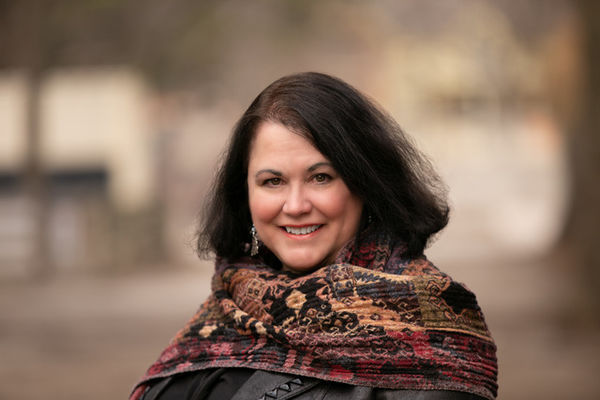
Susan Currie
OB:
Did you write this book in the order it appears for readers?
SC:
Yes, I wrote this book in the order it appears for the readers. I wanted to be sure to trace the history of the Cayuga Nation from the time before contact, through dark times, and then back into the light of the future. It was important for me to take that walk in the order it chronologically happened.
OB:
What are you working on now?
SC:
I am working on a young adult novel called Manifesto. It’s the third book in a series from Common Deer Press. The first novel was Iz the Apocalypse (2023). The second was Fierce Voice (2025). Manifesto will come out in 2027.
I’m also frequently engaged in nonfiction projects for Beech Street Books.
_____________________________________________
Susan Currie is an elementary teacher in Brampton, Ontario (22 years and counting). Before she entered the public school system, she earned a living as an accompanist, music director, choir director, dinner musician, leader of various music programs for children, and piano teacher. She has written two other books – Basket of Beethoven (Fitzhenry and Whiteside, 2001) and The Mask That Sang (Second Story Press, 2016). Susan is an adoptee who was in the foster care system briefly as a baby, and only learned of her Haudenosaunee heritage (Cayuga Nation, Turtle Clan) as an adult. She is happily married to John and has a wonderful daughter named Rachel.