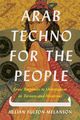
Read an Excerpt from ARAB TECHNO FOR THE PEOPLE, a Fascinating Work of Cultural Nonfiction by Jillian Fulton-Melanson
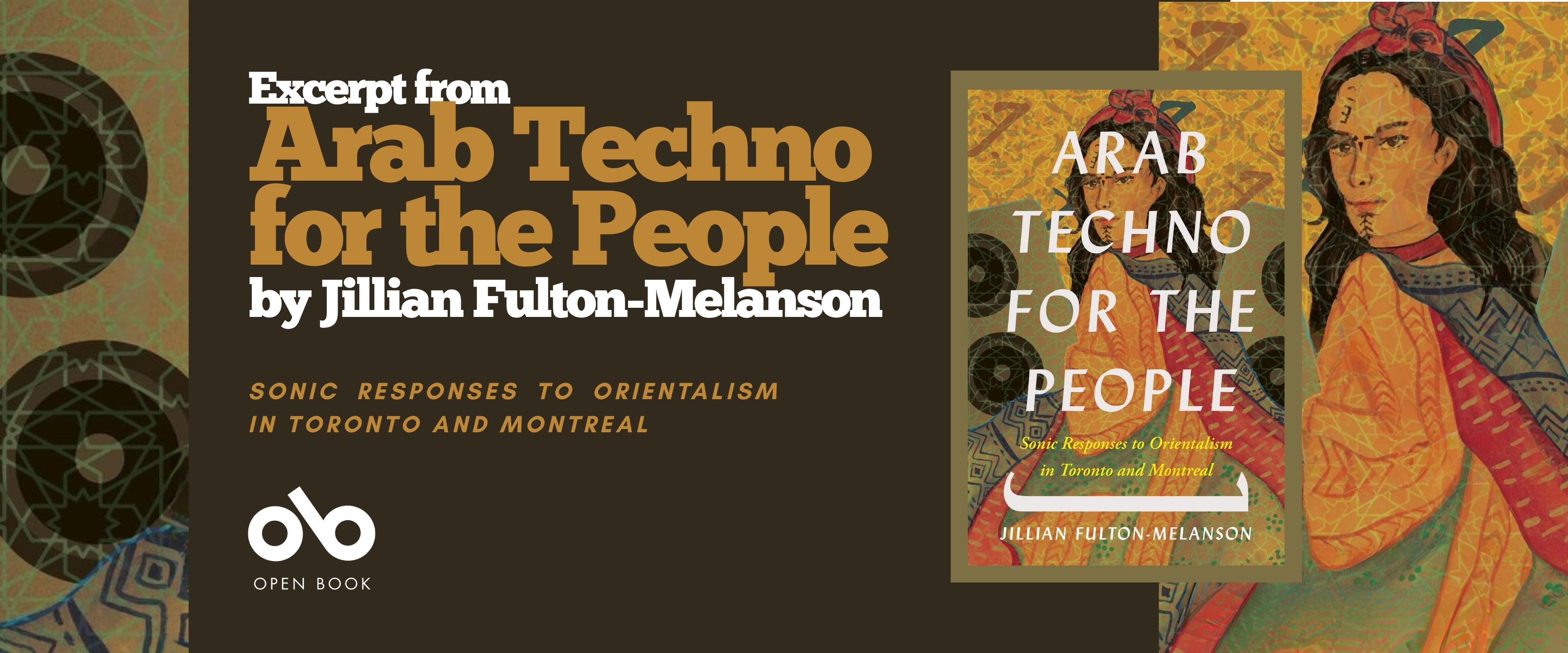
In clubs, basements, and late-night dance floors across Toronto and Montreal, electronic music becomes more than sound. Throughout the pages of Arab Techno for the People: Sonic Responses to Orientalism in Toronto and Montreal (Wilfrid Laurier University Press), these spaces open up as places where Arab musicians and listeners carve out room to define themselves on their own terms.
The book traces how house and techno scenes allow people who are often read through narrow ideas of Arab and Muslim identity to express lives shaped by many influences. Music carries memory and nostalgia, pleasure and grief, presence and absence. It becomes a way to push back against racism and misrecognition while making space for joy, creativity, and community in a multicultural Canada that often fails to listen closely enough.
Drawing on ethnographic research, Jillian Fulton-Melanson follows these musical practices beyond the dance floor and into everyday life, where sound becomes a tool for survival as well as expression. She also reflects openly on her own position as a white researcher, making the book a thoughtful contribution to decolonial and anti-racist scholarship. Lively, attentive, and grounded, Arab Techno for the People invites readers to hear electronic music not just as entertainment, but as a powerful social language.
Read more about this intriguing field of study in the following excerpt, free for all of our loyal Open Book readers!
An Excerpt from ARAB TECHNO FOR THE PEOPLE by Jillian Fulton-Melanson
My interlocutors reconstruct Home in their daily environments—along with their cities—at home in diaspora through sensory encounters like singing, cooking, tasting, and talking: activities that ignite nostalgia and make them feel at ease. Sylvia Angelique Alajaji (2015) transcribes the word “Home” with a majuscule “H” as one’s place of origins and home with a minuscule “h” as one’s place in diaspora. I follow her transcription in this book; Home, as will unfold throughout this book, is a conceptual place that is not necessarily a tangible location. This book is about the way people identify with Home (place of origins in the Arab world), home (Arab Canadian diaspora in Toronto or Montreal), and make meaningful connections through that identification. In this book, the majuscule and miniscule letters representing Home and home do not signify a ranking of importance; I believe that Home can hold just as much weight and importance as home, and that such weight and importance is different for each of my interlocutors. Diaspora groups prove that Home can be reconstructed anywhere in the world; electronic music enthusiasts prove that Home is where the music is.
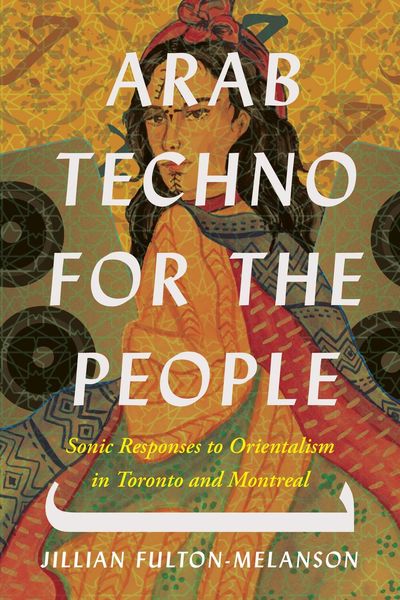
Arab Techno for the People by Jillian Fulton-Melanson
Some of my interlocutors reconstruct Home through food, some through music production, and some through actively creating connections with likeminded individuals at public events. Others prefer the private domain of the physical house for their reconstruction of Home. At times, people cannot voice their longing for Home. Memories of Home exist on a spectrum of positivity and negativity, and each of my interlocutors remembers and feels nostalgia for Home differently depending on their experiences and memories of Home. The sensory experiences that I depict in this book speak to how they make Home and community in their new homes.
In my conceptualization of how one creates home, I follow Ryan Thomas Skinner’s (2015) notion of “civility and the wild.” I use the inverse of these terms to describe the civility of the party (where one can feel a sense of belonging) and the wild of the outside world (the hostile diasporic environment). Although this creates another binary, many of the moments in this book show how the wild enters the civil space. This book is about how my interlocutors navigate the wild and take care of each other in supposedly civil spaces. The electronic music scene conceptually disrupts the wildness of the outside world—if only for a moment—for participants inside. I outline my exploration of Arab identities in Canada through various forms of social disruption: through a disruption of space, where I call for a new look at the way that cities are outlined and occupied; through a disruption of heteronormativity by discussing who is invited into or excluded from a space and why, based on a historical overview of electronic music scenes, purposes, and mandates; and through a disruption of the nostalgic element, where I argue that an individual’s relationship with, celebration of, or mourning for Home changes their presentation of self and Arabness in diaspora—as well as their performance in sensory environments such as the house or through cuisine. This book is about the various disruptions caused by remembering, forgetting, and the various arcane, paradoxical combinations thereof that take place in so-called civil and wild spaces.
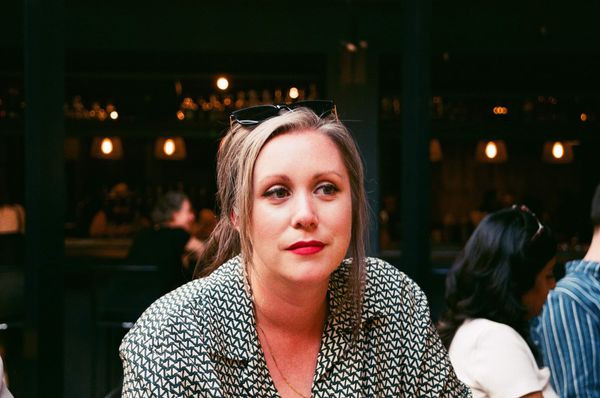
Jillian Fulton-Melanson
An outsider may perceive of civility and civilization as descriptions of the world outside the electronic music event space, where order or mainstream social mores define acceptable behaviour. Outsiders to the scene usually perceive of electronic music spaces as wild: a world of substance users ungoverned by civil society’s mainstream rules and order. Conversely, my emic definition situates civility inside the event because it is conceptualized by insiders as a space where people can freely and consensually explore themselves and each other (although, this is not always the case). My use of this terminology situates the wild outside of electronic music spaces, because the wild is a social world where people must adjust their behaviour and bodily comportment to maintain mainstream social norms. The outsider’s perception calls for Arab partygoers to be wild, but what is their response?
Your CanLit News
Subscribe to Open Book’s newsletter to get local book events, literary content, writing tips, and more in your inbox
Copyright Jillian Fulton-Melanson, 2026. Excerpt published with permission of WLU Press.
____________________________________________
Jillian Fulton-Melanson is based between Toronto and Casablanca. She holds a PhD in Social Anthropology from York University and has training in ethnomusicology, education, and music performance. She is a member of various education and research teams at York University, the Glenn Gould School at the Royal Conservatory of Music, the Society for Ethnomusicology, and the Polish Academy of Sciences.